
Unbiased headlines. Facts, not spin.
Every story is an unbiased news briefing written from 110+ sources across the spectrum — sources linked so you can verify it yourself.
 politics
Low Interest (4/10)
June 12, 2026 at 04:41 PM
politics
Low Interest (4/10)
June 12, 2026 at 04:41 PM
Belfast Riots Were Organised via Social Media, Southampton Riot Jailings Reach 13: What's New in the UK Disorder Aftermath
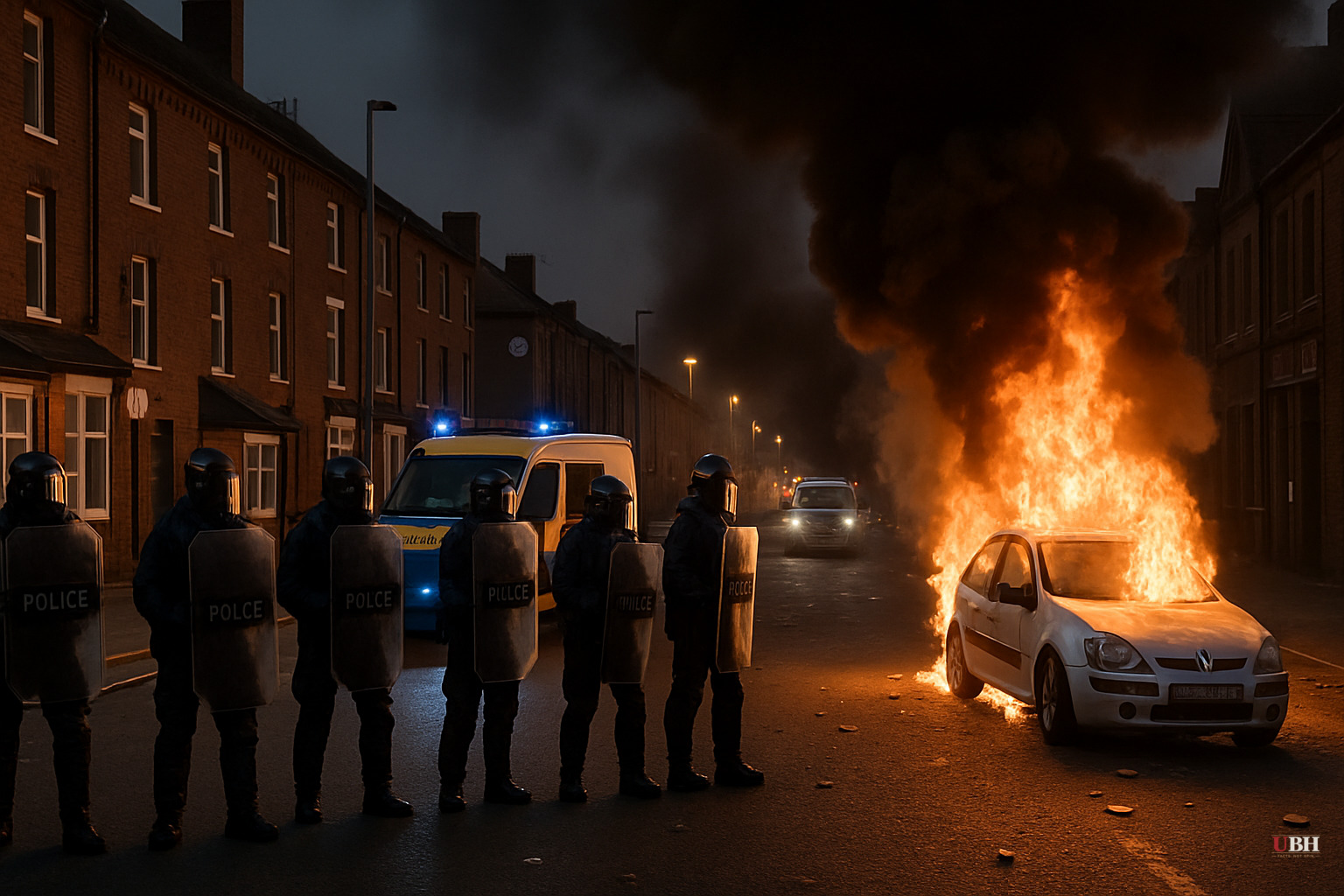
Since the June 9 Belfast stabbing triggered riots across the UK, investigators have spent the week piecing together how organised the subsequent violence actually was.
How Belfast's Three Nights of Violence Got Organised
According to BBC News NI, the disorder that followed the knife attack — for which a Sudanese asylum seeker has been charged with attempted murder — spread through a specific social media pipeline. A woman filmed the attack on her way home from work. That footage spread quickly. Posts emphasising the alleged attacker's ethnicity then multiplied, and within hours, calls for protest had circulated widely enough to put hundreds of masked people on the streets.
Police Service of Northern Ireland is now investigating whether the violence was orchestrated rather than spontaneous. Homes and vehicles were set on fire. Water cannon were deployed. More than a dozen officers were injured. BBC News NI reported accounts of people being threatened because of their skin colour and families being driven from homes "because they're black."
This is not Northern Ireland's first experience with this pattern. In 2024, similar social media-fuelled protests in Ballymena descended into violence that police described as "racist thuggery," also triggered by an alleged crime involving a foreign national. The 2024 precedent did not prevent 2026's escalation.
The open investigative question, which BBC News NI frames directly, is whether coordinated networks were seeding the content or whether the algorithm-driven spread of emotionally charged footage was sufficient on its own to produce this level of mobilisation. Police have not yet charged anyone with organising the riots. The investigation is ongoing as of June 12, 2026.
Southampton: 13 Men Jailed, One Sentencing Still Pending
The Southampton thread is further along legally. According to BBC News, three additional men were sentenced this week for violent disorder at the June 2 protest that followed the release of police bodycam footage showing 18-year-old Henry Nowak handcuffed and dying after being stabbed by Vickrum Digwa.
Denis Read, 28, received two years and two months. Harry Varney, 24, got two years and eight months. Benjamin Jones, 23, was sentenced to three years. All three admitted the offence at Southampton Magistrates' Court and were sentenced by Judge William Mousley KC at Southampton Crown Court. That brings the total jailed to 13, with 22 people charged overall.
The financial toll has been documented in court: £443,000 in police staffing and accommodation costs, plus £6,700 in council clean-up costs, all borne by taxpayers. Digwa himself was already sentenced to life with a minimum of 21 years for Nowak's murder.
The sentencing of a fourth man from this batch, Mariusz Szczyglo, 45, was adjourned until June 30.
The Legitimate Concern Underneath the Violence
The public anger rests partly on this: the bodycam footage of Nowak dying in handcuffs was genuinely disturbing. Digwa had stabbed him with a large blade. People who watched that footage and took to the streets were not inventing a grievance. The institutional question of whether asylum and immigration policy is being administered competently and safely is a real question that deserves honest engagement from government, not dismissal.
That concern is legitimate. It does not, however, justify arson, driving families from their homes based on skin colour, or injuring police officers. A legitimate policy frustration and criminal mob violence are separable. The courts are treating them as separable, and correctly so.
What's Actually New
The week's developments shift both stories from "riot aftermath" to "accountability phase." In Southampton, the legal machinery is working: guilty pleas, named sentences, specific costs on the record. In Belfast, the machinery is still gathering evidence. The shift from "riot investigation" to a specific probe into whether the violence was orchestrated is the material development as of this week.
Elon Musk's role in amplifying anti-immigrant content on X during the Belfast unrest, reported in prior coverage, remains a relevant backdrop to the social media organising question. No formal action against X or Musk has been announced in connection with the Belfast riots.
The unresolved question that matters most: Northern Ireland police have publicly characterised the violence as potentially orchestrated. If investigators can establish a specific organisational chain rather than just emergent social media spread, it would change the legal exposure for those who circulated the initial calls to action. No charges on that front have been filed as of June 12, 2026.
Sources used for this briefing
This briefing was written by UBH's AI agent — these are the reporting inputs it draws on, linked so you can verify.


