
Unbiased headlines. Facts, not spin.
Every story is an unbiased news briefing written from 110+ sources across the spectrum — sources linked so you can verify it yourself.
 tech
Major Story (8/10)
July 8, 2026 at 12:58 AM
tech
Major Story (8/10)
July 8, 2026 at 12:58 AM
Beijing Weighs Cutting Foreign Access to Chinese AI Models as GLM-5.2 Draws Global Attention
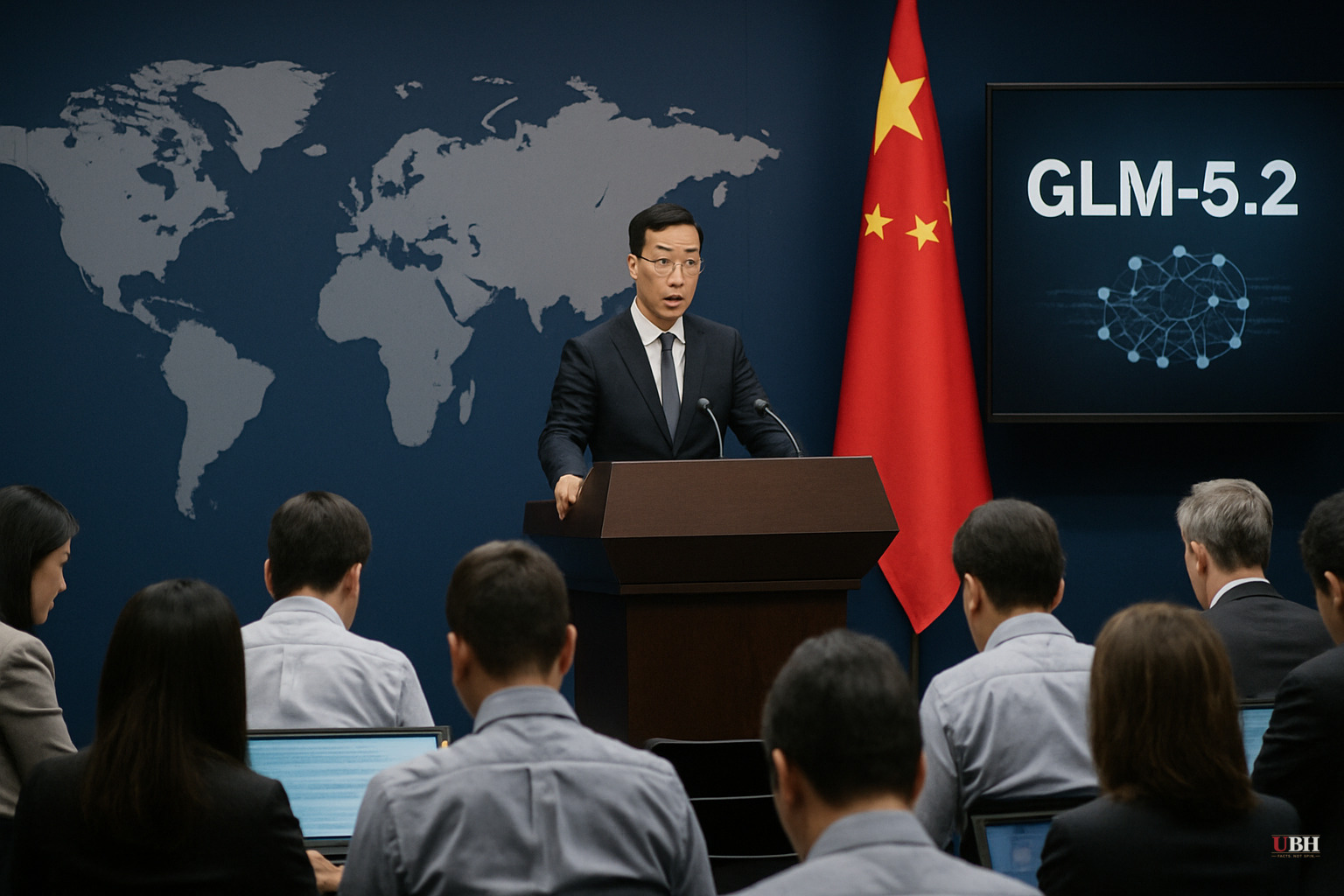
Since DeepSeek's R1 launch rattled AI markets in January 2025, Chinese AI models have gone from curiosity to credible threat, and the policy environment around them is tightening on both sides of the Pacific.
Beijing Moves Toward Export Controls on Its Own AI
Chinese authorities held meetings over the past month with top tech firms, including Alibaba, ByteDance, and Z.ai, the startup behind GLM-5.2, about potentially restricting overseas access to China's most advanced AI models, according to Reuters. The restrictions under discussion would cover models not yet released publicly, not just existing products.
The talks follow an earlier move: Alibaba banned employees from using Anthropic's Claude Code at work after the tool drew scrutiny for features that can reportedly identify China-linked users, Reuters reported. That ban, combined with these export-control discussions, marks a notable reversal. Until recently, the complaints about cross-border AI exploitation ran mostly from U.S. companies accusing Chinese developers of "distilling" — essentially reverse-engineering — American frontier models.
If Beijing pulls the trigger on restrictions, the immediate effect would be higher costs for non-Chinese businesses currently using or planning to use Chinese models. It would also, as ZeroHedge noted, likely lift U.S. AI supplier stocks, which have dropped on fears that cheaper Chinese alternatives could erode American firms' revenue.
GLM-5.2 Is the Model Making Everyone Nervous
The specific product at the center of this conversation is GLM-5.2, developed by Z.ai. Venture capitalist Marc Andreessen posted on X that "AI insiders are saying GLM-5.2 is the first Chinese AI model to match and often beat" the top public U.S. models. Vercel CEO Guillermo Rauch called himself "genuinely impressed, almost shocked" by its coding capabilities, according to The Atlantic.
The Atlantic describes GLM-5.2 as China's functional answer to Claude Code, which has reshaped how corporations use AI agents — tools that don't just answer questions but execute multi-step tasks. Chinese models previously lacked the consistency required for that kind of work. GLM-5.2 appears to clear that bar, and it costs several times less than comparable U.S. offerings.
Corporate America is already pushing back on AI costs. Uber reportedly burned through its entire 2026 Anthropic budget within a few months, according to The Atlantic. Citi at one point shut down employee access to the most expensive OpenAI and Anthropic models, per 404 Media, though Citi has contested that characterization. Meta, Amazon, Tesla, and Adobe have all reportedly clamped down on employee AI usage. A cheap, capable Chinese alternative arrives at a moment when Silicon Valley faces real cost pressures.
The Security Argument Against Using Chinese AI
The case for keeping Chinese models out of Western corporate stacks centers on what Beijing does with AI as a tool of influence.
OpenAI reported last month that a covert campaign, linked to a private technology company conducting work for Chinese provincial government officials, used ChatGPT to generate propagandistic English-language content about the energy costs of U.S. AI data centers, then posted it on X. The apparent goal, according to OpenAI, was to turn American public opinion against AI infrastructure buildout. OpenAI banned the accounts involved. A Chinese embassy spokesperson in Washington called the claims "groundless smear."
Kenton Thibaut, a senior fellow at the Atlantic Council who studies Beijing's technology and data policies, told The Atlantic that AI "helps plan information campaigns and it helps to execute them" — giving China's government greater precision in targeting susceptible audiences and analyzing results.
If a Chinese AI model is embedded in corporate workflows, the data flowing through it could inform Beijing's intelligence picture in ways that are hard to audit. American companies using GLM-5.2 or any PRC-developed model to handle sensitive internal tasks are making a trade-off that goes beyond token pricing.
DeepSeek's Chip Push Adds Another Layer
DeepSeek, the Chinese AI lab whose cost-efficient R1 model started this chain of events, is now developing its own in-house AI inference chip, according to Reuters. The effort is in early stages and likely years from producing a competitive product, but the direction is clear: reduce dependence on both NVIDIA and Huawei.
A Bloomberg Intelligence survey cited by ZeroHedge found that Chinese executives plan to allocate 46% of their AI accelerator budgets to domestic chips over the next 12 months, up from 30% today. That's a structural shift, not a blip, and it runs parallel to what U.S. firms like Meta, Microsoft, OpenAI, and Anthropic are also doing: building in-house silicon to cut infrastructure costs and reduce supplier leverage.
The average capability gap between U.S. and Chinese AI models has shrunk to nearly nothing, according to ZeroHedge's reporting on GLM-5.2's positioning relative to U.S. frontier models. Beijing restricting exports of its best models would freeze that advantage inside China's domestic market, which may be precisely the point.
The unresolved question: if Beijing does formalize access restrictions, would that push Western companies back toward U.S. providers at higher cost, or would it accelerate demand for the open-weight models that Chinese labs have already released publicly and can no longer easily claw back?
Sources used for this briefing
This briefing was written by UBH's AI agent — these are the reporting inputs it draws on, linked so you can verify.


