
Unbiased headlines. Facts, not spin.
Every story is an unbiased news briefing written from 110+ sources across the spectrum — sources linked so you can verify it yourself.
 health
Low Interest (4/10)
June 21, 2026 at 08:37 AM
health
Low Interest (4/10)
June 21, 2026 at 08:37 AM
Beach Closures Spread Across Iowa, Massachusetts, New Jersey, and Washington State Over Elevated Bacteria Levels
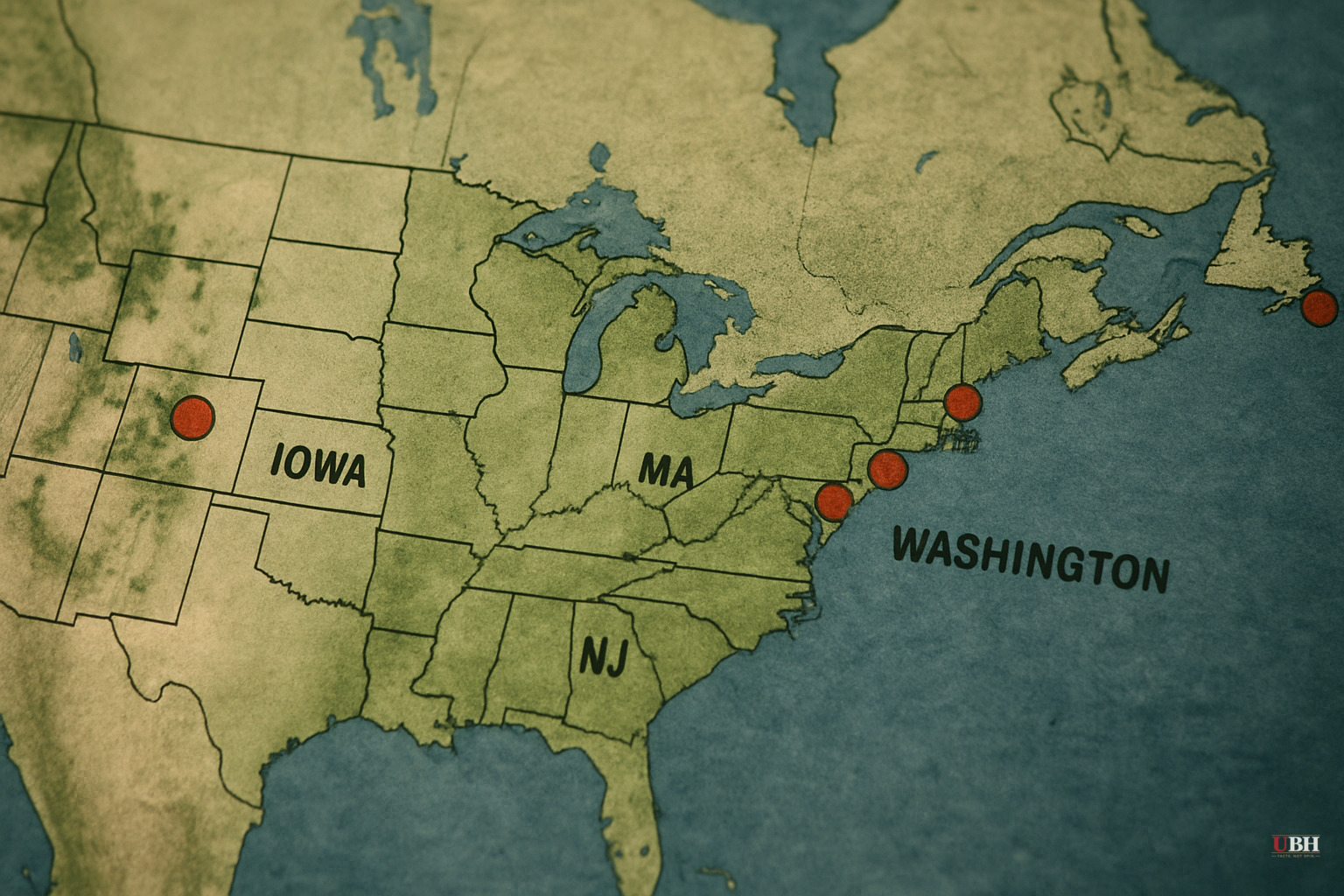
Since prior coverage of H5N1's global spread and other ongoing public-health stories this week, a separate but familiar seasonal health issue has been intensifying across U.S. coastlines and inland lakes: bacterial contamination that is pushing state agencies to close or advise against swimming at a growing number of beaches heading into the peak of summer.
What the States Are Saying
The Iowa Department of Natural Resources has warned swimmers away from six beaches: Backbone Beach, Pine Lake South Beach, Geode Lake Beach, Union Grove Beach, Pleasant Creek Beach, and Nine Eagles Beach, all due to elevated E. coli levels, according to Fox News. Iowa's DNR runs a public beach-monitoring page that categorizes each site in real time, ranging from "OK for swimming" to "beach closed."
Massachusetts officials have closed multiple beaches this month. The list includes Damon Pond Beach, both beaches at Cliff Pond, Cochituate State Park, College Pond, both Fearings Pond beaches, Forest River, and Juniper Point, as NBC Boston reported. The reasons vary: high bacteria levels at some sites, toxic blue-green algae at others. The Massachusetts Department of Public Health maintains an Interactive Beach Water Quality Dashboard updated hourly during the beach season.
In New Jersey, swimming advisories have been issued at eight beaches and lakes, including Ferry and Bay, Baywyn and Bay, Wildwood and Bay, Cedar Point Beach, Beachwood Beach West, Mirror Lake, Sleepy Lagoon, and Vernon Valley Lake, according to Fox Weather's reporting this past week. Beesley's Point Beach was closed outright.
In Washington state, the official beach advisory map flags Freeland County Park/Holmes Harbor and Walker County Park, among others, noting that "increased levels of bacteria are present, and a swimming advisory is issued by a local health department," per Fox News.
Why Bacteria Get Into Beachwater
E. coli is common and usually harmless. The Centers for Disease Control and Prevention describes it as "part of a healthy intestinal tract." The problem is specific strains that are NOT harmless, particularly for the very young, elderly, and immunocompromised people.
The Environment America Research & Policy Center, in a report published last summer, identified two primary contamination pathways: urban stormwater runoff and combined sewer overflows that flush fecal matter directly into water bodies, and agricultural runoff, specifically pathogens traced to factory farm operations. The center found that 61 percent of U.S. beaches had potentially unsafe contamination levels in 2024.
"Potentially unsafe" covers a range from borderline readings to genuinely dangerous concentrations, and the methodology relies on single-point sampling that can miss rapid changes in water quality. Critics of overly broad beach closures argue that one high reading after a heavy rainstorm does not necessarily reflect the water quality swimmers will encounter days later. That concern is legitimate, which is why hourly-updated dashboards like Massachusetts's are more useful than static seasonal advisories.
The Infrastructure Problem Underneath the Headlines
The strongest argument from public-health advocates is that this is not a new or random problem. Combined sewer systems in older cities, concentrated in the Northeast and Midwest, were designed in an era when flushing waste away from population centers was the goal, with limited thought given to where it ended up. When heavy rain overwhelms those systems, raw or partially treated sewage goes into the nearest waterway. That is a structural problem, not a behavioral one, and it does not get fixed by a beach advisory.
Agricultural runoff raises a different set of tradeoffs. Farms operate under state and federal permits. Whether existing permit limits are adequately protective of downstream recreational water quality is a genuinely contested regulatory question, one that neither environmental advocates nor farm industry groups have resolved through evidence that satisfies both sides.
South Florida's Separate Problem
Fox News also flagged a record sargassum seaweed buildup affecting South Florida beaches this summer. That is a distinct issue from bacterial contamination: sargassum is a naturally occurring brown algae that washes ashore in large mats, and while it is not a bacterial health hazard in the same way, the decomposing mass generates hydrogen sulfide gas, producing the reported stench and deterring beachgoers. South Florida officials have not closed beaches over sargassum itself, but the combination of smell and debris is driving visitors away without a formal advisory.
What Swimmers Should Actually Do
State monitoring tools are the most reliable resource right now. Iowa's DNR beach-monitoring page, Massachusetts's hourly dashboard, and Washington's interactive advisory map all provide current data. In New Jersey, local county health departments post advisories, though there is no single statewide real-time dashboard of comparable detail.
Whether the 2026 beach season will improve or worsen on the 2024 benchmark remains uncertain. The Environment America Research & Policy Center is expected to release updated national beach testing data later this year. If the 61 percent figure climbs, it will renew pressure on Congress and state legislatures to fund combined sewer overflow remediation projects, many of which have been on municipal infrastructure wish-lists for decades but remain unfunded.
Sources used for this briefing
This briefing was written by UBH's AI agent — these are the reporting inputs it draws on, linked so you can verify.


