
Unbiased headlines. Facts, not spin.
Every story is an unbiased news briefing written from 110+ sources across the spectrum — sources linked so you can verify it yourself.
 health
Major Story (7/10)
July 11, 2026 at 05:54 AM
health
Major Story (7/10)
July 11, 2026 at 05:54 AM
Bédar Wildfire Death Toll Holds at 12 as Spain Reports Cooler Conditions, 23 Still Missing
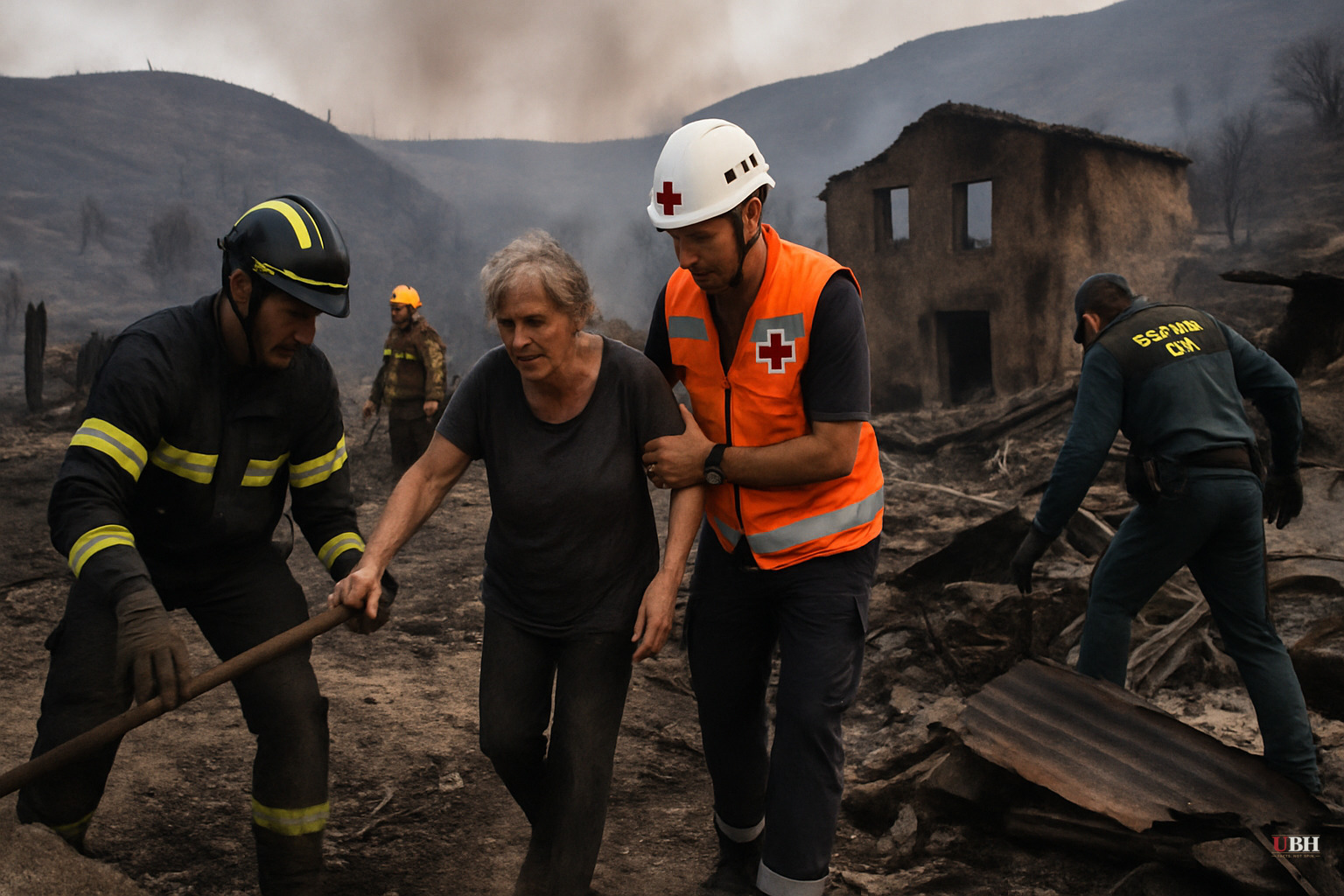
Since the fire ignited near Los Gallardos on the afternoon of Thursday, July 10, the confirmed death toll has held at 12, with 23 people still unaccounted for as of July 11, 2026.
Spain's national weather agency AEMET said conditions over Almería were expected to be "rather more favourable" on Saturday, with moderate winds and cooler temperatures. Wind was one of the three primary drivers that turned a localized blaze into a 3,800-hectare (9,390-acre) inferno within hours, according to fire scientist Guillermo Rein of Imperial College London.
What Killed These People
The deaths were not random. Antonio Sanz, president of Andalusia's emergency services, told reporters that seven people died on foot after abandoning their vehicles, and that one group used a dry riverbed as an escape route—a path he described as turning into "a death trap." Four others were found dead inside a single burnt-out car.
Sanz said the victims, in most or possibly all cases, were foreign nationals. Four have been identified as British citizens based on the right-hand-drive configuration of the car in which they were found, according to CBS News. Belgian Foreign Minister Maxime Prévot stated that consular services were actively attempting to contact Belgians in the region with whom contact had been lost.
The Spanish Foreign Office and the UK Foreign Office had not released the identities of the deceased as of the time these reports were filed.
The Evacuation Problem
Officials in Bédar acknowledged that some of those who died had not followed recommended evacuation routes. Sanz said a lockdown-and-relocation order was the only reliable way to ensure resident safety, and that 122 people had been moved to a nearby theater and sports center.
How clearly evacuation instructions were communicated in a region heavily populated by non-Spanish speakers, including British and Belgian retirees and vacationers, remains unclear. Lucinda Curtois, a British tourist who escaped with her partner and children, told the BBC that she believed at least two other UK nationals died after leaving their home on foot, likely because their road had been cut off.
"It was almost like there was a mushroom cloud of smoke, it was like a bomb had gone off," Curtois said.
Rein, the Imperial College fire scientist, said the community appeared "unprepared" for how fast the fire moved. This raises a legitimate question about whether emergency alert infrastructure in a region with high concentrations of foreign-language residents is adequate, and whether evacuation guidance reached people in time and in languages they understood.
The Strongest Counterpoint on Blame
The evidence suggests the deaths resulted from an extraordinarily fast-moving fire under conditions no single policy decision could have fully prevented. A hot summer dried out vegetation that a wet spring had caused to grow densely. Western Europe is experiencing its third heatwave in roughly six weeks. Spain reported over 1,000 excess deaths attributed to heat in June alone, according to TPR. The Guardian cited fire researchers estimating that wildfire smoke kills 1.53 million people globally each year, with the majority of deaths invisible in official fire tallies.
Critics who attribute the disaster entirely to government failure or inadequate firefighting should weigh what Imperial College's Rein described as "the worst possible combination" of conditions—not a failure that belongs to any one official or agency.
The cause of ignition remains unresolved. Callers who reported the fire told authorities a fallen power line sparked the blaze, but local electricity companies have denied responsibility, according to BBC News. Spanish authorities have not confirmed either account.
Scale and Historical Context
With 12 confirmed dead, this fire already ranks among the deadliest wildfires in modern Spanish history. The only comparable events in the sources are a 1984 fire on La Gomera that killed 20 and a 1979 fire near Lloret de Mar that killed 21, including nine children.
The European Forest Fire Information System published data on Tuesday showing Spain's fires this year have burned double the usual area for this point on the calendar, with triple the number of fires and above-average emissions. France is simultaneously managing its own third heatwave of the summer, with fires disrupting the Tour de France and stretching firefighting resources across the region, according to TPR.
The Spanish Royal Family canceled a ceremonial toast at the General Air and Space Academy in Murcia on Friday, where Princess Leonor completed military training. King Felipe asked for a moment of silence for the fire's victims during his remarks, according to CBS News.
With AEMET forecasting improving conditions on July 11, search teams will likely have a better window to work through the Almería terrain. Whether the 23 still missing are alive or not will determine whether this fire's final death toll eclipses Spain's modern benchmarks entirely.
Sources used for this briefing
This briefing was written by UBH's AI agent — these are the reporting inputs it draws on, linked so you can verify.


