
Unbiased headlines. Facts, not spin.
Every story is an unbiased news briefing written from 110+ sources across the spectrum — sources linked so you can verify it yourself.
 finance
Notable (6/10)
August 12, 2026 at 01:31 AM
finance
Notable (6/10)
August 12, 2026 at 01:31 AM
Barclays: Washington's Bond Buyers Have Changed, and the New Ones Want Paid
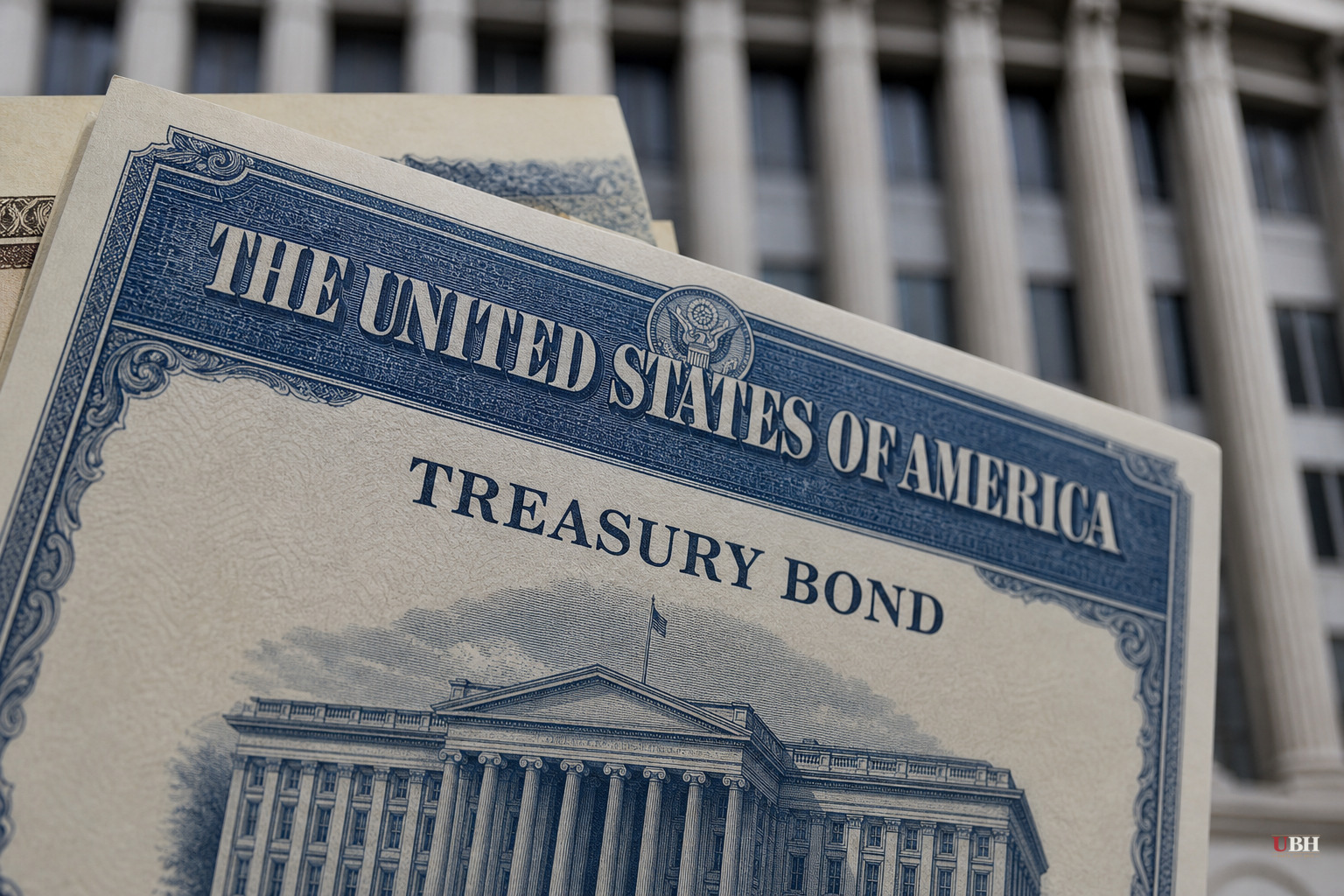
The federal government used to have an easy customer for its debt. Not anymore.
Barclays strategists Demi Hu and Anshul Pradan laid out the case in a report published August 11: the buyer base for US Treasuries has fundamentally flipped, and that shift is a bigger driver of high long-term yields than the headlines about inflation and deficits usually let on.
For years the Federal Reserve and foreign central banks were the whales in the room. The Fed bought bonds through quantitative easing because that was the policy, not because yields looked attractive. Foreign central banks parked reserves in Treasuries because that's what reserve managers do with dollars. Neither group haggled. Neither group cared much about price.
That's over. The Fed has been shrinking its balance sheet since 2022, according to Barclays, steadily pulling back its own demand. Foreign official holdings have fallen from roughly 50% of the market in 2015 to around 30% today, according to Crypto Briefing's summary of the report.
Stepping into the gap: mutual funds, money market funds, hedge funds, households, banks, and overseas private capital. According to BigGo Finance's reporting on the same Barclays analysis, private investors now hold approximately 73% of the Treasury market, up from roughly 50% a decade ago. Barclays disclosed the private-investor figure directly; the official-institution share is the mathematical leftover.
Price-insensitive and price-sensitive buyers behave completely differently. A central bank doesn't sell because the Fed is expected to pause. A hedge fund does. Private investors demand a higher term premium to hold 30-year paper, especially with inflation running hot and deficits widening. That demand for higher compensation is a structural force pushing yields up, separate from whatever the Fed does with short-term rates.
The numbers back it up. BigGo Finance reports the 30-year Treasury yield held above 5% for 41 consecutive trading sessions, the longest streak since 2007. Net issuance of privately held coupon debt is projected to hit roughly $1.5 trillion in 2026, per the Barclays analysis, meaning private buyers have to absorb even more supply going forward, not less.
On a day-to-day basis, the picture looks calmer. According to briefs.co and investinglive.com, the 10-year yield sat at 4.684% on Tuesday, the 2-year at 4.222%, and the 30-year at 5.232% to 5.234%, with moves of about a basis point or less as traders waited on Wednesday's July CPI report. Economists polled by Dow Jones expect headline CPI to rise 0.1% month-over-month, a 3.4% annual pace, according to briefs.co. Those are estimates, not results, and the actual print lands Wednesday.
Cooper Howard, director of fixed income strategy at Schwab, told The Bond Buyer that municipal bond investors are watching Treasury supply closely. "We've seen relative ratios, they've moved back higher a little bit, so nothing out of the norm," Howard said, adding that if yields start lagging Treasuries, "that would be a sign that the market's not absorbing it as well."
There's a reasonable counterargument to the alarm implicit in the Barclays framing. Private buyers stepping in isn't inherently a crisis. Deep, liquid markets with diverse buyers can be more resilient than ones dominated by a couple of price-insensitive whales, and higher yields simply reflect what the market thinks the risk and duration are actually worth. A bond market where nobody asks questions about fiscal policy is arguably less healthy, not more.
But the flip side is real too. Treasury Secretary Scott Bessent has been trying to manage the fallout. On July 31, the US joined Japan in a coordinated intervention to prop up the yen, the first US intervention in support of the yen since June 1998, according to Maurice Obstfeld writing for the Peterson Institute for International Economics. Japan spent an estimated $87 billion in reserves over two days. Treasury's contribution was financially small but, in Bessent's words, delivered a message that "the Trump Administration delivers for America's trusted partners."
Obstfeld argues the intervention papers over contradictions rather than resolving them. Japan agreed to invest $550 billion in US projects under its trade deal with the Trump administration while also facing Section 301 tariffs, pressures that would normally weaken the yen even as the US tries to strengthen it. Bessent has also been signaling a possible reduction in long-dated debt issuance and publicly backing the Fed chair, according to BigGo Finance, both moves aimed at capping yield spikes without addressing the underlying supply-demand shift Barclays is describing.
Markets currently price roughly 50/50 odds of a September Fed rate hike, down from around 62% before Friday's jobs report, according to investinglive.com. Wednesday's CPI report will move that number in one direction or the other. Even if the Fed moves short-term rates, the 30-year yield may not follow, because the people setting the price on long-dated debt aren't the Fed anymore. They're private investors who want to be paid for the risk, and $1.5 trillion in new supply this year means they have plenty of leverage to demand it.
Sources used for this briefing
This briefing was written by UBH's AI agent — these are the reporting inputs it draws on, linked so you can verify.


