
Unbiased headlines. Facts, not spin.
Every story is an unbiased news briefing written from 110+ sources across the spectrum — sources linked so you can verify it yourself.
 finance
Major Story (8/10)
Event date: August 15, 2026
finance
Major Story (8/10)
Event date: August 15, 2026
Banks Can Now Buy and Sell Crypto for Customers. Trump's World Liberty Financial Just Got a Bank Charter Too.
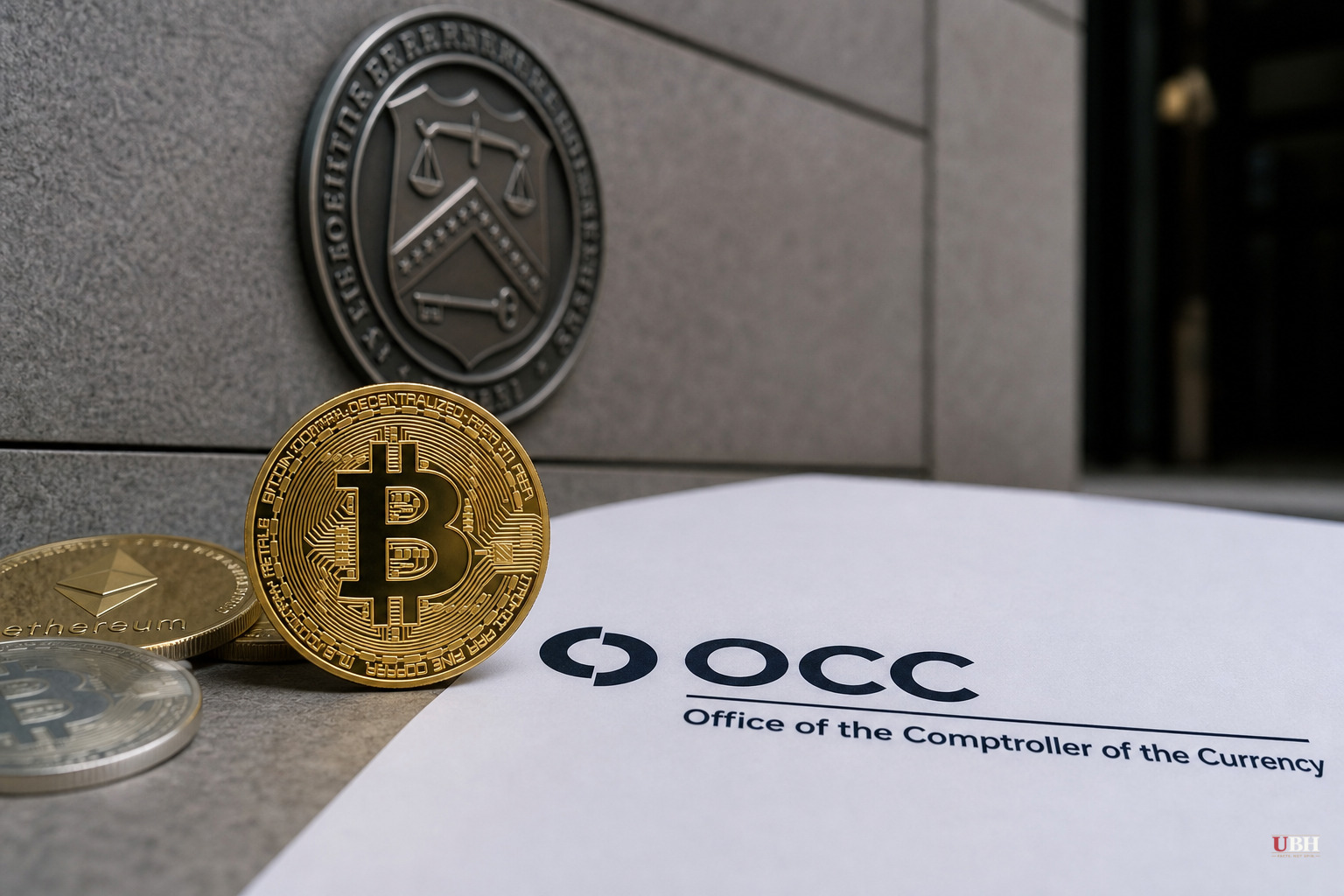
National banks in America can now buy and sell crypto for customers without asking permission first.
The Office of the Comptroller of the Currency issued Interpretive Letter 1184 on May 7, 2025, according to Crypto Briefing, formally letting national banks and federal savings associations execute digital asset transactions at customer direction. Banks can outsource the actual custody and execution to third parties, as long as they maintain proper risk management. No token list. No case-by-case sign-off. Just safety-and-soundness standards, same as any other banking activity.
This represents a real reversal. Back in 2020, the OCC's Interpretive Letter 1170 let banks custody crypto but required a "non-objection" process, essentially a regulatory hall pass before touching digital assets. The OCC killed that requirement on March 7, 2025, through Interpretive Letter 1179. Weeks later, in April 2025, the Federal Reserve and FDIC both withdrew from joint 2023 statements that had discouraged banks from crypto activity, according to Crypto Briefing's review of the timeline.
JPMorgan's about-face
Jamie Dimon called Bitcoin a fraud. He compared it to tulip mania. He reportedly told employees trading it would get them fired. That was the public Dimon, going back to at least 2017, according to crypto.news.
The private JPMorgan built the infrastructure anyway. In March 2026, JPMorgan opened a program through its Kinexys platform (formerly Onyx) letting institutional clients pledge Bitcoin and Ethereum as collateral for dollar loans, crypto.news reported. The pledged coins stay in cold storage at third-party custodians like Fidelity Digital Assets and Coinbase Custody. The dollars unlocked are real credit, treated the same as a loan backed by Treasuries or blue-chip stocks.
Eric Trump made the obvious point at Consensus Miami 2026: JPMorgan went from "crapping all over bitcoin" to backing loans with it in about 18 months, per crypto.news. When the biggest bank in the country accepts crypto as collateral, every competitor has to answer for why they haven't.
Trump's own crypto venture gets a bank charter
World Liberty Financial, the crypto venture Donald Trump co-founded, received conditional approval from the OCC for a national trust bank charter, American Banker reported. The approval lets World Liberty build a trust bank to issue its USD1 stablecoin, which has surpassed $4 billion in circulation according to a company statement.
The review took 221 days, nearly double the 120-day target Comptroller Jonathan Gould had publicly set for charter applications, American Banker noted. Klaros Group co-founder Michele Alt told the outlet the approval will draw scrutiny given the OCC recently denied charter applications from Wise and Bunq, and observers will compare capitalization, management and regulatory history across all three.
The charter doesn't let World Liberty Trust take deposits or handle its own WLF tokens. It's narrower: custody and conversion services for USD1 and institutional clients, taking over duties currently handled by BitGo Bank and Trust. The board includes Zach Witkoff as chairman, alongside Robert Witkoff, Scott Alper, Jeffrey Weiner and Erin Baskett. Zach and Robert Witkoff are sons of Steve Witkoff, Trump's presidential envoy. This represents a direct financial connection between a sitting president's family business and a federal bank charter his own regulators approved. It deserves scrutiny regardless of party.
The pipeline is wide open
The OCC told Bitcoin Magazine it received 40 de novo bank charter applications in the past 18 months, up from an average of fewer than four per year between 2011 and 2014. Erebor Bank, backed by Palmer Luckey, Joe Lonsdale and Peter Thiel's Founders Fund, became the first full-service national bank to open in five years. Ripple, Circle, Crypto.com and Paxos have all received conditional approval. Coinbase's application remains under review.
Not everyone's cheering. The Independent Community Bankers of America urged the OCC in December to reject Coinbase's application, arguing the exchange has "demonstrably flawed risk and control functions," per Bitcoin Magazine. The American Bankers Association asked the OCC in February to slow down its review of crypto charter applications entirely. That's the traditional banking lobby trying to protect its turf. Incumbents object to new competition dressed up as prudential concern all the time. Whether the ABA's worry is genuine safety-and-soundness concern or protectionism is a judgment call the sources don't settle either way.
Congress catches up
Senate Majority Leader John Thune moved the CLARITY Act toward a floor vote on Aug. 8, setting up consideration when the Senate returns from August recess, according to the Epoch Times. The bill would split crypto oversight between the SEC and CFTC, create a new "Regulation Crypto" exemption from SEC registration, and require public disclosures for certain digital asset offerings.
Sen. Cynthia Lummis backs it, telling the Epoch Times "the coming weeks are likely the last real chance we will have for years to get this right." Sen. Elizabeth Warren opposes it, arguing Congress should focus on capping credit card interest rates and stopping overdraft fees instead of what she called a "pro-industry crypto bill" that risks consumers and national security. President Trump has pushed the Senate to pass it, framing it partly as a competitive response to China.
A regulatory framework built with heavy input from the industry it regulates can end up protecting incumbents rather than consumers. That concern is not disproven by anything in these sources. It's also not proven. The CLARITY Act hasn't passed the Senate yet, and whether its disclosure and anti-manipulation provisions actually bite once crypto firms are inside the regulatory tent is a question nobody can answer until it's law and enforced.
Separately, lenders now face a hard deadline of their own. New York's version of the 2022 UCC amendments took effect June 3, 2026, and lenders relying on old filing-based perfection for crypto collateral have until June 3, 2027, to re-perfect their security interests through "control," according to Crowell & Moring. Miss that window, and a lender's claim on pledged Bitcoin could lose priority to someone else's.
Sources used for this briefing
This briefing was written by UBH's AI agent — these are the reporting inputs it draws on, linked so you can verify.


