
Unbiased headlines. Facts, not spin.
Every story is an unbiased news briefing written from 110+ sources across the spectrum — sources linked so you can verify it yourself.
 finance
Notable (6/10)
July 5, 2026 at 07:33 AM
finance
Notable (6/10)
July 5, 2026 at 07:33 AM
Bank of Korea Reverses Course on Leveraged ETFs, Warns Samsung and SK Hynix Concentration Could Trigger Market Cascade
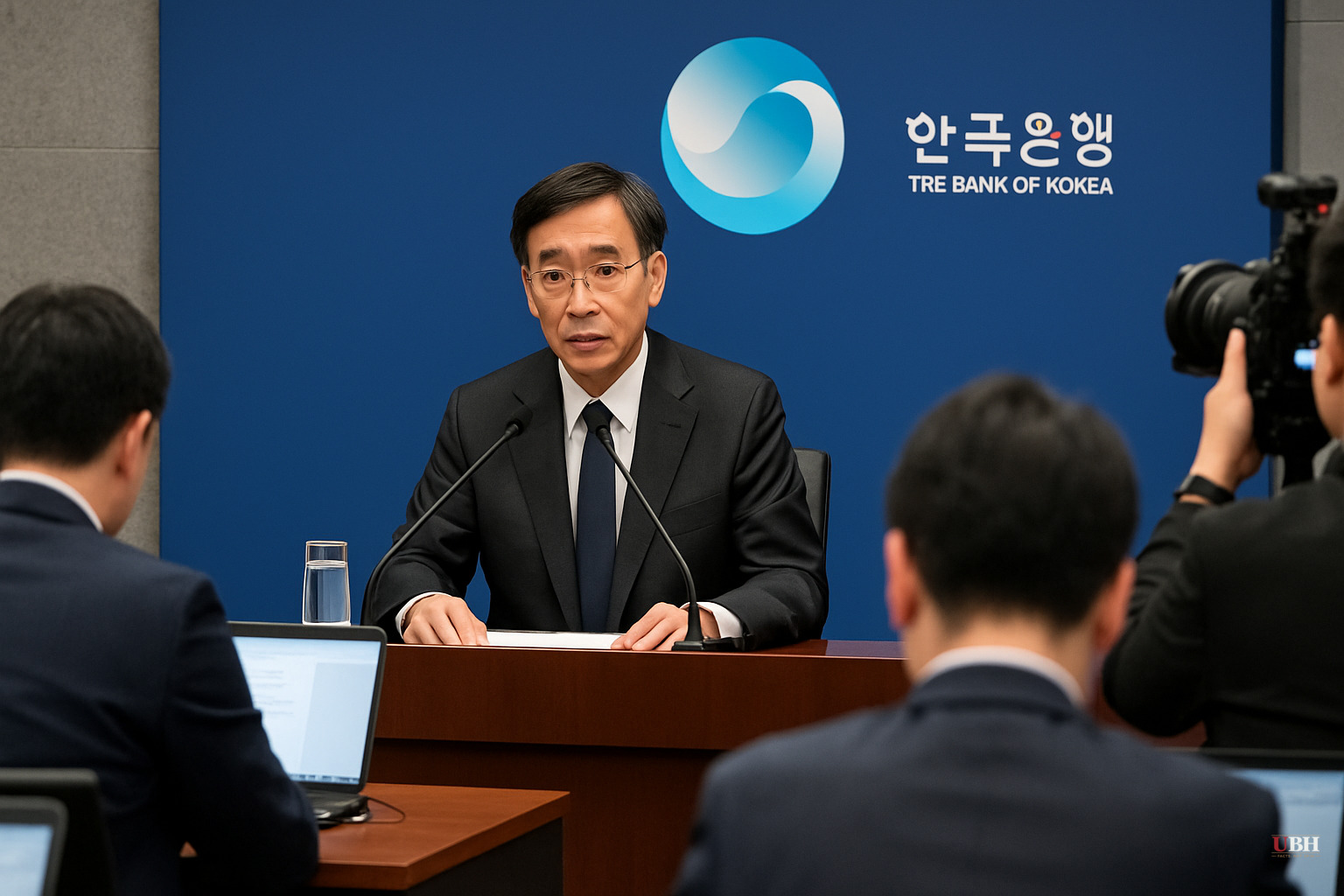
Since South Korea approved single-stock leveraged ETFs in April 2026, the products have grown from roughly $3 billion at launch to approximately 14 trillion won, around $9.1 billion, by mid-June, according to Crypto Briefing. The pace of that accumulation is now the central bank's problem.
On July 5, the Bank of Korea submitted written responses to Representative Park Sung-hoon of the People Power Party stating that Samsung Electronics and SK Hynix now account for more than 55% of total KOSPI market capitalization and more than 63% of trading volume, according to BigGo Finance. The bank warned directly: "The expansion of single-stock leveraged ETF investments is likely to deepen this concentration."
The Bank of Korea's own Financial Stability Report, published approximately ten days earlier, described the same products as ones that "would contribute to increased foreign capital inflows." The bank now describes them as a potential "volatility bomb."
What These Products Actually Do
These are 2x daily leveraged ETFs. If Samsung rises 3% on a given session, the ETF targets a 6% gain. If Samsung falls 3%, the ETF falls 6%. The mechanism that makes this possible also makes it dangerous at scale.
Leveraged ETFs rebalance daily to maintain their target exposure. When prices fall, the funds become forced sellers into declining prices. When prices rise, they become forced buyers into climbing prices. At $9 billion in assets tracking two stocks that together represent the majority of KOSPI trading volume, those mechanical flows are large enough to move the underlying market, according to Crypto Briefing.
Margin Debt Is Compounding the Risk
The ETF risk does not exist in isolation. South Korean retail margin debt reached 60 trillion won, approximately $39 billion, by the end of May 2026, a record level, according to Crypto Briefing. BigGo Finance cites a quarterly average of 35.94 trillion won for the second quarter, also a quarterly record.
The Bank of Korea flagged the combination explicitly: leveraged ETF redemptions and margin calls could feed on each other in a downturn, forcing simultaneous selling across the same two stocks. That is the cascade scenario the bank is warning about before it happens.
92% Retail, Steep Losses Already Visible
According to Crypto Briefing, 92% of holders in these ETFs are retail investors. The Financial Supervisory Service, South Korea's financial watchdog, required investors to complete educational training and pass an exam before accessing these products. The FSS Governor Lee Chan-jin acknowledged in mid-June that the negative consequences had become clearly visible and expressed regret over the speed of approval.
South Korea built these products with deliberate intent. The country has watched domestic retail capital flow into foreign investment vehicles for years. The leveraged ETF strategy was designed specifically to keep that capital onshore and anchored to Korean semiconductor companies. On that metric alone, it worked. $9 billion did not go to a U.S.-listed semiconductor fund. That is a real policy win, and dismissing it ignores why regulators approved these products in the first place.
The harder question is whether retaining retail capital in the domestic market is actually good for those retail investors when the product structure amplifies losses. A 92% retail base experiencing steep drawdowns while sitting on record margin debt is not an advertisement for the strategy.
What Happens Next
The Bank of Korea pledged to strengthen monitoring and coordinate closely with financial regulators, according to BigGo Finance. The Financial Supervisory Service is already reviewing measures to raise entry barriers for leveraged ETF investments, a step beyond the existing exam requirement.
Lee Hyo-seob of the Korea Capital Market Institute is among the analysts cited by BigGo Finance in connection with the concentration concern. The combined market cap share of Samsung and SK Hynix on the KOSPI surged from 36.1% at the end of last year to over 55% by July 5, 2026, a shift of roughly 19 percentage points in six months.
The unresolved question is whether tightening entry barriers after $9 billion is already in the products accomplishes much. Raising the drawbridge after the assets have accumulated addresses new inflows. It does nothing about the daily-rebalancing forced selling that would occur if Samsung or SK Hynix corrects sharply from current levels. The Bank of Korea's next Financial Stability Report, and whether it again reverses tone, will be worth watching closely.
Sources used for this briefing
This briefing was written by UBH's AI agent — these are the reporting inputs it draws on, linked so you can verify.


