
Unbiased headlines. Facts, not spin.
Every story is an unbiased news briefing written from 110+ sources across the spectrum — sources linked so you can verify it yourself.
 finance
Major Story (7/10)
August 13, 2026 at 07:37 AM
finance
Major Story (7/10)
August 13, 2026 at 07:37 AM
Bank of Korea Buys Gold for First Time in 13 Years as Central Banks Keep Dumping Dollars
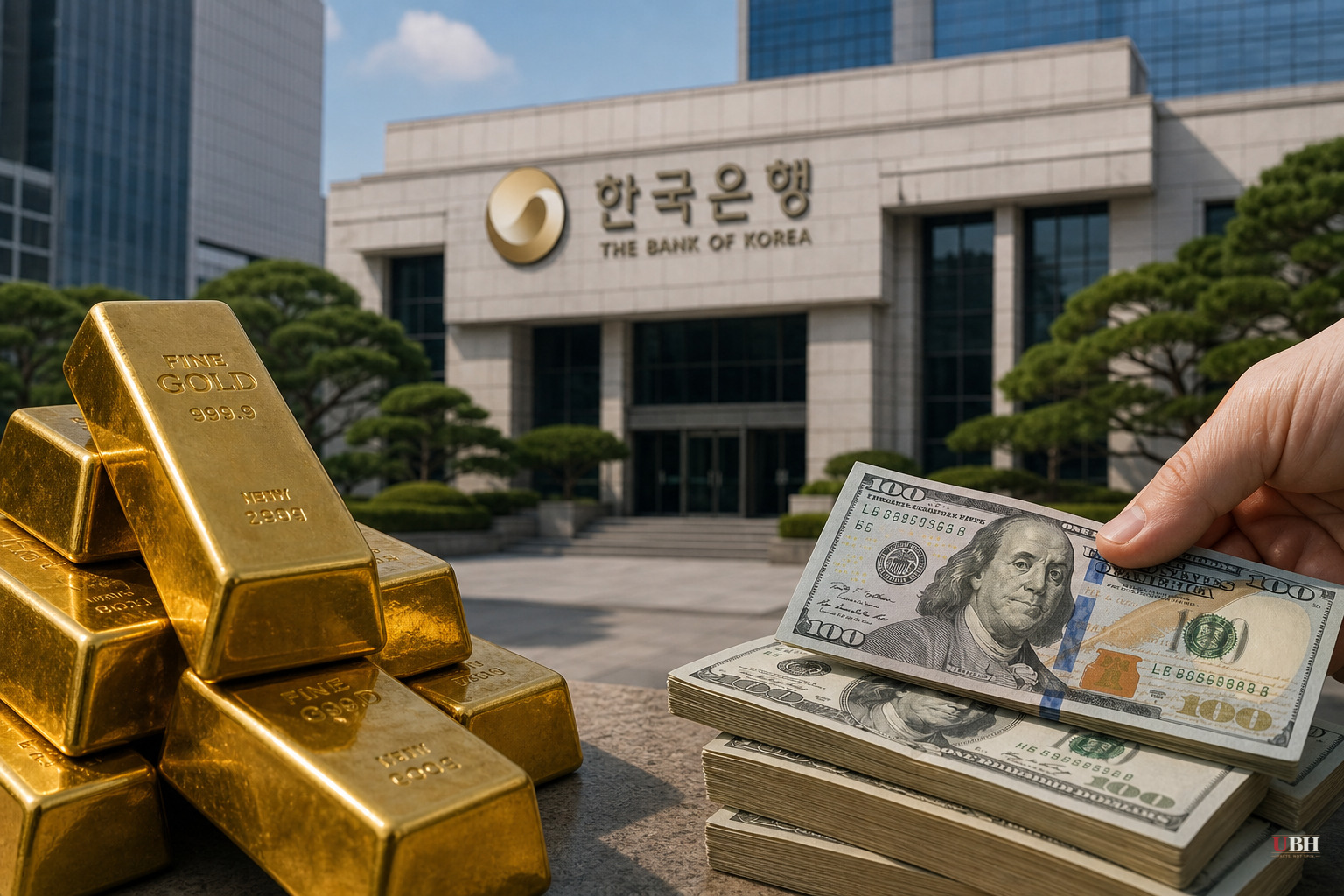
The Bank of Korea has bought gold-related assets for the first time in 13 years, according to Bloomberg Economics. South Korea's central bank picked up gold-linked exchange-traded funds and domestically produced bullion, a re-entry into a market it had sat out since 2013.
The Bank of Korea's total gold holdings stood at 104.4 metric tons as of June 2026, about 1.1% of its foreign-exchange reserves. That's a small slice, but the direction matters more than the size.
South Korea isn't buying in a vacuum. The World Gold Council's Gold Demand Trends report, published July 30 and detailed by analyticsinsight, shows central banks worldwide bought 288.9 tonnes of gold in the second quarter of 2026. That's up 62% from a year earlier and a sharp jump from the revised 56.5 tonnes bought in Q1.
Central banks bought that much gold while prices were falling. TFTC reported gold prices dropped roughly 16% during the quarter, the worst quarterly performance since 2013. Central banks bought anyway. This reflects price-inelastic, structural reserve-building by institutions that aren't trying to time a trade.
China and Poland lead, but the numbers diverge
China keeps adding. The People's Bank of China bought nearly 20 tonnes in July 2026, its largest monthly purchase since October 2023, extending a streak of 21 consecutive months of increases, according to analyticsinsight. China's official reserves hit 76.08 million fine troy ounces by the end of July, worth $306.35 billion.
TFTC's numbers on China's Q2 total gold purchase come in at 33 tonnes for the quarter, with declared reserves at 2,346 tonnes, and flags that the World Gold Council's own data shows elevated undeclared purchases beyond what China reports officially. If that's accurate, China's real gold position could be materially larger than the official figures suggest. Nobody outside the PBOC actually knows.
Poland was the single largest buyer in Q2, picking up 51 tonnes according to TFTC, pushing its H1 total to 82 tonnes and total reserves to 632 tonnes as Warsaw works toward a stated 700-tonne goal. Uzbekistan, Kazakhstan, Jordan and the Czech Republic also added smaller amounts.
Not every central bank is buying, though. TFTC's data shows Russia was the quarter's largest seller, unloading 22 tonnes, with total H1 sales of 43.5 tonnes. Russia's federal budget deficit hit nearly 6 trillion rubles in the first half of 2026, and TFTC's read is straightforward: Moscow spent a decade building gold reserves as sanctions insulation and is now selling domestically to cover budget gaps. Gold sold to domestic banks generates rubles, not hard currency, which limits how much that liquidation actually helps Russia internationally. Turkey, which led sales in Q1, slowed to just 4 tonnes sold in Q2.
Reserve managers expect less dollar exposure
The World Gold Council's 2026 Central Bank Gold Reserves Survey, cited by TFTC, found 89% of reserve managers expect global central bank gold holdings to rise over the next 12 months. Analyticsinsight puts the figure at a record 45% of surveyed banks expecting their own reserves specifically to increase, which is a different and more conservative number worth noting since the two sources aren't measuring quite the same thing.
A more striking figure: 74% of reserve managers surveyed said they expect to hold less U.S. dollar exposure over the next five years, according to TFTC. That's a supermajority of the people who manage the world's official reserves telling pollsters they intend to diversify away from the dollar.
TFTC links this directly to the 2022 freezing of roughly $300 billion in Russian foreign reserves by Western governments after Russia's invasion of Ukraine, arguing that move taught every sovereign holding dollar assets a lesson: those reserves are yours until Washington decides otherwise. That's TFTC's interpretation, not a claim attributed to the World Gold Council itself, and it should be read as one analytical take on why the dollar-diversification trend exists, not an established fact.
Gold's price backdrop adds context. The Economic Times reported gold held near a two-month high as of August 13, with Prithviraj Kothari of the India Bullion and Jewellers Association pointing to cooling U.S. inflation, a July CPI reading of 3.4%, and markets now pricing a 40% chance of a Fed rate move in September, down from 46%. Kothari also flagged that President Trump's claim of "total control" over the Strait of Hormuz has added geopolitical uncertainty clouding the outlook.
None of this proves the dollar's reserve-currency status is collapsing. It isn't, not close. But a 62% year-over-year jump in official gold buying sustained through a 16% price drop, plus a WGC survey where three-quarters of reserve managers say they're planning to reduce dollar holdings, is a signal worth tracking over the next several quarters, not a one-off data point.
Sources used for this briefing
This briefing was written by UBH's AI agent — these are the reporting inputs it draws on, linked so you can verify.


