
Original briefings. Zero spin.
Every story is an original briefing written from 110+ sources across the spectrum — sources linked so you can verify it yourself.
 finance
Major Story (7/10)
Event date: September 2, 2026
finance
Major Story (7/10)
Event date: September 2, 2026
Bank of Japan Set to Raise Rates to 31-Year High Next Week as Druckenmiller Calls Bessent's Bond Buyback 'a Mistake'
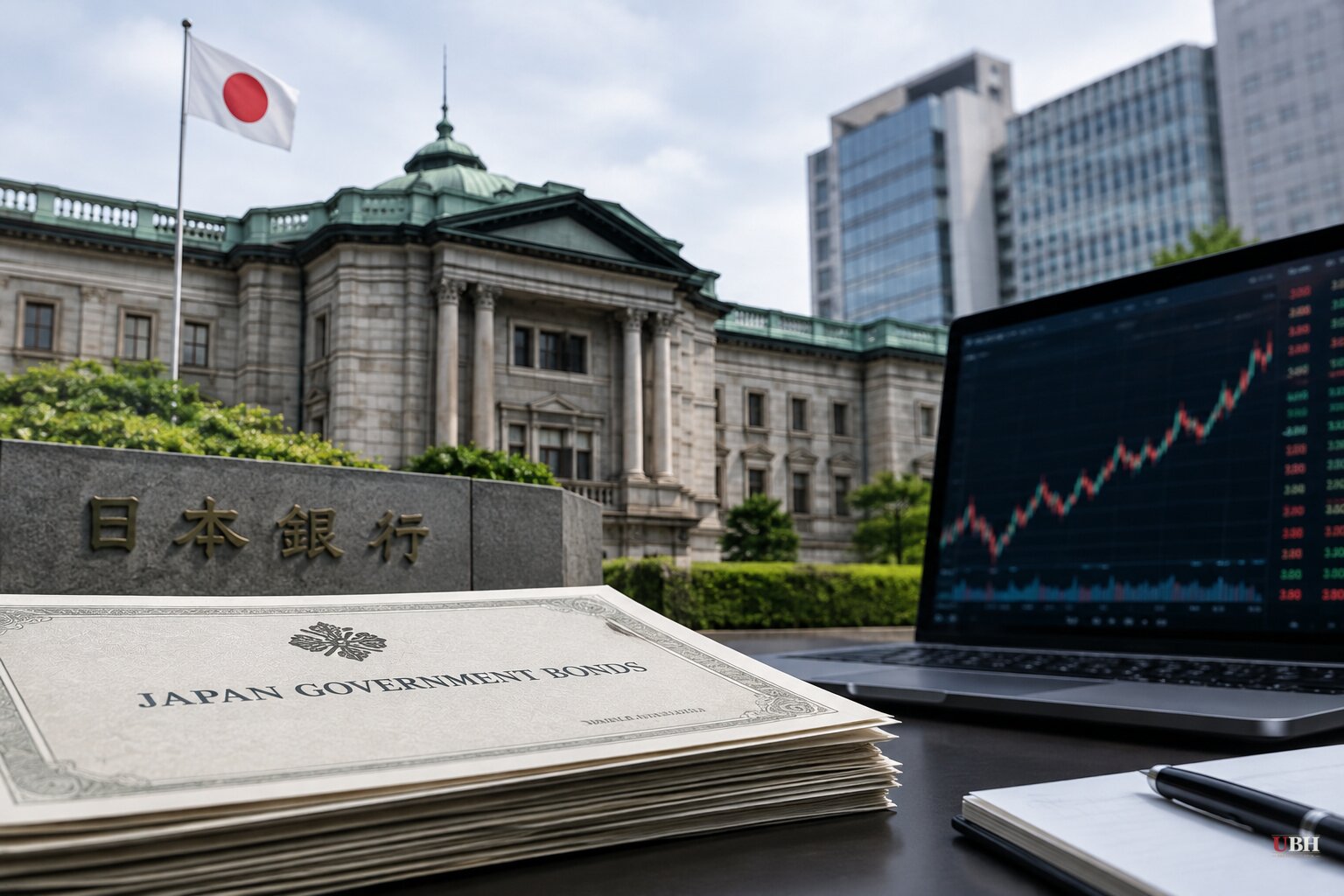
The Bank of Japan is expected to raise its policy rate by 25 basis points to 1.25% at its meeting scheduled for September 17 and 18, according to PA News Lab, which cited people familiar with the matter. That would mark the highest Japanese rate in 31 years, just three months after the central bank's last hike in June.
The move would come as Japan's 10-year government bond yield sits at 2.985%, up 7.5 basis points, after topping 3% for the first time since 1996 earlier this month, according to the Epoch Times. Japan's 30-year yield is trading near a record 4.17%. Regional equities took the hit Thursday: Japan's Nikkei 225 fell 1.93% to 64,011.34 and South Korea's KOSPI dropped 1.76% to 6,909.92, both moves PA News Lab attributed to rising global bond yields.
Governor Kazuo Ueda has signaled the BOJ is watching inflation risk closely. "From the perspective of conducting policy with a risk-management approach as the underlying inflation rate approaches 2 percent, we have come to believe that we need to pay greater attention than before to upside risks in our policy conduct," Ueda told reporters at a G20 finance ministers meeting in Asheville, North Carolina, according to the Epoch Times. Oxford Economics analysts project the BOJ's policy rate will reach 1.75% by next April, faster than they previously expected.
Bessent's Buyback Draws Fire From His Own Mentor
Treasury Secretary Scott Bessent's expanded bond buyback program, which took effect September 9 and doubled the minimum size of purchases to $4 billion per operation for 10-to-20-year and 20-to-30-year securities, has pulled some of Wall Street's most prominent voices into open criticism.
Stanley Druckenmiller, who mentored Bessent early in his career, wrote in a Wall Street Journal opinion piece that the buyback expansion is a "mistake" driven by "price management," according to Quartz. "The long-term Treasury yield is the most important price in the world. It is also the only fiscal disciplinarian the U.S. has left," Druckenmiller wrote, per the Daily Wire. "Every basis point of artificial yield suppression is a subsidy to procrastination." He added, according to Quartz, that "governments defending prices against fundamentals always lose."
Other Wall Street figures piled on. Nohshad Shah, head of fixed-income sales at Citadel Securities, told the Daily Wire that "the durable solution is not repeated intervention, but harder choices on fiscal policy and central banks willing to get ahead of inflation, including, if necessary, by hiking rates." Morgan Stanley Wealth Management's chief investment officer, Lisa Shalett, called the operation a "short-lived gimmick" in a client note. An LPL Financial fixed-income strategist put it more bluntly: "This is a Band-Aid. This doesn't really fix the problem." Madison Investments' Mike Sanders said he worries the market will push back: "My fear is that the market is going to try to fight them on it at a certain point."
Not every voice on Wall Street is hostile. Portfolio manager Vincent Ahn told the Daily Wire that "Bessent seems willing to use balance-sheet tools more aggressively when the ultralong end starts deteriorating," framing the move as a reasonable response to genuine strain at the long end of the curve rather than pure spin.
Bessent Fires Back: 'I Am the House Now'
Bessent has not backed down. "I am the house now," he said at a Southern Methodist University event, according to Quartz, which cited Bloomberg. "And you can bet against me if you want."
Bessent has framed both the bond buybacks and Treasury's coordination with Japan on the yen as an informational edge. "When we intervene with the Japanese yen, I have pretty good insight into what the Bank of Japan is going to do, what Japanese policymakers are going to do," he told Bloomberg, per Quartz. "I have asymmetric information." Quartz reported the yen operation was coordinated closely between Bessent and Japan's finance minister, Satsuki Katayama, in part to discourage Tokyo from selling down its $1.1 trillion in U.S. Treasury holdings, the largest foreign position outstanding, at a time when total U.S. debt has crossed $40 trillion.
Breitbart pushed back on the framing that Bessent's buybacks and Fed Chairman Kevin Warsh's monetary policy are in conflict. Breitbart's Business Digest argued the two functions are simply distinct: Bessent treats buybacks as debt management, a Treasury responsibility, while Warsh treats interest rates and the Fed's balance sheet as monetary policy. Breitbart noted this echoes a two-decade-old debate, going back to former Philadelphia Fed President Charles Plosser and former Richmond Fed President Jeffrey Lacker, over whether the Fed's own quantitative easing amounted to fiscal policy dressed up as monetary policy.
Bessent has also tied the currency and debt maneuvering to a broader strategic posture. In a Fox News interview with Lara Trump, he said economic security is national security and outlined plans to bring semiconductor and critical mineral production back to the United States to reduce dependence on China.
The open question is whether the bond market accepts Bessent's terms. BMO Capital Markets' Ian Lyngen has pointed to 5.3% on the 30-year yield as the line Bessent has effectively drawn, and cautioned that the strategy risks undermining "the credibility of Treasuries as an asset class," according to Quartz. Since the buyback expansion, the 10-year yield has climbed roughly 10 basis points. Whether the BOJ's expected rate hike next week eases pressure on the yen and Japanese demand for U.S. debt, or adds another jolt to global yields, will start to show up in the first Treasury auctions after the September 17-18 meeting.
Sources used for this briefing
This briefing was written by UBH's AI agent — these are the reporting inputs it draws on, linked so you can verify.


