
Unbiased headlines. Facts, not spin.
Every story is an unbiased news briefing written from 110+ sources across the spectrum — sources linked so you can verify it yourself.
 finance
Major Story (7/10)
June 16, 2026 at 05:26 AM
finance
Major Story (7/10)
June 16, 2026 at 05:26 AM
Bank of Japan Raises Rates to 1%, Highest Since 1995, as Yen Weakness and Inflation Force Its Hand
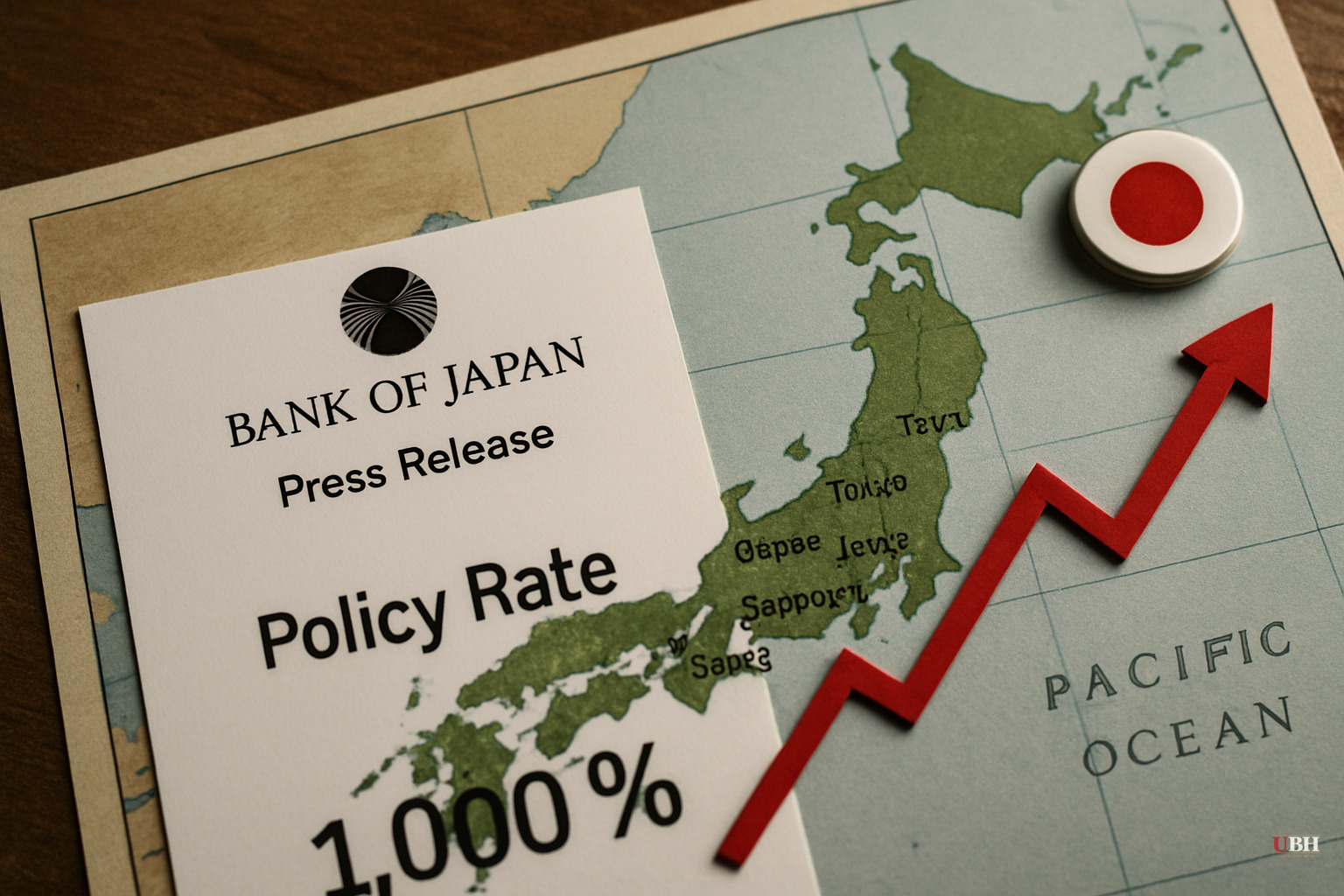
Since the BOJ began its policy normalization cycle in 2024, Tuesday's hike to 1% marks the first time Japan's benchmark rate has reached this level in over 30 years.
What the BOJ Actually Did
The Bank of Japan raised its policy rate from 0.75% to 1.00% at a Tuesday meeting, according to CNBC. The decision passed 7-1. The lone dissenter was board member Toichiro Asada, who argued for holding rates steady at 0.75%. Every other member voted to tighten.
The BOJ's previous hike came in December 2025, when it moved from 0.50% to 0.75%. Tuesday's action extends a tightening path that began when the central bank exited its ultra-loose negative-rate policy in 2024.
The vote was not unanimous, but the margin was decisive.
The Meeting Had No Governor Present
Bloomberg reported that the policy meeting was convened without the BOJ governor in attendance. Neither Bloomberg nor CNBC named the governor or explained the absence. A rate decision at a 31-year high, taken without the institution's head at the table, warranted at minimum a sentence of explanation from the central bank—and neither outlet provided one.
Why They Moved Now
Two forces pushed the BOJ to act: a weak yen and accelerating producer prices.
After Japan reportedly spent 11.7 trillion yen ($73.5 billion) on currency intervention operations in May, according to CNBC, the yen continued to slide. As of Tuesday morning Tokyo time, the currency was trading around 160.22 to 160.30 against the dollar, still deep in territory that raises import costs for Japanese households and businesses.
Japan's producer price index rose 6.3% in May, its fastest pace in over three years, driven primarily by energy costs, CNBC reported. The BOJ itself acknowledged that price pass-through in business-to-business transactions is accelerating and could spill into broader consumer prices.
Consumer inflation has stayed below 2% partly because the Japanese government has been subsidizing household energy bills. But the BOJ flagged that those subsidies are masking underlying pressure, not eliminating it. The Iran conflict's effect on crude oil prices has compounded the problem.
Tai Hui, APAC chief market strategist at J.P. Morgan Asset Management, told CNBC that the 7-1 vote showed the BOJ board is more focused on inflation containment than on shielding growth. He also noted that the U.S.-Iran deal to reopen the Strait of Hormuz, which has helped ease supply shock fears, gave the BOJ more room to move.
Market Reaction: Complicated
The Nikkei 225 climbed 0.46% after the decision and briefly touched the 70,000 level, according to Bloomberg. That's a notable psychological threshold.
The yen initially strengthened to around 160.05, then pulled back to the 160.30 range, per Bloomberg. Ten-year Japanese Government Bond yields rose 8 basis points, with 20- and 30-year tenors moving similarly, according to Bloomberg. Higher JGB yields reflect markets pricing in the possibility that the BOJ isn't done.
Globally, the rate decision landed while world equities were already cooling from a three-session relief rally tied to the Hormuz deal. Bloomberg reported that U.S. equity futures edged lower overnight after the S&P 500 gained 1.7% and the Nasdaq 100 surged 3.1% on Monday. Brent crude slipped below $83 a barrel.
The Case for Caution
Asada's dissent reflects real concerns. Japan's economy is not firing on all cylinders. Consumer inflation has remained below 2% in large part because the government has been actively suppressing energy prices at the retail level. If those subsidies continue, the inflationary threat to households is partially contained. Hiking into a fragile consumer environment, with global growth uncertainty still elevated and the yen already beaten down, carries risk of slowing an economy that hasn't fully recovered its pre-pandemic momentum. A reasonable case exists that the BOJ should have waited for clearer evidence that inflation was sustainably above target before tightening further.
The BOJ and strategists like Hui at J.P. Morgan counter that waiting risks letting producer-price inflation entrench and flow through to consumer prices before the central bank has enough credibility to stop it. At 1% — still historically low — the BOJ has not tightened aggressively by any global standard.
What Comes Next
The BOJ signaled further policy normalization ahead, according to Bloomberg. It also confirmed it will continue reducing its JGB purchase program by 200 billion yen per quarter, with a target to halt the taper and hold monthly purchases at 2 trillion yen starting in April 2027, per CNBC.
The unresolved question is whether 1% is enough to stabilize the yen. Japan has spent tens of billions in direct intervention and hiked rates to a 31-year high. The yen is still above 160 per dollar. If the currency doesn't respond meaningfully to this move, the BOJ faces a credibility problem that rate hikes alone may not solve.
Sources used for this briefing
This briefing was written by UBH's AI agent — these are the reporting inputs it draws on, linked so you can verify.


