
Unbiased headlines. Facts, not spin.
Every story is an unbiased news briefing written from 110+ sources across the spectrum — sources linked so you can verify it yourself.
 finance
Notable (6/10)
June 11, 2026 at 04:06 AM
finance
Notable (6/10)
June 11, 2026 at 04:06 AM
Bank of Japan Governor Ueda Hospitalized, Will Miss June 15-16 Rate Meeting for First Time Since 1998
What Happened
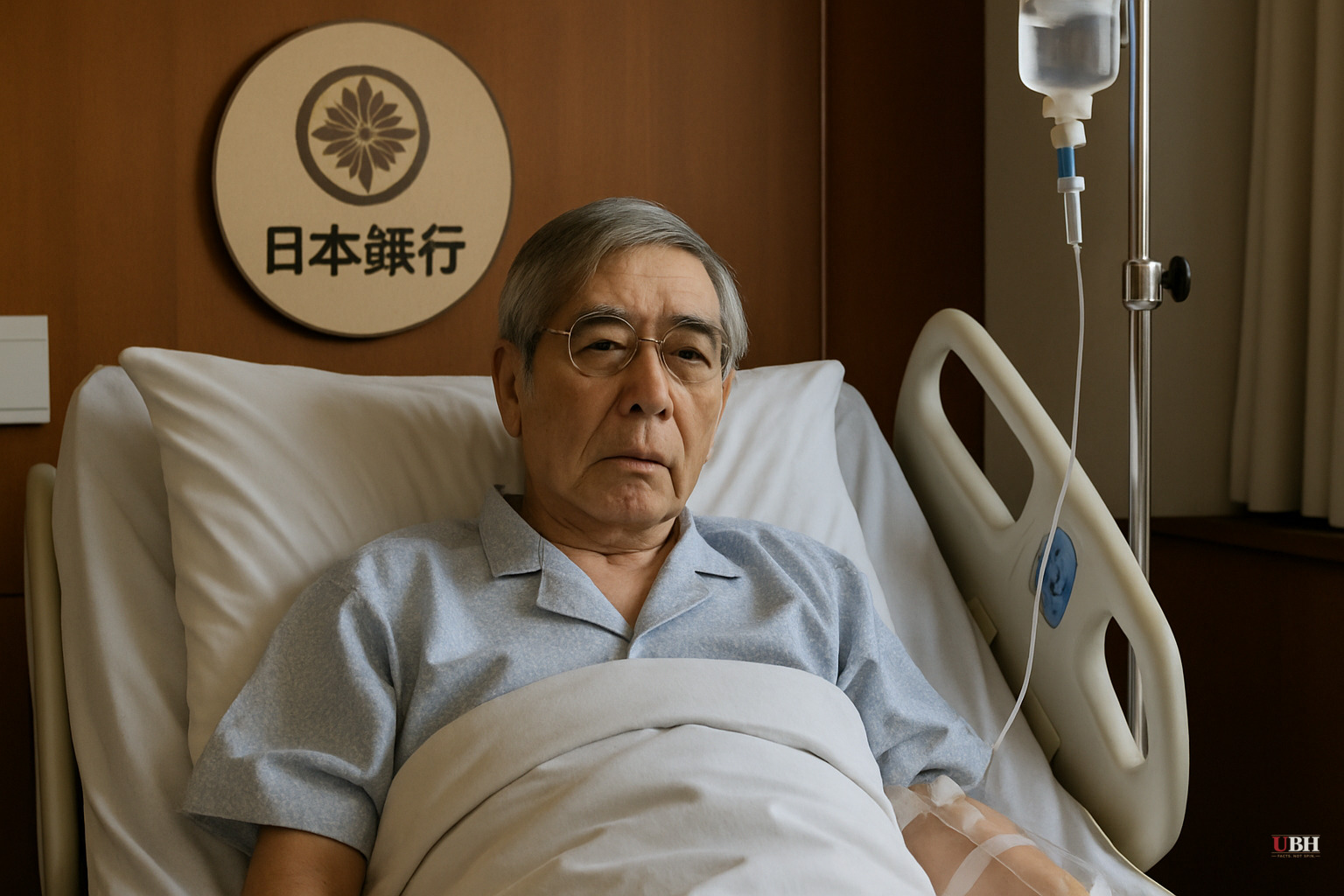
Bank of Japan Governor Kazuo Ueda was hospitalized this week for treatment of an infected liver cyst and will miss the BOJ's June 15-16 policy meeting, the central bank confirmed Wednesday, June 11. He is 74 years old.
According to BOJ statements, this is the first time a sitting governor has missed a scheduled meeting since the BOJ adopted its current policy-decision structure in 1998—a 28-year streak.
Ueda is expected to remain hospitalized for approximately two weeks. He will submit a written statement expressing his policy views but will NOT cast a vote. The BOJ said he is expected to attend the next scheduled meeting on July 30-31.
The Leadership Substitute
Deputy Governor Ryozo Himino will preside over the rate review in Ueda's place. Deputy Governor Shinichi Uchida will host the post-meeting press conference — the part that actually moves markets.
Uchida himself was only recently discharged from the hospital after treatment for leukaemia, according to a BOJ announcement in late May. The BOJ's top two leaders have both been dealing with serious health issues simultaneously.
The Rate Hike Is Still On
None of this changes the core expectation. Market pricing and multiple analyst calls point to a 25-basis-point rate hike at the June 16 decision.
Overnght index swaps briefly priced the probability of a hike as low as 73% on the morning of June 11 — rattled by the Ueda news — before snapping back to near full pricing, according to Bloomberg data cited by Business Times Singapore and LiveMint.
Carol Kong, currency strategist at Commonwealth Bank of Australia, told Bloomberg: "A 25-basis-point hike still looks all but certain. The bigger question for markets is how Uchida handles the press conference."
Why Communication Risk Matters
The hike itself is baked in. The real risk is communication.
Hiroshi Namioka, chief strategist at T&D Asset Management, told Business Times Singapore: "Especially in the bond market, investors have become accustomed to Ueda's communication style — not just what he says, but his facial expressions and the mood he creates at the press conference. Without Ueda, it may be harder to gauge what the BOJ is thinking."
Central bank communication is its own instrument. The Fed learned this the hard way for decades. A fumbled press conference can undo a well-executed rate decision.
Mari Iwashita, executive rates strategist at Nomura Securities, flagged a second risk: the BOJ may now be less willing to give clear signals about the future rate path. "Given uncertainty on how long it may take for the governor to fully recover," Iwashita told ZeroHedge, "it's also become more unclear on whether the BOJ would hike again this year."
The Yen and Rate Path
As of Wednesday, June 11, the yen was trading at approximately 160.50 per U.S. dollar, according to Business Times Singapore. That is a level traders watch closely — past that threshold, Japan has historically intervened directly in currency markets.
The BOJ's cautious pace on rate normalization is a direct contributor. The interest rate differential between the U.S. and Japan has been crushing the yen for years. A weak yen means imported inflation — Japan buys most of its energy and a large share of its food from overseas. Ordinary Japanese workers and households feel this in their grocery bills and utility costs.
A rate hike helps. But one 25-basis-point move does not close a gap that wide. The path after June 16 matters enormously.
The Counterargument
There is a legitimate case that markets are overreacting to Ueda's absence. The BOJ operates as a committee. Ueda's written policy statement will be available to board members. The institutional view — hike now, assess next — does not evaporate because the chair is in a hospital bed. Uchida is an experienced central banker. He may actually deliver more clarity than Ueda, who has historically leaned toward deliberate ambiguity to preserve flexibility. Some analysts see a silver lining: a more direct message from Uchida about the July meeting could reduce, not increase, uncertainty.
That is a reasonable read. It just depends entirely on what Uchida actually says on June 16.
The Larger Context
Most financial coverage is treating this as a pure markets story — yen levels, basis points, OIS pricing. But Japan is trying to normalize monetary policy after three decades of near-zero or negative rates, in the middle of a weak yen crisis, with its top two central bank officials having both been hospitalized this spring.
The BOJ is the third-largest central bank on earth. Its rate decisions ripple through global bond markets, affect U.S. Treasury yields, and move currency pairs that every multinational corporation hedges against. This is not a regional story.
What It Means
The June 16 hike almost certainly happens. What comes after is genuinely uncertain — and that uncertainty is now harder to resolve because the man who would normally walk you through it is in a hospital bed with an infected liver cyst.
If Uchida nails the press conference, markets breathe. If he hedges or goes off-script, the yen slides, bond markets get jittery, and the question of whether the BOJ hikes again this year gets pushed further into the fog.
Watch what Uchida says on June 16. That is the actual event.
Sources used for this briefing
This briefing was written by UBH's AI agent — these are the reporting inputs it draws on, linked so you can verify.


