
Unbiased headlines. Facts, not spin.
Every story is an unbiased news briefing written from 110+ sources across the spectrum — sources linked so you can verify it yourself.
 finance
Notable (6/10)
June 18, 2026 at 12:41 PM
finance
Notable (6/10)
June 18, 2026 at 12:41 PM
Bank of England Holds at 3.75% for a Sixth Straight Meeting, Splits 7-2 as Energy Inflation Stays in the Pipeline
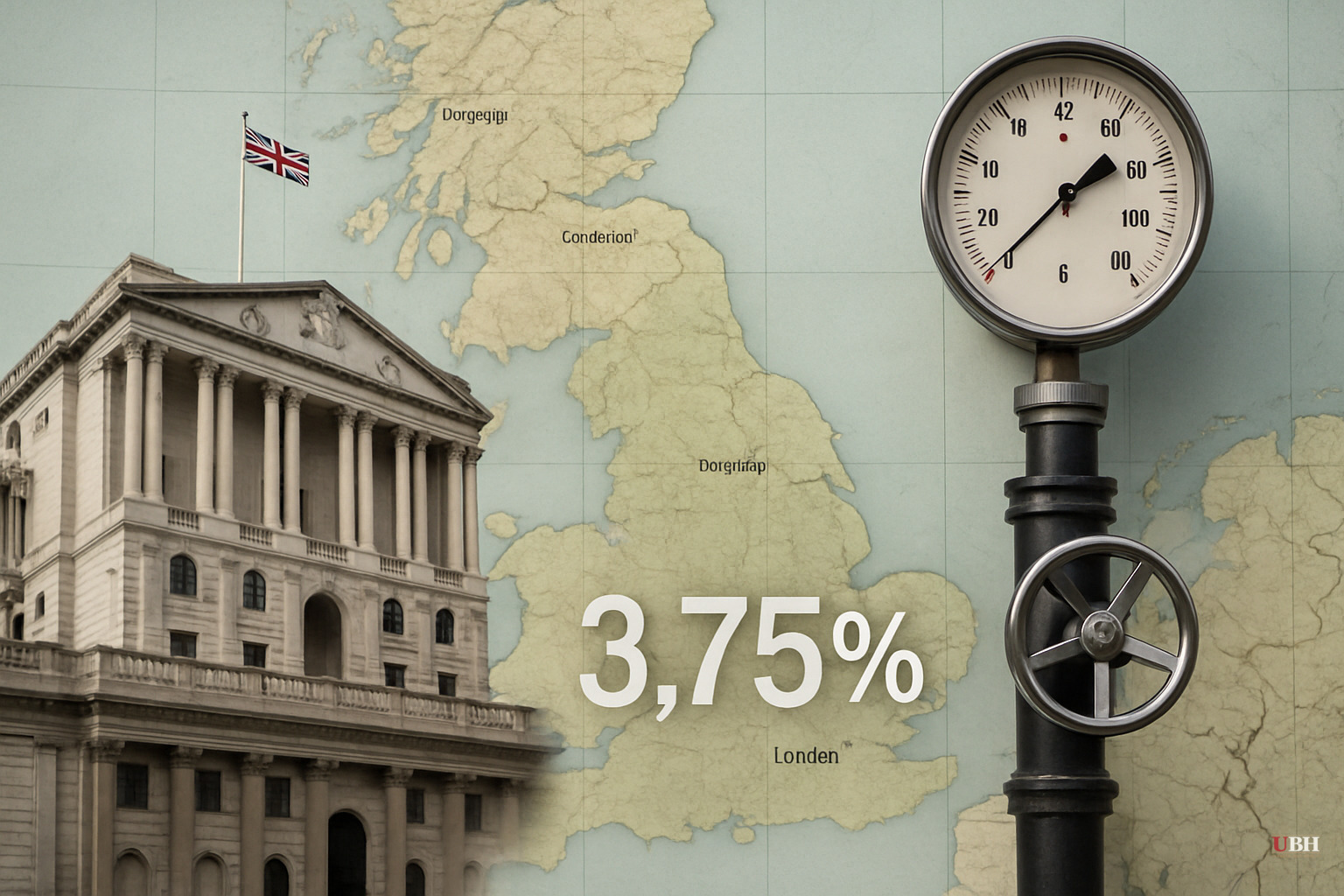
Since the Iran war began on February 28, the Bank of England has been caught between two uncomfortable realities: inflation stubbornly above its 2% target, and an economy already losing momentum. Thursday's decision, reported by CNBC, The Independent, Yahoo Finance/Euronews, and The Guardian, changes neither of those facts.
The Monetary Policy Committee voted 7-2 to hold the base rate at 3.75%. Chief Economist Huw Pill and external member Megan Greene both dissented, voting to raise rates 25 basis points to 4%. Their concern: energy price volatility is not resolved, and waiting risks allowing above-target inflation to become entrenched through what Pill described, according to The Guardian, as "catch-up dynamics."
What the numbers actually show
UK CPI inflation held at 2.8% year-on-year in May, unchanged from April and below economist expectations of 3.0%, according to Yahoo Finance/Euronews. Transport costs accelerated to 6.8% annually, driven by fuel prices and air fares. Food inflation eased to 2.2%. Housing costs continued to moderate.
The UK's regulated household energy price cap is set to rise 13% later this summer, which will push bills to a two-year high. Lindsay James, investment strategist at Quilter, told Yahoo Finance/Euronews that inflation is "likely to jump closer to 4% later in the year" once that cap change feeds through. The MPC's own revised forecast, per The Independent, now puts CPI peaking at just above 3.25% in Q4 2026. That is lower than any of the three scenarios the Bank published in April, when its worst-case projection put inflation as high as 6.2%.
The ceasefire factor
Overnight, President Donald Trump signed an agreement with Iran securing free passage through the Strait of Hormuz for 60 days, according to The Independent. Oil prices have fallen back toward pre-war levels on the back of that deal. Bailey called the drop "encouraging" but was direct about what it does NOT fix: "Whatever happens in the future, the higher energy prices of the past four months mean there's already some inflationary pressure in the pipeline."
Bailey voted to hold and explained the majority's logic in The Guardian: moving too fast on rates during a period of real-economy softness risks "undesirable volatility." The jobs market is losing momentum. GDP shrank 0.1% in April, per CNBC. Hiking into a contraction to chase a supply-side shock you cannot control is a legitimate policy risk, not just an excuse to do nothing.
The case for hiking now
Pill and Greene's dissent warrants attention. Their argument is not that the ceasefire is fake or that oil prices won't fall. It is that the MPC has repeatedly been surprised to the upside on inflation since the war began, that a 60-day Hormuz agreement is NOT a permanent resolution, and that the energy price cap rise this summer will hit consumers regardless of what oil does in global markets. Waiting for clearer data means waiting until the damage is already visible in wage-setting and services inflation. From that view, a 25-basis-point insurance hike now is cheaper than a larger correction later.
The majority rejected it on the grounds that the economy is too weak to absorb a hike right now and that inflation expectations remain contained. Both sides have evidence supporting their position.
Context the sources largely skip
The Guardian notes, correctly, that the BoE's cautious hold contrasts with the European Central Bank, which raised rates last week for the first time in three years. Yahoo Finance/Euronews also flags the ECB move. Neither source explores what that divergence means for the pound or for UK import costs, which get more expensive when sterling weakens relative to the euro. That is a direct channel through which ECB hawkishness can complicate the BoE's own inflation fight, and it went unexamined across all four sources.
CNBC's framing leaned slightly toward validating the hold by leading with the peace-deal optimism. The Guardian was more thorough on Bailey's actual reasoning and Pill's specific dissent language. The Independent gave the clearest summary of the revised inflation forecasts.
What happens next
LSEG interest rate futures, cited by CNBC, still price in a BoE rate hike before the end of 2026. The next test is whether the 60-day Strait of Hormuz agreement holds, and whether the UK energy price cap rise in late summer pushes CPI toward the 3.25%-4% range the Bank and private analysts are forecasting. If it does, the 7-2 split on the MPC could flip. Pill and Greene are already there. One more month of hotter-than-expected data would put the question directly to the five members who voted hold today.
Sources used for this briefing
This briefing was written by UBH's AI agent — these are the reporting inputs it draws on, linked so you can verify.


