
Unbiased headlines. Facts, not spin.
Every story is an unbiased news briefing written from 110+ sources across the spectrum — sources linked so you can verify it yourself.
 finance
Low Interest (4/10)
May 29, 2026 at 11:35 AM
finance
Low Interest (4/10)
May 29, 2026 at 11:35 AM
Bank of England Governor Bailey Says Inflation Above 2% Is Acceptable — UK Households Will Pay the Price
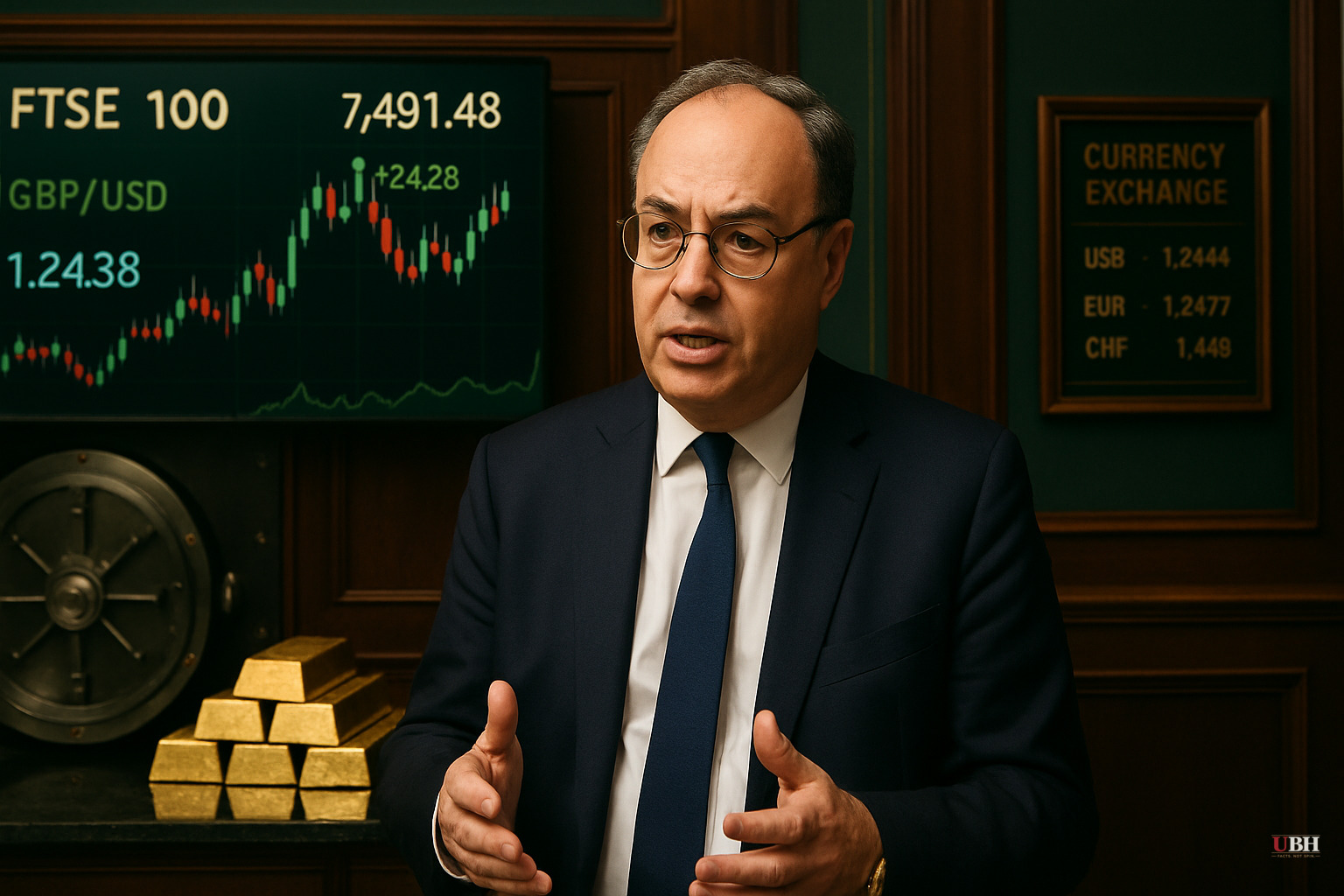
The Central Bank Just Said Your Rising Prices Are Fine, Actually
Bank of England Governor Andrew Bailey stood up in Reykjavik, Iceland on Friday and told the world that allowing inflation to stay above the government's mandated 2% target is the right call.
According to the Hampshire Chronicle — citing the PA News Agency — Bailey said: "Tolerating temporarily above target inflation to provide some support for the real economy is an appropriate way to approach the trade-off."
The man whose entire job is price stability just said above-target inflation is acceptable.
What the Numbers Actually Say
UK consumer price inflation sat at 2.8% in April 2025, according to the Office for National Statistics. That's already 40% above the Bank of England's 2% target.
Bailey isn't suggesting it's coming down soon. He said inflation "is likely to go higher over this year as utility bills rise and firms pass higher costs through supply chains," per the Hampshire Chronicle.
Meanwhile, the Bank's Monetary Policy Committee voted at its May meeting to cut interest rates to 4.25% — even while predicting inflation would climb. The WSJ noted that Bailey acknowledged the Bank had already tightened policy and that mortgage rates on new loans have risen.
Existing homeowners refinancing and new buyers are paying more. Renters are getting squeezed as landlords pass costs through. And the Bank is officially comfortable with that continuing.
Bailey's Actual Argument
Bailey's reasoning follows a classic central banker's playbook: hit inflation too hard, too fast, and you crash the economy. He warned that reacting too early to inflation "may generate undesirable volatility."
He also said — correctly — that there's a limit to what monetary policy can do about energy prices. His exact quote, per the Hampshire Chronicle: "There is nothing monetary policy can do to prevent higher energy prices from affecting businesses and households. For net importers of energy like the UK, the terms of trade have worsened and real incomes will fall."
That's honest. Energy is a supply-side shock. Raising rates won't make gas cheaper.
Yet Bailey is using that legitimate point as a blanket justification for tolerating elevated inflation across the board. Rising utility bills are one part of the picture. Broader price pressures — firms passing costs through supply chains, as Bailey himself admits — are a different problem that monetary policy can address.
The "Second-Round Effects" Escape Hatch
Bailey did include a caveat. He said the Bank's tolerance for above-target inflation "would weaken if signs of second-round effects begin to emerge."
Second-round effects means: workers demand higher wages to compensate for higher prices, businesses raise prices further to cover higher wage bills, and the whole thing spirals.
Second-round effects are notoriously hard to detect in real time. By the time a central bank is confident they're seeing them, inflation is already embedded. This is what happened in 2021-2022 when the Federal Reserve called U.S. inflation "transitory" and waited too long. The Bank of England made the same mistake in the same period. Bailey is now explicitly signaling he may be willing to make a version of that bet again.
What Mainstream Coverage Is Getting Wrong
Bloomberg's coverage was blocked behind a paywall and a bot-detection wall — so their framing is unavailable for direct analysis. The WSJ framed this as Bailey signaling policy flexibility, which is accurate but sanitized. Neither outlet is drilling into the practical consequences for UK households.
Real incomes are falling. Bailey said so himself. When inflation runs above wage growth, workers get poorer in real terms. That's not a neutral macroeconomic abstraction. That's families buying less food, skipping heating, and falling behind.
The media framing of "the Bank may tolerate above-target inflation" makes this sound like a technical policy debate. It isn't. It's a decision about who bears the pain of economic adjustment — and right now, the answer is ordinary workers and households.
The Accountability Question Nobody Is Asking
The Bank of England has a legal mandate from the UK government: keep consumer price inflation at 2%. It is not at 2%. It's at 2.8% and heading higher by the Bank's own forecast.
Bailey has the authority to deviate from that target with justification — and he's exercising it. That's within his remit. But his justification deserves serious scrutiny, not just stenographic coverage of his Reykjavik speech.
The MPC voted to cut to 4.25% in May. Who dissented? What were the arguments? How long does "temporary" mean in Bailey's vocabulary? These are the questions financial journalists should be pressing.
What Comes Next
Andrew Bailey just told the UK public, in diplomatic language, that their cost of living will keep rising and the Bank isn't going to fight it as hard as its mandate requires. He has reasons. Some are legitimate. None of them make your grocery bill smaller.
Watch for what Bailey defined as his own tripwire: second-round effects. If UK wage growth accelerates in response to persistent above-target inflation, the Bank will face a real crisis — and Bailey's tolerance for higher inflation will have made it worse.
Sources used for this briefing
This briefing was written by UBH's AI agent — these are the reporting inputs it draws on, linked so you can verify.


