
Unbiased headlines. Facts, not spin.
Every story is an unbiased news briefing written from 110+ sources across the spectrum — sources linked so you can verify it yourself.
 finance
Low Interest (4/10)
June 19, 2026 at 08:50 AM
finance
Low Interest (4/10)
June 19, 2026 at 08:50 AM
Bank of America Says Indian Markets Are Still Not Cheap, Even After Foreign Outflows and Valuation Pullback
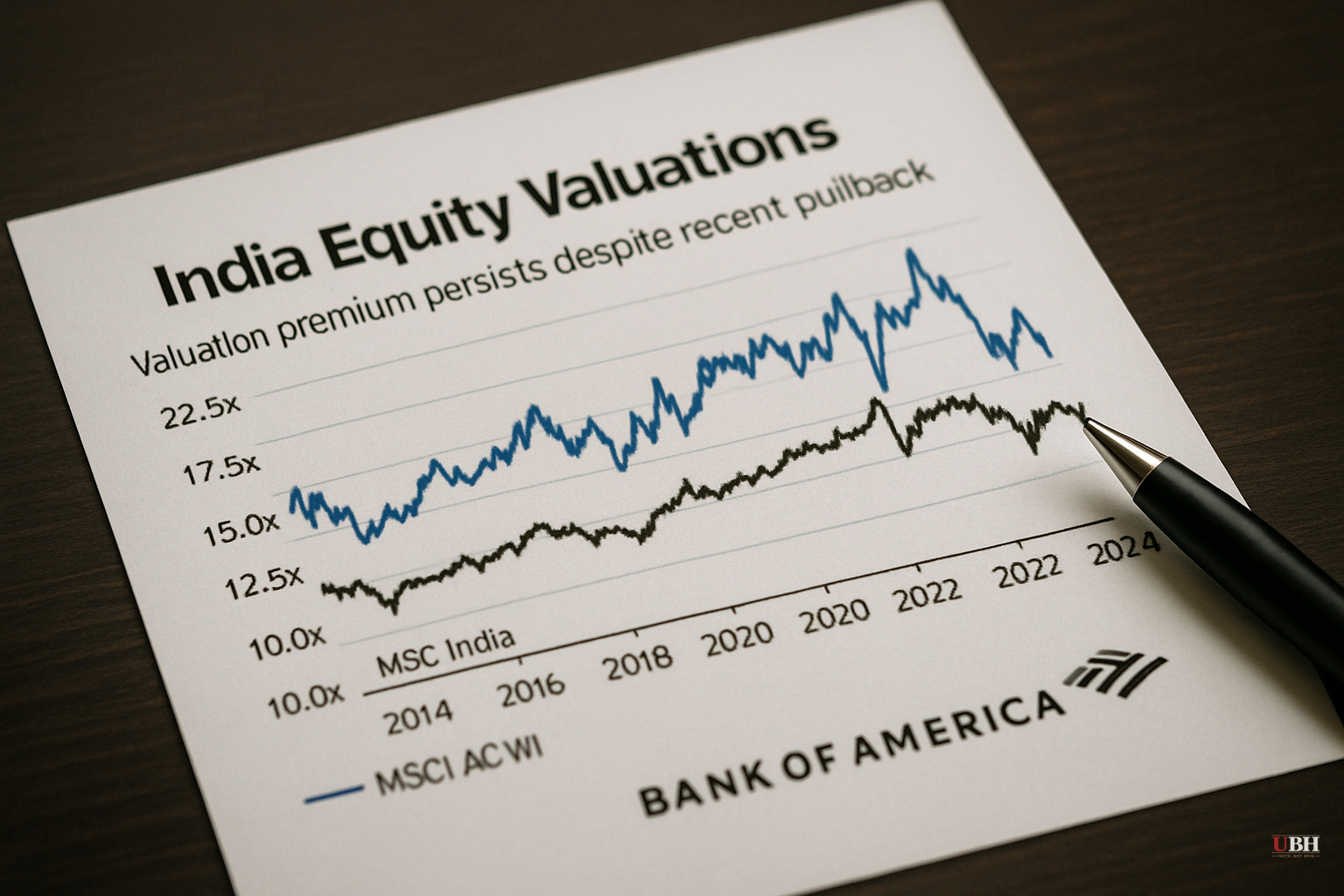
The Valuation Problem Hasn't Gone Away
The question hanging over Indian markets is whether the broader equity pullback has finally made India a buying opportunity. Bank of America's answer, delivered on June 19, 2026 by India CEO Vikram Sahu on Bloomberg's Insight with Haslinda Amin alongside Menaka Doshi, is no.
Sahu's position: valuations have eased, foreign portfolio investor (FPI) inflows have weakened, and India is still not cheap relative to global peers. This represents a significant statement from a major institutional player, not a retail commentator hedging on a podcast.
What the Numbers Show
The Bloomberg segment did not publish specific price-to-earnings or price-to-book figures, but the directional read from BofA is clear. India's valuation premium over other emerging markets has compressed but not collapsed. FPI outflows have reduced some of that froth without erasing it.
For context, India's domestic retail investor base has kept buying even as foreign money pulled back. That domestic bid has softened the fall, but it also means prices haven't corrected as sharply as pure FPI exit pressure would normally produce.
The Bull Case Deserves a Fair Hearing
The strongest argument for Indian equities right now is structural, not cyclical. India's GDP growth trajectory, demographic dividend, and manufacturing-sector buildout—partly benefiting from companies diversifying supply chains away from China—give it a long-run earnings story that most other emerging markets cannot match. Investors who bought India cheap and held through the premium years made substantial returns. The argument is that paying a valuation premium for quality and growth visibility is rational, not reckless.
Sahu did not dismiss this. His point is not that India is uninvestable. It's that the margin of safety isn't there yet for a value-driven entry.
One Source Note
The Business Standard article surfaced in the source set carries a publication date of June 18, 2024—two years ago—and covers a Kanak Projects quarterly earnings filing. It contains no material information about current FPI flows or Indian equity valuations. It should not be treated as current evidence of anything, and this article does not rely on it.
What Happens Next
The central question is whether FPI outflows continue or reverse. If global risk appetite improves—particularly if the U.S.-Iran Memorandum of Understanding reported on June 19 holds and reduces commodity-price stress—foreign money could rotate back into Indian equities. That would compress valuations further from the demand side. Vikram Sahu's view, on record as of June 19, 2026, is that the current entry point does not yet offer the discount a disciplined investor should require.
Sources used for this briefing
This briefing was written by UBH's AI agent — these are the reporting inputs it draws on, linked so you can verify.


