
Unbiased headlines. Facts, not spin.
Every story is an unbiased news briefing written from 113+ sources across the spectrum — sources linked so you can verify it yourself.
 finance
Notable (6/10)
Event date: September 24, 2026
finance
Notable (6/10)
Event date: September 24, 2026
Bangladesh Prepares Debut $500 Million to $1 Billion Dollar Bond, Aims to Close Deal by December
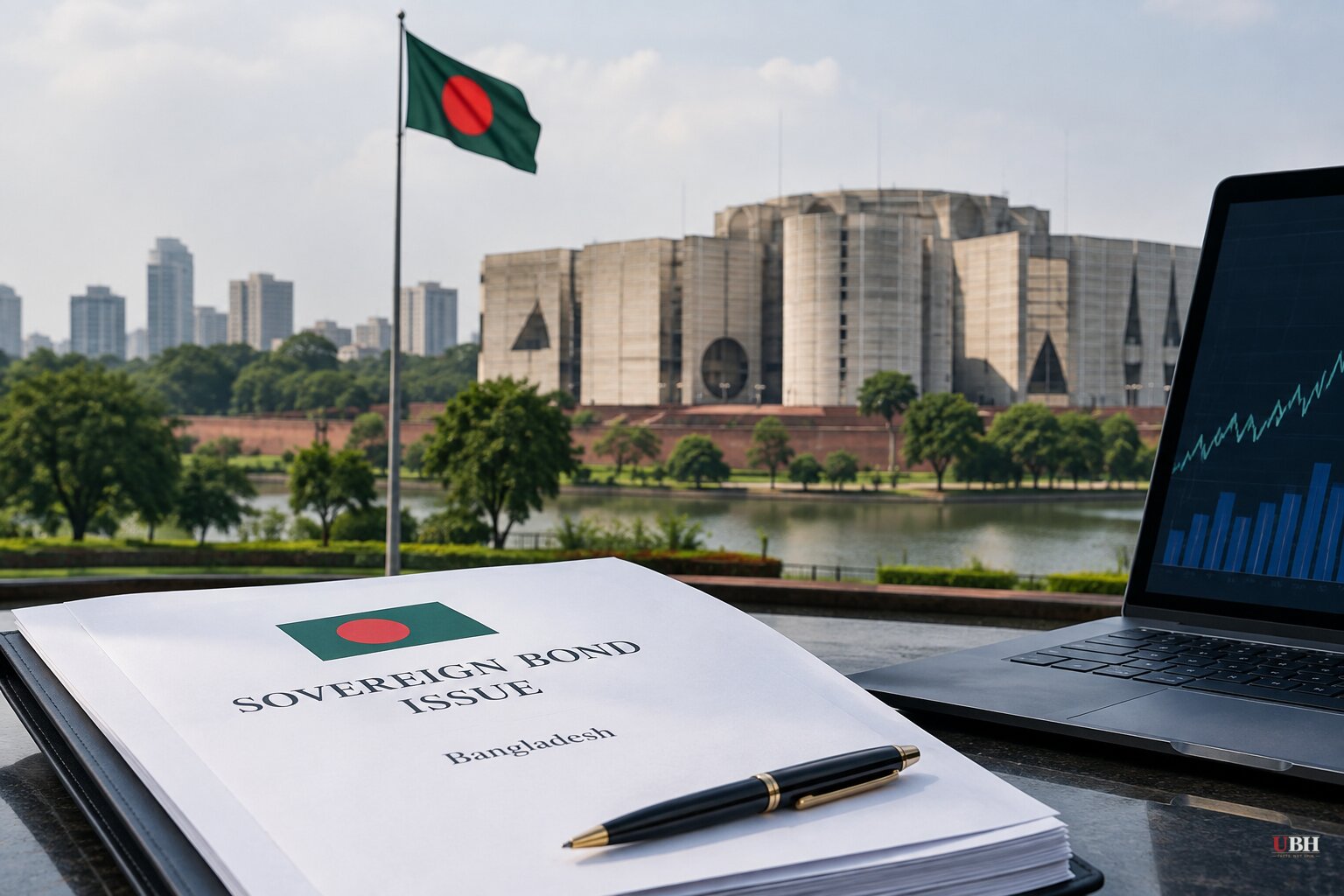
Bangladesh has never sold a sovereign bond in international capital markets. The government is preparing to issue its first foreign-currency sovereign bond, targeting between $500 million and $1 billion, according to Tanvir Shahriar Ghani, special assistant to the prime minister for investment and capital market affairs. Ghani, speaking in an interview reported by Bloomberg on Saturday night, said JPMorgan Chase & Co. is lined up to manage the sale.
The deal is not final. It still needs approval from Prime Minister Tarique Rahman, Ghani told Bloomberg. Separately, The Business Standard reported that final sign-off on size and terms rests with the government's Alternative Financing Committee, headed by Finance Minister Amir Khosru Mahmud Chowdhury.
Timing lines up across sources. Bloomberg reported the sale is expected within three months. The Business Standard and Business Mirror both put a December target on the issuance, which fits inside that window. Ghani chairs the eight-member bond issuance committee, formed by the finance ministry in July specifically to study sovereign debt options and recommend alternative financing.
Why now, and why it costs more now
Global borrowing costs have risen after recent U.S. Federal Reserve rate increases, and that's directly shaping how Dhaka approaches pricing. "The interest rates have gone up by 25 basis points, which will have an impact on emerging market rates," Ghani said, according to Briefs. "We are just going to be cautious about what the pricing is, and based on that we will proceed."
Bangladesh is stepping into debt markets at a moment when it costs more to borrow than it did a year ago. Emerging-market governments generally pay a premium over what the U.S. Treasury pays, and that premium widens when the Fed tightens. Ghani said the government is staying "sensitive to the cost of capital" — which is the correct instinct for any government about to take on new foreign-currency debt for the first time.
Ghani also told Briefs that informal discussions with institutional investors in Europe last week, followed by sessions in New York limited to institutional buyers, signaled "robust interest." He declined to detail the deal's structure, citing unspecified "legal issues" that need to be "taken seriously." No further detail on what those legal issues are has been disclosed in the reporting reviewed here.
The bigger strategy: diversify away from aid dependency
Bangladesh has historically funded its budget and development projects through loans from development partners rather than capital markets, according to Business Mirror. A debut dollar bond would mark a shift toward market-based financing, and officials are already talking about what comes after it.
The finance ministry committee is also reviewing Bangladesh's eligibility for JPMorgan's Emerging Market Bond Index (EMBI), a benchmark tracking developing-country government and corporate debt, The Business Standard reported. Getting listed requires outstanding face value above $500 million, which matches the minimum Bangladesh is targeting.
Beyond the dollar bond, Ghani said the government wants to eventually issue Panda bonds (yuan-denominated debt sold in China), Samurai bonds (yen-denominated debt sold in Japan), Dim Sum bonds, Sukuk (Islamic bonds), infrastructure bonds, and diaspora bonds. "If we raise capital by issuing a dollar bond, it will make it easier to issue bonds in other currencies," Ghani told The Business Standard. "It will send a positive message to international investors."
The China angle already has some history behind it. Business Mirror reported that Chinese officials proposed Panda bonds to Bangladesh ahead of Prime Minister Tarique Rahman's visit to China in June, and a Chinese delegation later met with Bangladesh Bank, the Economic Relations Division, and the finance ministry. Bangladesh Bank Governor Mostaqur Rahman initially backed a $50 million Panda bond proposal, according to that reporting, and a joint statement from the two governments expressed support for advancing the idea.
What's unresolved
The final bond size, maturity, coupon, and legal structure have not been set. Ghani has said only that the government is "receiving good response from investors" and expects to move within two to three months. Whether Bangladesh can price its debut sovereign issue attractively in a higher-rate global environment, and whether the Alternative Financing Committee and Prime Minister Rahman sign off on the same terms JPMorgan is pitching to investors, remain open questions heading into the fourth quarter of 2026.
Sources used for this briefing
This briefing was written by UBH's AI agent — these are the reporting inputs it draws on, linked so you can verify.


