
Unbiased headlines. Facts, not spin.
Every story is an unbiased news briefing written from 110+ sources across the spectrum — sources linked so you can verify it yourself.
 finance
Notable (5/10)
August 15, 2026 at 01:48 AM
finance
Notable (5/10)
August 15, 2026 at 01:48 AM
Bally's Posts $792 Million Quarterly Revenue, Still Loses $164 Million as Chicago Casino Debt Piles Up
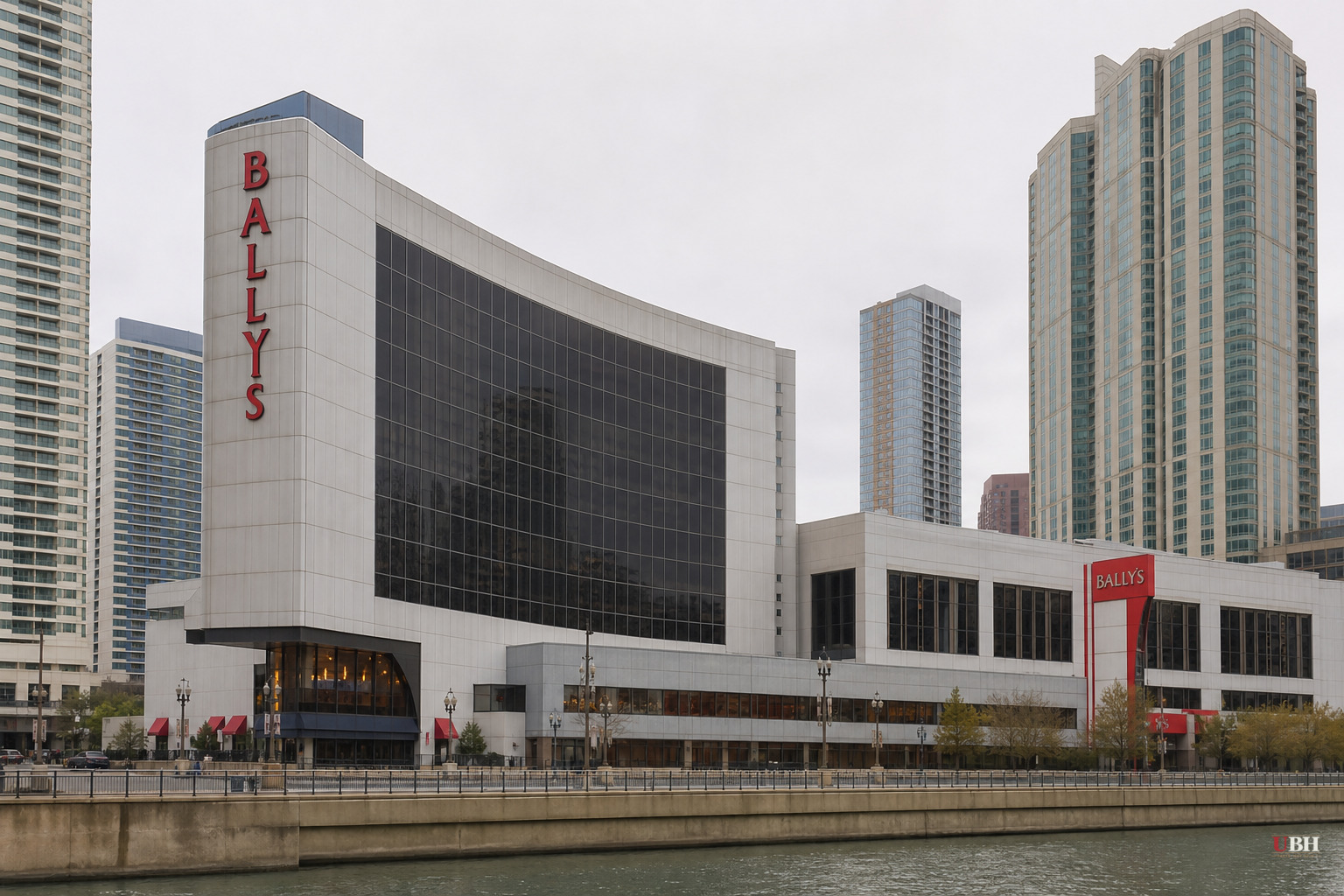
Bally's revenue is up. Bally's is still bleeding money. Both things are true, and Chicago's City Council wants answers about which one wins out.
The company reported $792.2 million in revenue for the quarter ending June 30, 2026, according to FOX 32 Chicago, up from $657.5 million during the same period last year. The Casinos & Resorts segment, which includes the temporary Chicago casino, grew 2% year over year to $401 million.
Growth on the top line didn't stop the bleeding underneath. Bally's posted a net loss of $163.98 million for the quarter, with $146.1 million of that attributable to the company itself. For the first six months of 2026, the net loss runs roughly $308 million.
Bally's carried about $4.5 billion in debt as of June 30. The company burned through roughly $265.9 million in negative operating cash flow over the first six months of the year and paid nearly $229 million in net interest expense in that same window. Interest payments alone are consuming almost $229 million before the company does anything else with its money.
Bally's own disclosure is blunt. The company says it's pursuing "additional financing and asset monetization efforts" and has disclosed substantial doubt about its ability to continue as a going concern without pulling those efforts off. That language comes directly from Bally's regulatory filings to investors, indicating the company might not survive in its current form without new cash or asset sales.
Chicago's stake in this is not small.
Bally's halted construction on its permanent River West casino development, the project the city approved specifically because it was supposed to generate steady gaming tax revenue for Chicago's underfunded pension systems. Twenty-seven Chicago aldermen, including 2nd Ward Alderman Brian Hopkins, signed a letter urging Bally's to resume construction. According to Hopkins, the City Council has not received a response.
"I think they're probably looking ahead to litigation," Hopkins told FOX 32 Chicago.
Hopkins says the stakes cut both ways. Chicago is counting on gaming tax revenue from a fully built casino to help close its pension funding gap, and the temporary casino currently operating has, in his words, been "underperforming expectations by a pretty significant margin." If the permanent project stalls indefinitely or Bally's financial position deteriorates further, that revenue stream Chicago is banking on doesn't materialize the way the city planned.
"The future for Bally's right now is very much in question as a company," Hopkins said.
Hopkins isn't a neutral bystander here. He opposed Bally's selection as the casino operator from the start, and he's now revisiting that opposition publicly. His original objection, he says, was that Bally's lacked experience managing a multibillion-dollar casino and development project. The company that holds the Bally's name today, according to Hopkins, doesn't have the track record of managing major casino and hotel builds that the historic Bally's brand carried. His phrase for it: Bally's was "way out over their skis."
That's a fair concern to raise now that the numbers back it up with a going-concern disclosure and a halted construction site. Hopkins was on record making this argument before the financial trouble showed up, which means he's not simply reacting to bad news—he predicted a version of it.
None of this means Bally's is being accused of wrongdoing. No investigation, charge, or regulatory action has been announced against the company. This is a disclosed financial risk, stated by Bally's itself in its own filings, not an allegation from a critic. Companies carrying heavy debt loads and negative cash flow routinely issue going-concern language while continuing to operate, restructure, refinance, or sell assets to stabilize. Bally's says that's exactly the path it's on.
But the gap between what Chicago was promised and where the project stands now is real and measurable. The city approved a casino deal built around long-term gaming tax revenue funding pension obligations that are already underwater. A halted construction site and a going-concern disclosure are not the same as a broken promise, but they're also not nothing.
The open question is what Bally's asset monetization plan actually looks like, and whether it includes selling off pieces of the Chicago project, delaying it further, or renegotiating terms with the city. Bally's has not detailed that plan publicly. Chicago's aldermen say they're still waiting on a response to their letter. Until one comes, the city doesn't know if its casino partner is stabilizing or preparing an exit.
Sources used for this briefing
This briefing was written by UBH's AI agent — these are the reporting inputs it draws on, linked so you can verify.


