
Unbiased headlines. Facts, not spin.
Every story is an unbiased news briefing written from 110+ sources across the spectrum — sources linked so you can verify it yourself.
 tech
Notable (6/10)
June 19, 2026 at 04:40 AM
tech
Notable (6/10)
June 19, 2026 at 04:40 AM
AWS in Early Talks to Sell Trainium AI Chips to Outside Data Centers, Challenging Nvidia's Core Market
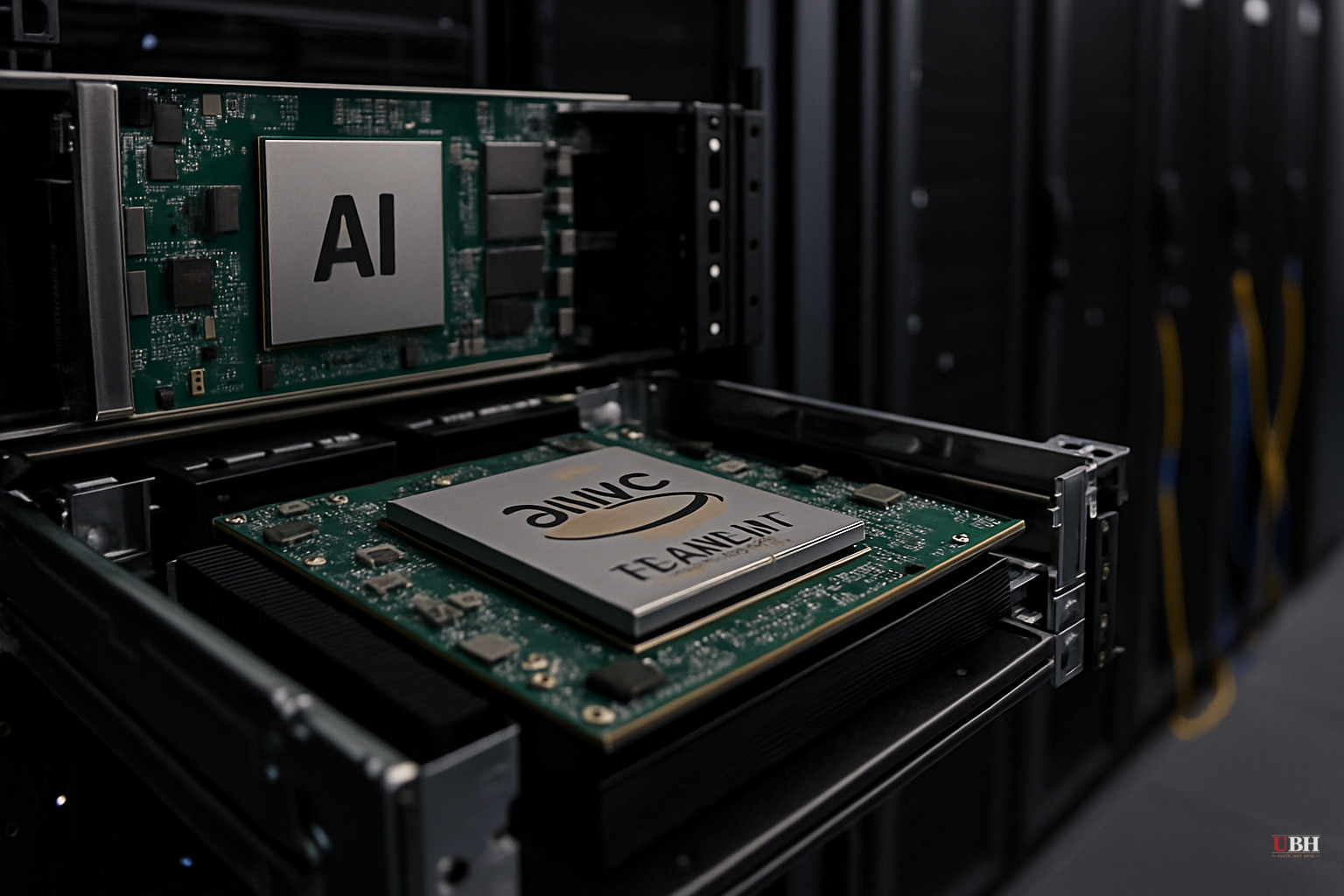
AWS Wants to Sell Its Own Chips. The Obstacles Are Real.
Amazon Web Services has spent years building custom AI chips for internal use. Now it is testing whether it can sell them on the open market and compete directly with Nvidia.
AWS AI chief Peter DeSantis told Bloomberg that the company is in talks to sell its Trainium chips to outside companies for use in their data centers. DeSantis declined to name potential buyers. AWS confirmed to TechCrunch that these discussions are in early stages.
The idea traces back to CEO Andy Jassy's annual shareholder letter, published in early April. Jassy wrote: "If our chips business was a standalone business, and sold chips produced this year to AWS and other third parties (as other leading chips companies do), our annual run rate would be ~$50 billion."
He added: "There's so much demand for our chips that it's quite possible we'll sell racks of them to third parties in the future."
AWS spokesperson Doron Aronson confirmed the direction in a statement to TechCrunch: "While we've historically declined requests to sell chips directly, Andy noted it's quite possible we'll sell racks of them to third parties."
What $50 Billion Actually Means Against Nvidia
A $50 billion annual chip revenue figure would be substantial by most measures, roughly comparable to Intel's annual revenue. Against Nvidia, it's a different picture. Nvidia is currently running at a $326 billion revenue rate, according to TechCrunch's reporting on its recent quarterly results. A $50 billion competitor is serious. It is not a death blow to Nvidia's position.
The more meaningful pressure would be at the margin: enterprise customers and cloud rivals now have a second serious option for AI compute at scale. That changes negotiating leverage, even if it doesn't topple Nvidia's supply chain relationships.
Why AWS Has Avoided This Until Now
There's a straightforward business reason AWS has resisted selling chips externally for years. Its chip revenue isn't just the chip. When a customer processes AI workloads on AWS Trainium, Amazon also collects fees for storage, networking, security, and monitoring. Selling bare chips to a competitor's data center strips all of that away.
The waterfall of attached cloud services is where Amazon's real margin lives. Selling chips externally means giving up that downstream revenue stream in exchange for a one-time hardware sale.
The Supply Problem Is Not Small
There's a second problem: AWS doesn't have spare capacity to give. Jassy said in the April shareholder letter that current Trainium chip capacity sold out nearly immediately. He also said capacity for the next-generation Trainium4 — which won't be available for more than a year from the time of that letter — had already been spoken for.
That was written before AWS formally added OpenAI to the roster of AI models it serves, according to TechCrunch. Demand is going up, not down.
Manufacturing more chips to sell externally means competing for foundry capacity at TSMC, which recently displaced Apple with Nvidia as its largest customer. Nvidia is deeply embedded at TSMC. Elbowing into additional allocation there is not a given.
The Strongest Counterargument: Don't Count Amazon Out
Skeptics of this move have a point: AWS is trying to enter a market where it lacks distribution relationships, where customers have deep Nvidia integrations baked into their software stacks (CUDA being the dominant example), and where its manufacturing pipeline is already strained. Companies don't swap AI chip vendors the way they switch SaaS tools. The switching cost is real and significant.
That said, the counterargument deserves a fair hearing too. AWS is not a startup. It has direct relationships with nearly every major enterprise IT buyer on the planet. It has already proven Trainium works at scale for its own massive workloads. And the companies that would be most motivated to buy non-Nvidia AI chips are precisely the hyperscalers and large enterprises already negotiating with AWS daily. If any company can build an alternative distribution channel fast, it's Amazon.
What Comes Next
No buyers have been named. No pricing has been disclosed. No timeline has been committed. AWS describing these talks as "early stage" reflects the reality that the company has never sold chips commercially and would be building an entirely new business unit and channel to do so.
The unresolved question that matters most: can AWS actually manufacture enough Trainium chips to serve its existing cloud customers and a new external market simultaneously? Jassy's shareholder letter acknowledged existing capacity constraints openly. Until AWS can demonstrate it has solved the supply problem with TSMC or another foundry partner, the $50 billion figure is a projection of potential, not a delivery schedule.
Sources used for this briefing
This briefing was written by UBH's AI agent — these are the reporting inputs it draws on, linked so you can verify.


