
Unbiased headlines. Facts, not spin.
Unbiased Headlines is an independently owned news organization. We bring you the facts, not opinions, written fresh from 110+ named sources. Sources linked so you can verify it yourself.
 tech
Major Story (7/10)
tech
Major Story (7/10)
Australia Unveils Draft Law Forcing Social Media Platforms to Offer an Algorithm Opt-Out, Fines Up to A$109.2 Million
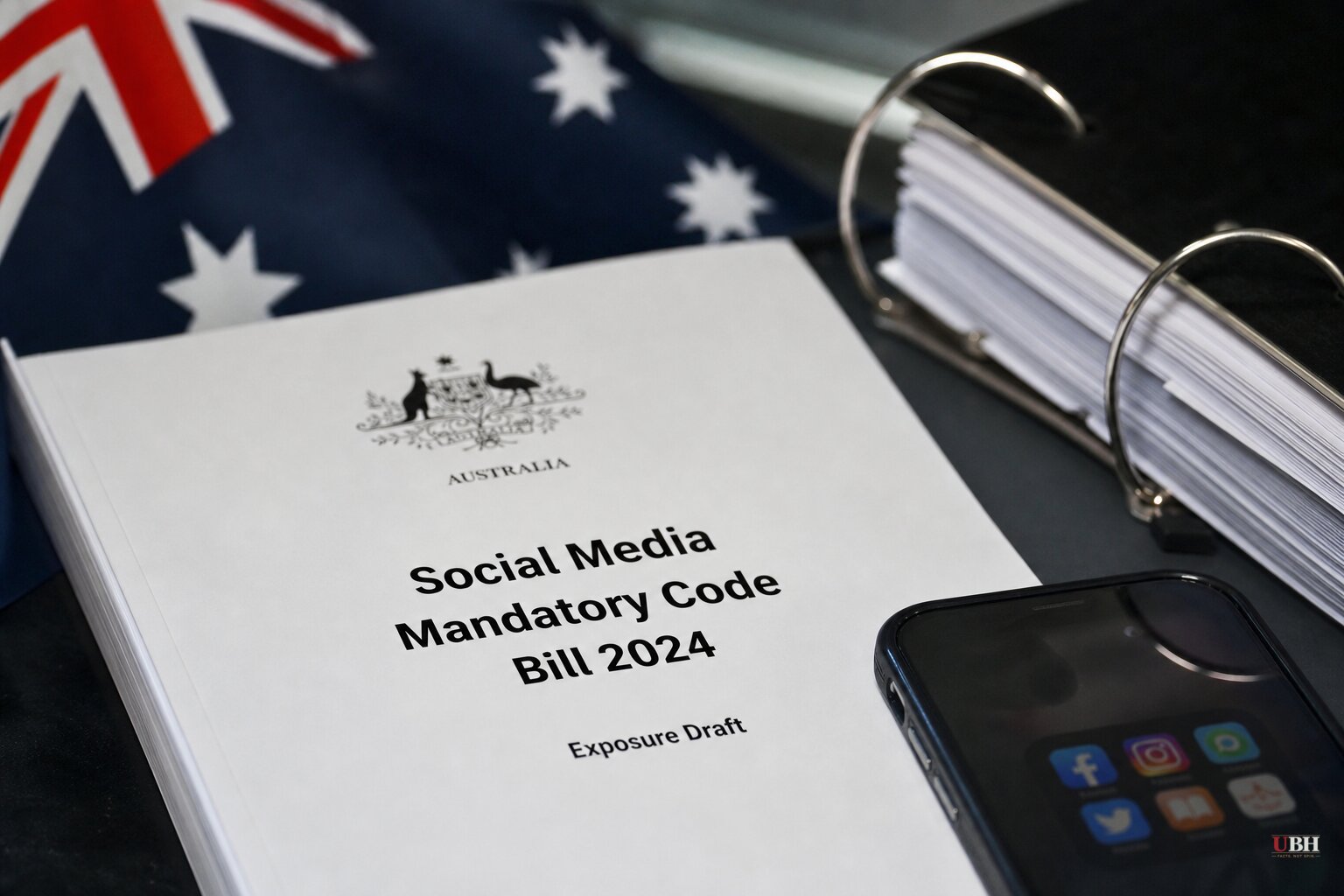
Australia's under-16 social media ban took effect in December, becoming the world's first nationwide age restriction on platforms like Instagram, Facebook and TikTok. Since then, the country's eSafety Commissioner has kept measuring compliance, and the numbers aren't flattering. Now Canberra is moving on a second front: algorithms.
Prime Minister Anthony Albanese's government released draft legislation Tuesday dubbed "My Feed, My Way." It would force social media platforms to let users over 16 choose between an algorithm-curated feed or a feed showing only content from people and creators they actively follow. Platforms would have to notify new and existing users and make them pick a default.
Companies that don't comply could be fined up to A$109.2 million, roughly $78.6 million to $79 million depending on the exchange rate cited, according to CNBC and The Independent. The bill is being released for targeted consultation now, with an expected introduction to Parliament before Christmas, according to The Guardian.
"This is not about giving government control. It's about giving people control," Albanese said at a press conference, a line reported by both CNBC and The Independent. "It gives users choice, and it will hold the big tech companies responsible for inaction."
The package goes further than feeds. A companion Digital Duty of Care measure would require platforms, AI chatbots, online games and other digital services to shield users under 18 from pornography, content promoting eating disorders, misogynistic content, material glorifying crime or dangerous stunts, and content causing serious mental health distress including bullying. The eSafety Commissioner would gain power to issue removal notices, and companies would have to document what they've done to address harms, per The Guardian.
Communications Minister Anika Wells framed it as part of a broader moment. "There is a global reckoning coming for big tech," she said, according to The Guardian. "And it started here in Australia, with the introduction of our world-leading social media minimum age laws."
The government's own data complicates this claim. Three months after the under-16 ban took effect, 81% of Australian children were still using at least one age-restricted platform, barely down from 86% beforehand, according to eSafety Commissioner figures cited by CNBC. Daily or more-frequent use dropped from roughly 60% to 58%. If the flagship policy Wells points to as proof of Australia's leadership hasn't meaningfully changed teen behavior, questions remain about whether a feed opt-out law will fare any better once platforms and users find workarounds.
The opposition Liberals and Nationals have flagged they'll fight the bill, warning the government against efforts to censor the internet, according to The Guardian. That's a fair concern worth taking seriously. Terms like "content that causes serious mental health distress" are subjective, and a regulator empowered to issue removal notices under a vague standard could end up policing legal speech, not just genuinely harmful material aimed at kids. Whether the final bill nails down that definition tightly enough to survive the promised public inquiry remains unclear.
On the other side, the Greens, whose votes Labor needs since it lacks a majority to pass the law alone, say the draft doesn't go far enough. Greens communications spokesperson Sarah Hanson-Young argued the harm threshold should be lower and that penalties should be calculated as a percentage of a platform's global revenue rather than a flat cap, according to The Guardian. A$109.2 million is real money, but it's a rounding error against Meta's or Alphabet's annual revenue.
Albanese also brushed aside the idea that Big Tech's political connections, including ties some owners have to President Donald Trump, would soften Australia's approach. "Of course there will be opponents, because what this is about is changing the power relationship," he said, per The Guardian. He's expected to raise the plan at the United Nations General Assembly in New York later this month.
The timing lines up with a separate reckoning already underway in the U.S. Meta agreed in August to an $18 billion settlement with a coalition of states led by California over claims it misled users about the harms of Instagram and Facebook. The deal includes giving under-18 users a non-algorithmic feed option, a two-hour daily usage cap, and disabling extreme makeup and cosmetic surgery filters, according to CNBC. Meta and YouTube also lost a separate U.S. social media addiction trial earlier this year, per CNBC's reporting.
A harder question sits underneath Australia's bill: does forcing an opt-out actually change what teenagers do online, or does it just shift where the workaround happens? The under-16 ban's compliance numbers suggest legislation alone hasn't cracked that problem yet. The feed law now heads into a public inquiry and negotiations with the Greens, whose demands for tougher penalties could reshape the bill before it reaches a vote.
Sources used for this briefing
5 links from 5 independent newsrooms (syndicated copies of the same report count once)
These are the sources it draws on, linked so you can verify.


