
Unbiased headlines. Facts, not spin.
Every story is an unbiased news briefing written from 110+ sources across the spectrum — sources linked so you can verify it yourself.
 health
Major Story (8/10)
June 27, 2026 at 10:44 AM
health
Major Story (8/10)
June 27, 2026 at 10:44 AM
Australia Confirms Fourth H5 Bird Flu Case in Wild Birds, Fifth Suspected as Poultry Industry Locks Down
Since the first H5 detections near Esperance in Western Australia, confirmed cases have now climbed to four wild birds across two Australian states, with a fifth suspected.
Australia's Chief Veterinary Officer Dr. Beth Cookson confirmed the fourth case in a statement Saturday, June 27. A giant petrel in Western Australia tested positive, following two earlier Western Australian cases and a confirmed case in South Australia. Samples from another giant petrel found near Esperance have been sent to the CSIRO's Australian Centre for Disease Preparedness for testing, according to Bloomberg and The Straits Times.
How the South Australia Case Developed
The Guardian's reporting fills in the timeline most completely. South Australian Premier Peter Malinauskas said a giant petrel was found unwell on Knights Beach in Port Elliot on June 14, before anyone in Australia was publicly tracking H5 detections. Authorities were only alerted to the bird on June 19 after WA Agriculture Minister Jackie Jarvis reported suspected cases there and social media posts flagged birds at a wildlife care center in South Australia.
Justin Biddle, wildlife rescue center manager for Wildlife Welfare Organisation SA, told The Guardian the bird was brought into his Goolwa center on June 14 showing signs of being "beach washed and debilitated." An initial swab came back negative, then inconclusive. CSIRO confirmed the positive result Wednesday, June 25. The bird was euthanized.
Malinauskas said the government is in contact with volunteers who handled the bird and will prescribe the antiviral Tamiflu if necessary.
What Authorities Are and Are NOT Saying
Cookson was direct: "At this stage, there have only been detections in vagrant migratory seabirds that occasionally visit southern Australia. There remains no evidence of any mass mortality events, and there are no detections in poultry or in our agricultural production system. The risk to human health remains low."
All four sources agree on that baseline. Human H5 infections globally remain uncommon and are almost entirely tied to direct, close contact with infected animals.
The legitimate concern worth taking seriously: H5 bird flu has been spreading globally for years and has crossed into mammals, including cattle in the United States and seals in multiple countries. Australia's status as a historically H5-free continent made it a firewall. That firewall is now breached, at least at the wild-bird level. Whether it stays contained to migratory seabirds or finds its way into domestic poultry or livestock is what epidemiologists are watching.
The Poultry Industry Is Not Waiting
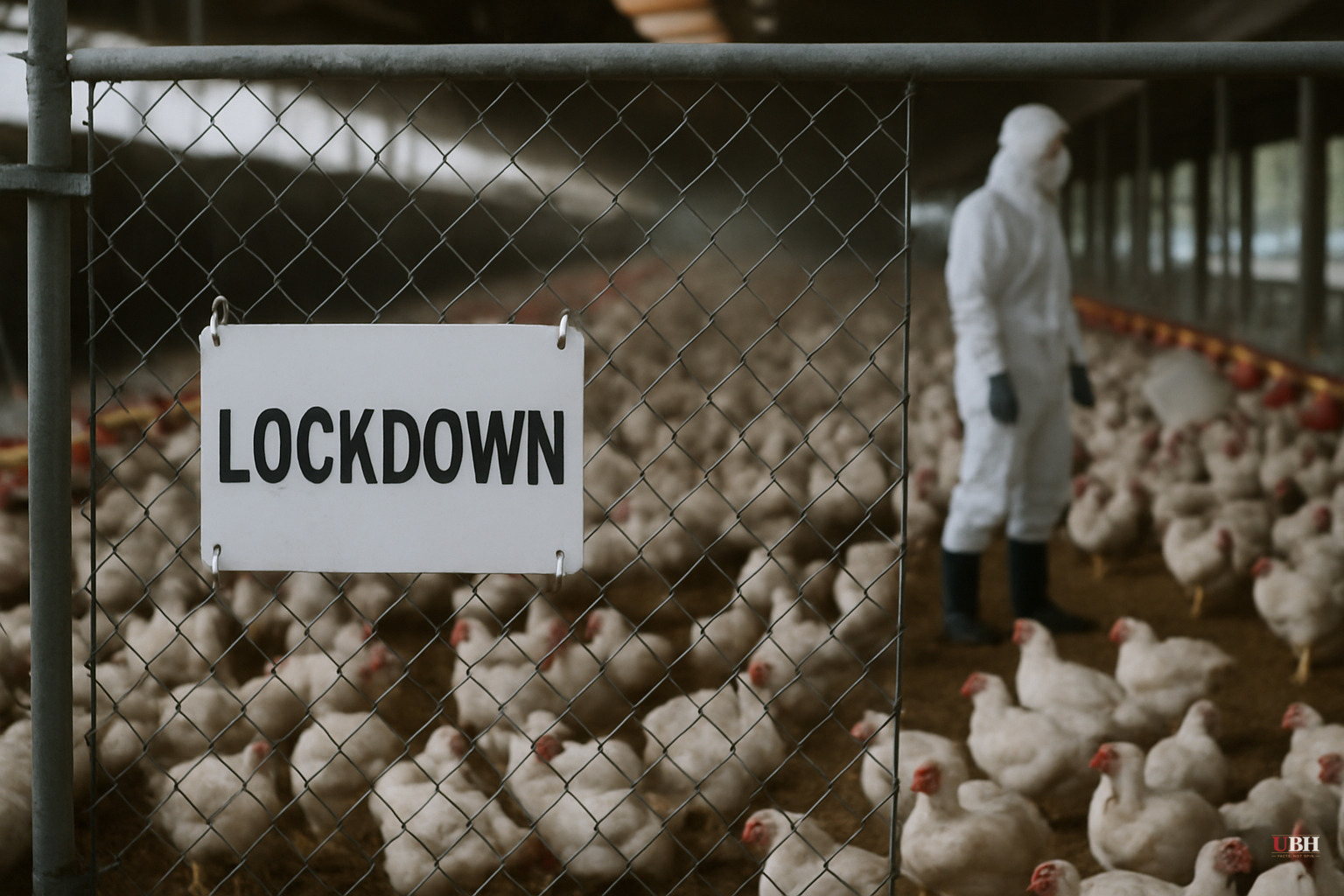
Australian-listed chicken producer Inghams Group moved before any commercial infections were confirmed. The company announced a "complete lockdown" of its Western Australian operations this week, according to The Straits Times and The Star. No H5 cases have been detected in Inghams' flocks. The company is acting on proximity and precaution, not confirmed exposure.
That is standard biosecurity practice. Poultry industry lockdowns during wild-bird H5 detection events have become routine in Europe and North America. They are disruptive and expensive, but the alternative—an outbreak in commercial flocks—is far worse.
Coverage Comparison
The Guardian's coverage is the most detailed on the South Australia timeline and includes direct quotes from the wildlife rescue worker and the South Australian premier. Bloomberg and outlets running the Bloomberg wire focus on the confirmed case count and Inghams' lockdown but omit the wildlife care center timeline and the Tamiflu distribution detail. Neither framing is wrong, but readers relying only on the Bloomberg version get an incomplete picture of how the South Australian case was actually identified and how long it circulated before detection.
What Comes Next
The CSIRO results on the fifth suspected giant petrel, found near Esperance, are pending as of June 27. Federal Agriculture Minister Julie Collins confirmed to reporters there is still no evidence H5 has entered Australia's commercial food supply. The open question is whether the ongoing influx of migratory seabirds from the subantarctic region continues to seed additional detections, and at what point authorities shift from monitoring wild birds to implementing broader surveillance of domestic poultry operations in proximity to coastal detection zones.
Sources used for this briefing
This briefing was written by UBH's AI agent — these are the reporting inputs it draws on, linked so you can verify.


