
Unbiased headlines. Facts, not spin.
Unbiased Headlines is an independently owned news organization. We bring you the facts, not opinions, written fresh from 110+ named sources. Sources linked so you can verify it yourself.
 tech
Notable (6/10)
tech
Notable (6/10)
Atlas Energy Plans to Grow Driverless Sand-Truck Fleet From 28 to 100 by Mid-2027
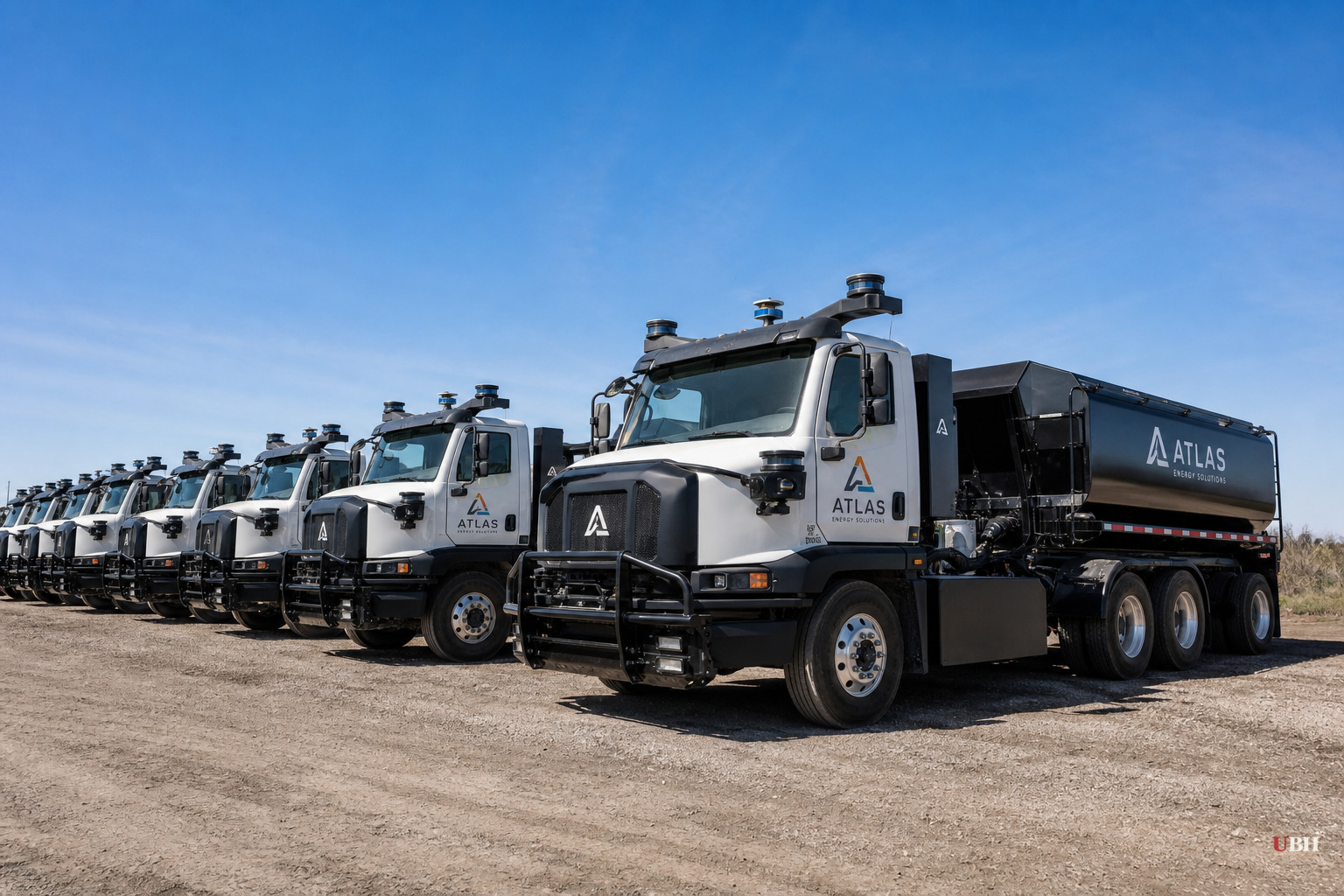
No driver. No one in the cab. Just a truck full of sand, driving itself to an oil well.
That is already happening today in the Permian Basin, and it is about to happen a lot more. Atlas Energy Solutions and Kodiak AI announced plans to expand their driverless truck fleet from 28 trucks to 100 by mid-2027, according to Fox News. The companies also expect some of these trucks to start operating on public roads in early 2027, though that timeline depends on hitting operational milestones first.
Right now the trucks stay on private industrial roads, hauling sand to well sites. Atlas used to run the operation out of one load-out location. Now it runs simultaneously from two depots roughly 90 minutes apart, one in Texas and one in New Mexico, according to Fox News. That wider footprint means Atlas can reach more well sites and respond faster when customers need more sand.
The system links up with Atlas's 42-mile Dune Express conveyor belt, which moves sand most of the way before the driverless trucks handle the final stretch. As of March 31, 2026, the driverless program had 28 trucks running 15 routes, according to Fox News.
Don Burnette, founder and CEO of Kodiak, called it the world's largest fleet of driverless big-rig trucks. "We've demonstrated that autonomous trucking is delivering meaningful results today," Burnette said, according to Fox News. "Our expanding partnership, which now covers two unique locations, is creating a blueprint for how autonomy can transform logistics."
Burnette is the one selling the technology, so of course he is going to call it a blueprint for the industry. But the trucks are running today with nobody behind the wheel, and Atlas is putting actual money behind scaling the fleet nearly fourfold.
Kodiak's broader business is moving in the same direction. The company rolled out its seventh-generation Kodiak Driver platform, aimed at higher efficiency and reliability for commercial fleets, and Burnette told investors the company is pushing toward driverless long-haul trucking operations by the end of the year, according to a report carried by manilatimes.net covering Kodiak's second-quarter results. Kodiak says it became the first company to deploy customer-owned, customer-operated driverless trucks in commercial service back in 2024.
Putting a fully autonomous 80,000-pound rig on a private oil-field road is one thing. Putting it on a public highway, sharing lanes with families in minivans, is an entirely different safety question. Kodiak and Atlas say early 2027 is the target for public roads, but they are explicit that this depends on hitting milestones first, according to Fox News. This is a hedge, not a guaranteed date.
Supporters of the technology have a strong case. Long-haul trucking has a persistent driver shortage, and the industry sees fatigue-related crashes as a real and ongoing problem that automation could reduce. Autonomous trucks do not get tired, distracted, or need to stop for eight hours of sleep. For a company like Atlas, moving sand to well sites around the clock without needing shift changes is a straightforward efficiency and cost play.
But there is a fair counterpoint that deserves a real hearing. Critics of rapid autonomous vehicle rollout point to unresolved questions about how these systems handle edge cases: sudden weather, erratic human drivers, debris, construction zones, and rural roads without good mapping data. Regulators have not established a uniform national framework for how driverless trucks should be tested, certified, or held accountable when something goes wrong on a public road. There is no indication in these reports that federal regulators have signed off on a public-road driverless trucking framework, and no timeline from any regulatory body confirming Kodiak and Atlas's early 2027 target will be approved. The gap between corporate ambition and regulatory clarity deserves close attention.
For now, the expansion is confined to private industrial routes in Texas and New Mexico. The real test comes whenever Kodiak and Atlas actually attempt to put one of these trucks on a public highway. Whether that happens on schedule in early 2027, whether state or federal regulators impose new requirements first, and whether the safety record from the private-road fleet holds up as the number of trucks nearly quadruples, are all open questions nobody has answered yet.
Sources used for this briefing
2 links from 2 independent newsrooms (syndicated copies of the same report count once)
These are the sources it draws on, linked so you can verify.


