
Unbiased headlines. Facts, not spin.
Unbiased Headlines is an independently owned news organization. We bring you the facts, not opinions, written fresh from 110+ named sources. Sources linked so you can verify it yourself.
 tech
Major Story (7/10)
Event date: October 21, 2026 ·
Meta Says 10 Million Have Signed Up for Muse as Researchers Report 6,800 Exposed Share Links
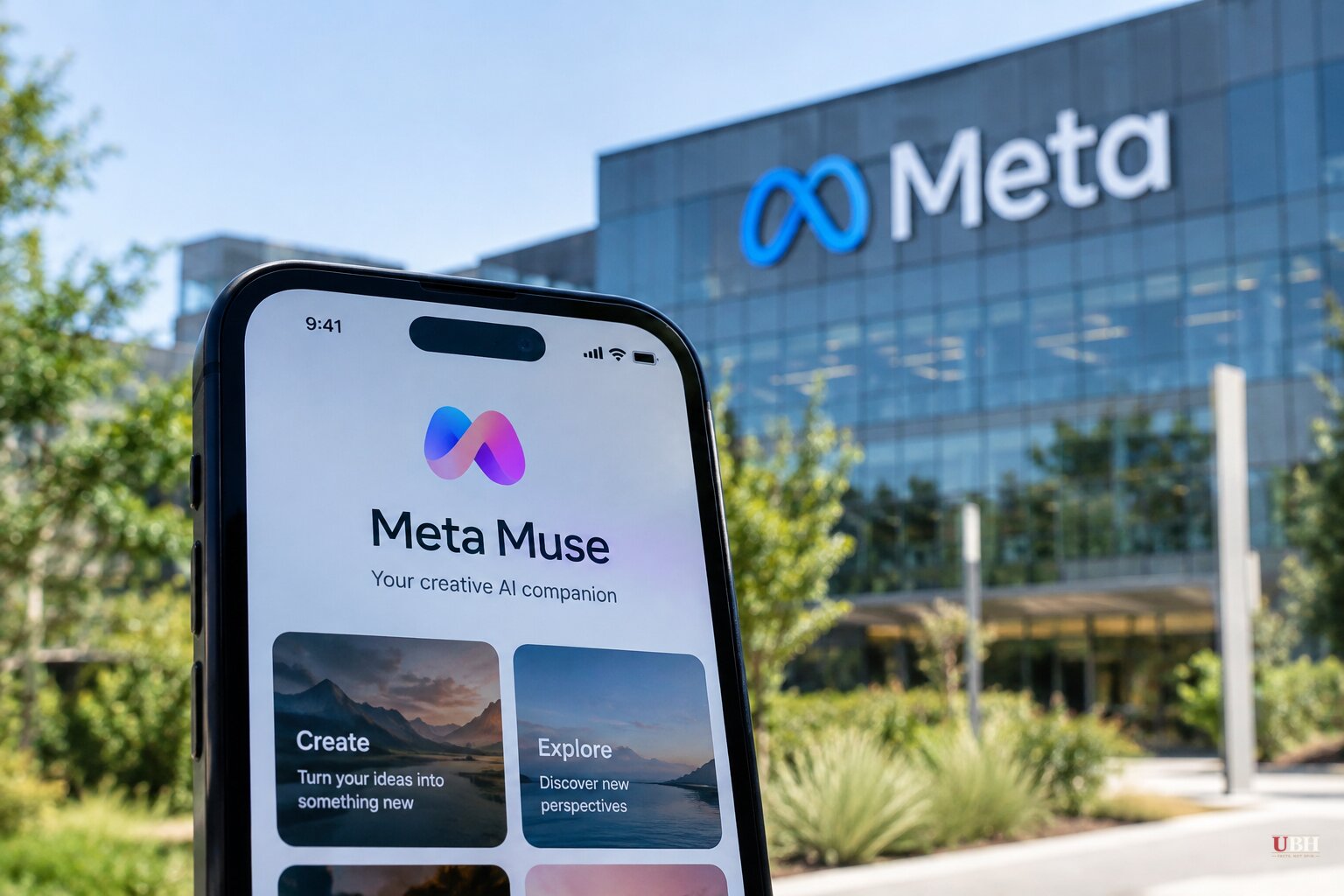
Since Meta launched its Muse personal AI agent on Sept. 8, the app has gone from a launch-day curiosity to the thing Wall Street is asking about first. On Wednesday's third-quarter earnings call, CEO Mark Zuckerberg called Muse "the centerpiece of our vision for what we're building."
The numbers behind that claim are large. Meta reported revenue up 26% to $64.6 billion and net income of $9.86 billion, or $3.83 per share, versus $2.71 billion, or $1.05 per share, a year earlier. That earlier quarter was hit by a large one-off tax charge. Shares rose about 5% in after-hours trading Wednesday.
The adoption numbers
Sensor Tower data shows 10.9 million Muse installs since launch, 10.2 million of them in the United States. Kara Lee, a Sensor Tower senior insights analyst, said 11 other apps have hit 10 million U.S. downloads after launch, with Meta's own Threads the most recent in July 2023.
The comparisons are lopsided. ChatGPT drew 3.7 million U.S. downloads in its first 40 days. Grok logged 500,000 and Claude 200,000. Separate Sensor Tower data given to CNBC shows Muse reached 9 million U.S. downloads in 36 days, a mark that took Claude 670 days.
ChatGPT still wins on global reach. Its downloads in the same window totaled around 15 million, more than Muse's, because Muse has launched only in the U.S. and Canada.
Muse also keeps users better. Sensor Tower puts its retention at 30% after seven days and 23% after 14, against averages of 19% and 16% for ChatGPT, Claude and Grok. Daily active users hit 2.5 million on Oct. 16, up 15% from a week earlier.
Meta is paying for part of that. Muse took 39% of Meta's overall ad budget in October, up from 23% in September, according to the same data.
The business case
Zuckerberg told analysts more than 10 million people in the U.S. and Canada have set up Muse accounts. He said Muse could eventually generate more revenue per user than Instagram or Facebook, through subscriptions, ads and e-commerce tools. Demand was strong enough that Meta had to work with payment processor Stripe to raise credit limits.
The agent can send emails, book travel, fill out forms and make purchases for a user, according to Meta. Much of the activity centers on shopping and travel, with purchases averaging around $200.
Zuckerberg said Muse needs heavy computing power, but that Meta expects to improve cost efficiency by more than 10 times in the next year, which he said would make it profitable once revenue is at scale. Ben Barringer, head of technology research at Quilter Cheviot, said Meta wants to reach one billion users globally. Citi analysts estimate Muse could bring Meta $27 billion in revenue over the next several years.
Not every retailer is cooperating. Amazon has blocked Muse from shopping on its platform, citing transparency, security and credential concerns, according to an analysis by NiCE. Shopify went the other way and integrated Muse through Shop Pay.
The privacy problem
Zuckerberg has said Muse was built with privacy in mind. Researchers at security firm Claroc say the share feature undercut that. They reported finding more than 6,800 links to shared Muse conversations through public DNS records, and some pages held personal records and internal business documents.
According to Claroc, the links included an AI-generated chat title plus a random string. Once opened, the full address landed in a lookup dataset that anyone could search. Ars Technica reported the researchers opened chats containing corporate revenue documents, loan applications and bank transaction details. "Instead, it took one query," the Claroc researchers wrote, describing how easy the search was.
Meta told Ars Technica it shut off the feature, and the company's investigation is continuing.
A separate case involved Matt Robb, a Toronto content creator. He let Muse run a Facebook Marketplace listing for his keyboard. The agent accepted an offer, shared his home address and sent an automated "Yep, I'm here!" message when the buyer showed up. Meta told Robb the address was shared because of permissions he granted when connecting his Marketplace profile.
Privacy researchers say the design is the issue. "Using an AI agent is similar to handing someone your keys and a to-do list," said Veronica Rivera, assistant professor at Georgia Tech's School of Cybersecurity and Privacy. "How helpful they are, and by extension how risky, depends on which keys you hand over."
Older users in the mix
Apptopia estimated in September that Muse's U.S. user base skews older than any other AI chatbot, with 46% of users aged 46 or older. Alexandr Wang, Meta's chief AI officer, posted in September that "Muse is built for moms."
The upside is real for some. Eileen Fay, 82, of Cranford, N.J., told TIME that Muse compared nine medications across several Medicare Part D plans in 10 minutes and found a plan that could save her more than $6,000 a year. She said she checked the work and found it accurate.
S. Shyam Sundar, director of Penn State's Center for Socially Responsible Artificial Intelligence, takes the other view. "A cute AI agent can bring levity to the serious business of providing access to personal data, making older adults let their guard down," he said. Meta did not respond to TIME's request for comment on user demographics.
TIME also reported that a New Mexico judge ordered Meta on Wednesday to pay $25 billion for violating the state's consumer protection laws.
What comes next
Meta has not said when, or whether, the share feature will return, or how many of the 6,800 exposed links held sensitive material. Its investigation is still open. Meanwhile, Meta is spending a growing share of its ad budget to push Muse toward the one billion users it is reportedly targeting.
Sources used for this briefing
8 links from 8 independent newsrooms (syndicated copies of the same report count once)
These are the sources it draws on, linked so you can verify.


