
Unbiased headlines. Facts, not spin.
Unbiased Headlines is an independently owned news organization. We bring you the facts, not opinions, written fresh from 110+ named sources. Sources linked so you can verify it yourself.
 tech
Major Story (7/10)
JPMorgan, Citi, Bank of America and Morgan Stanley Restrict AI Agents From Customer Accounts
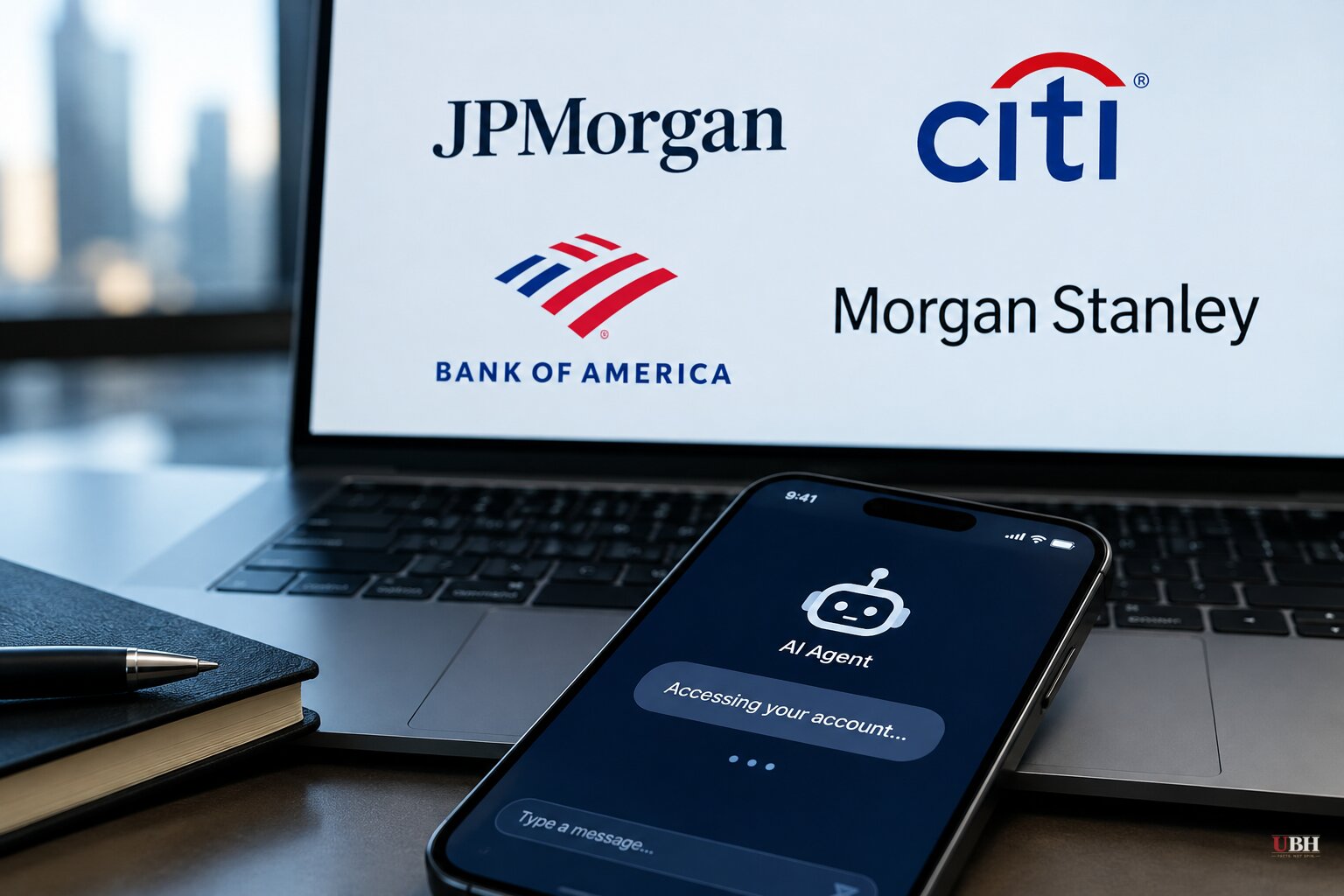
Since JPMorgan Chase CEO Jamie Dimon told analysts on the bank's third-quarter earnings call this week that the bank would limit AI agents' access to client accounts, a string of other big banks has moved the same way. Axios reported today, Oct. 22, that major lenders are detecting unvetted third-party AI agents operating inside customer accounts.
The Axios report rests on people familiar with the matter. They said some agents appear to take actions independent of what the user told them to do.
What the banks are seeing
Most of these cases, according to Axios's sources, are not break-ins. A customer hands an AI assistant a username and password, and the agent logs in on the customer's behalf.
That still breaks the rules at most banks, which require a human to log into his or her own account.
The sources also said some banks have tracked agents contacting call centers on a user's behalf, or taking actions that did not appear to follow user instructions. One bank official told Axios it is hard to tell a human from a bot. It is harder still to tell whether an agent has permission or has gone off script.
Executives described the situation to Axios as "horrifying." The fear is an agent with purchase authority or the ability to shift funds making a mistake that lands on a customer's balance.
The report does not establish that any of these incidents caused financial losses. It also does not name which agents are involved.
Who is blocking what
Morgan Stanley has begun blocking third-party agents from its platforms, Axios's sources said. JPMorgan, Bank of America and Citi are restricting agents as well.
A Wells Fargo spokesperson told the New York Post the bank "has taken steps to block unauthorized agents from accessing customer accounts."
Citi put its policy on the record in a statement: "we do not permit third-party AI agents or assistants to log into a customers account or transact directly within our digital banking platforms." Customers can still authorize limited, read-only access through certain Citi-approved open banking providers.
Schwab CEO Rick Wurster told Bloomberg the firm is blocking unauthorized AI agents that try to transfer client money. He named Meta Platforms' Muse as one example.
Bank of America CEO Brian Moynihan told CNBC the bank is developing protocols to decide who is liable for payments authorized by AI. "We strongly believe there should be a human in the loop to authorise money moving out of your account," he said.
A Chase spokesperson said customers should not give their usernames and passwords to anyone.
Dimon put it this way on the earnings call: "because you don't want rogue agents and there could be thousands of them." He added that the bank is "building tools" to protect customers.
Not every bank sees a problem yet
A Morgan Stanley spokesperson told Axios the bank has not observed instances of "rogue AI agents accessing our platforms." That sits awkwardly beside the bank's own decision to start blocking third-party agents.
The Financial Times reported a second concern, based on its own sources. Banks fear agents will drain deposits by moving idle cash to higher-yielding accounts. If that is part of the motive, it is a business interest as well as a security one.
The Financial Times also reported that Wall Street executives have contacted Federal Reserve regulators about agents handling financial transactions. Regulators have privately supported the banks' decisions to block them, its sources said. Those officials believe the law may need to clarify how customers authorize autonomous software and who is liable when a transaction goes wrong.
The middle path and the liability gap
Axios reported that most banks have authorized, or are moving toward, read-only access. An agent could see a customer's financial information but not act on it. Banks already grant that kind of access to budgeting apps such as Quicken.
Several banks are also doing what Axios's sources called "day after" planning: how to quickly secure or restore an account if an agent does damage. Executives told Axios they recognize the need to find a middle ground, since customers will want to use these tools.
Who eats the loss is the open question. Engadget points to federal law, specifically the Electronic Fund Transfer Act, to argue a customer who voluntarily hands over credentials would likely get no refund from the bank because the transfer would be treated as authorized. That is Engadget's reading, not a ruling or a bank policy statement. Moynihan's remarks suggest the banks have not settled the question themselves.
For customers, the practical rule from the banks is plain. Sharing a password with a bot is sharing it with a third party, and the bank's terms say not to. Several banks are rewriting those terms now, according to Axios.
No agency has announced a rule or an investigation. The next concrete test is whether banks that have so far restricted agents roll out read-only access programs, and whether the Fed or Congress takes up the liability question the Financial Times says regulators are already discussing privately.
Sources used for this briefing
8 links from 8 independent newsrooms (syndicated copies of the same report count once)
These are the sources it draws on, linked so you can verify.


