
Unbiased headlines. Facts, not spin.
Unbiased Headlines is an independently owned news organization. We bring you the facts, not opinions, written fresh from 110+ named sources. Sources linked so you can verify it yourself.
 tech
Major Story (7/10)
Google DeepMind Researchers Resign Over Pentagon Classified AI Contract
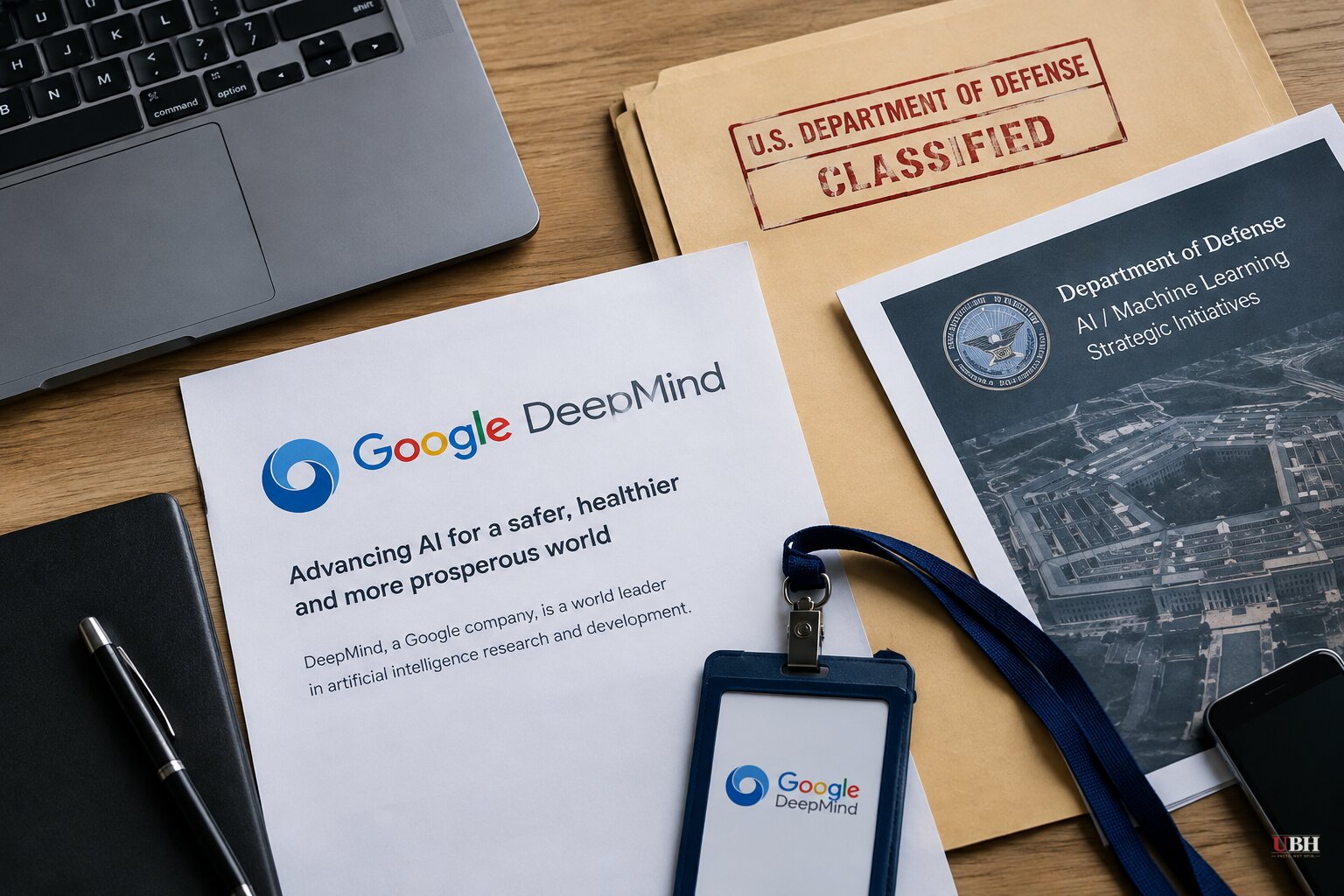
Two researchers have left Google DeepMind over the company's Pentagon contract, and others are reportedly preparing to follow.
Sofia Liguori, a London-based research engineer, resigned this week after three years at the company. Andreas Kirsch, an AI researcher, left earlier in October. Both described their reasons to the BBC, which published its investigation Wednesday, Oct. 21.
What the contract allows
In April, Google reached an agreement with the Department of Defense to deploy its AI models in classified settings. The contract permits use for "any lawful government purpose."
The document also says the technology should not be used for domestic mass surveillance, or for autonomous weapons without appropriate human oversight. Google has no right to veto how the Pentagon uses the models, according to Kirsch.
Google is not alone. OpenAI, Amazon, Microsoft, SpaceX, Oracle, Nvidia and the start-up Reflection have signed comparable agreements, and xAI has a Pentagon contract as well. Anthropic went the other way. The Defense Department blacklisted it after it refused to remove safeguards against use of its models for weapons and surveillance.
What the researchers say
"Realizing my company is pushing more and more for AI systems in military operations makes me feel ashamed to work at Google," Liguori told the BBC.
She said she has lost faith in the company's stated ethical values. In an internal farewell letter, she wrote: "I no longer believe that our technology will have a net positive impact on society."
Liguori joined in 2023 and worked on routing power more efficiently through electrical grids. She told The Intercept that her objections also cover Project Nimbus, Google's cloud and AI contract with the Israeli government and military.
She said the day after the Pentagon deal became public in April, she used sick leave and vacation days to stop working. She also said posts containing the word "genocide" were deleted from internal forums, and that managers criticized her tone as too aggressive.
She told the BBC the terms of her departure bar her from criticizing Google. "In principle I'm not allowed to criticize Google for the duration of my life," she said. She spoke anyway, in a personal capacity.
Kirsch's objection is about control. He told the BBC that Google's governance and oversight are "not sufficient or meaningful enough to deploy AI safely and responsibly in military and classified settings." Google "seems to have no right to control or veto how the Pentagon uses its AI and also seems to have limited visibility into how it's being deployed," he said.
In a thread on X over the summer, Kirsch argued that none of the conditions attached when Google acquired DeepMind in 2014, including a ban on military use, had survived. "Not one safeguard survived intact," he wrote.
Google's response
Google rejects the criticism. Spokesman Tom Hewett said the company works with public sector organizations around the world and reviews all contracts through a consistent process that includes its AI principles. Employees can raise concerns internally, he said, and retaliation is prohibited.
In April, Google said providing access to its commercial models on industry-standard terms "represents a responsible approach to supporting national security."
The Pentagon's position is speed. War Secretary Pete Hegseth said in January that the United States will become an "AI-first warfighting force." Under Secretary Emil Michael said in a statement this year that "speed defines victory in the AI era."
There is a national-security case here: the U.S. military is competing against adversaries, China above all, that will not hesitate to field AI. Hegseth and Michael are making that argument, and companies that sell models to the Pentagon are answering it.
A warning from inside the military world
The sharpest caution does not come from a protest movement. Retired Lt. Gen. Jack Shanahan, the former director of Project Maven, described the Pentagon's approach as one that aims to go "as fast as possible to deploy [AI technology] as widely as possible," potentially at the expense of "the rigor and discipline of test and evaluation."
Maven Smart Systems, the Pentagon's main platform for organizing intelligence and data, was built by Palantir. It uses AI to help personnel identify and select targets to strike. Palantir has folded technology from several leading AI companies into it.
This fight is not new at Google. In 2018, thousands of employees protested the company's Maven drone work.
Labor and the open questions
Liguori says others have left over ethics, some publicly and some quietly. Neither she nor the BBC gives a count. DeepMind employees voted to unionize in May, according to Liguori, who co-organized a February protest outside the London office.
Companies are free to sign lawful defense contracts, and employees are free to quit over them. Nobody has alleged a violation of law. The dispute is over whether a written limit on surveillance and autonomous weapons means anything when the vendor cannot veto a use and has limited visibility into deployments.
Google has not said how it would detect a breach of those restrictions, or what it would do if it found one. Nor has the Pentagon explained how the carve-outs will be checked once the models run in classified environments.
Sources used for this briefing
7 links from 6 independent newsrooms (syndicated copies of the same report count once)
These are the sources it draws on, linked so you can verify.


