
Unbiased headlines. Facts, not spin.
Every story is an unbiased news briefing written from 110+ sources across the spectrum — sources linked so you can verify it yourself.
 finance
Notable (6/10)
July 11, 2026 at 09:11 AM
finance
Notable (6/10)
July 11, 2026 at 09:11 AM
AstraZeneca Shares Down Nearly 10% Over Two Sessions as Wainua Failure Prompts Pipeline Premium Rethink
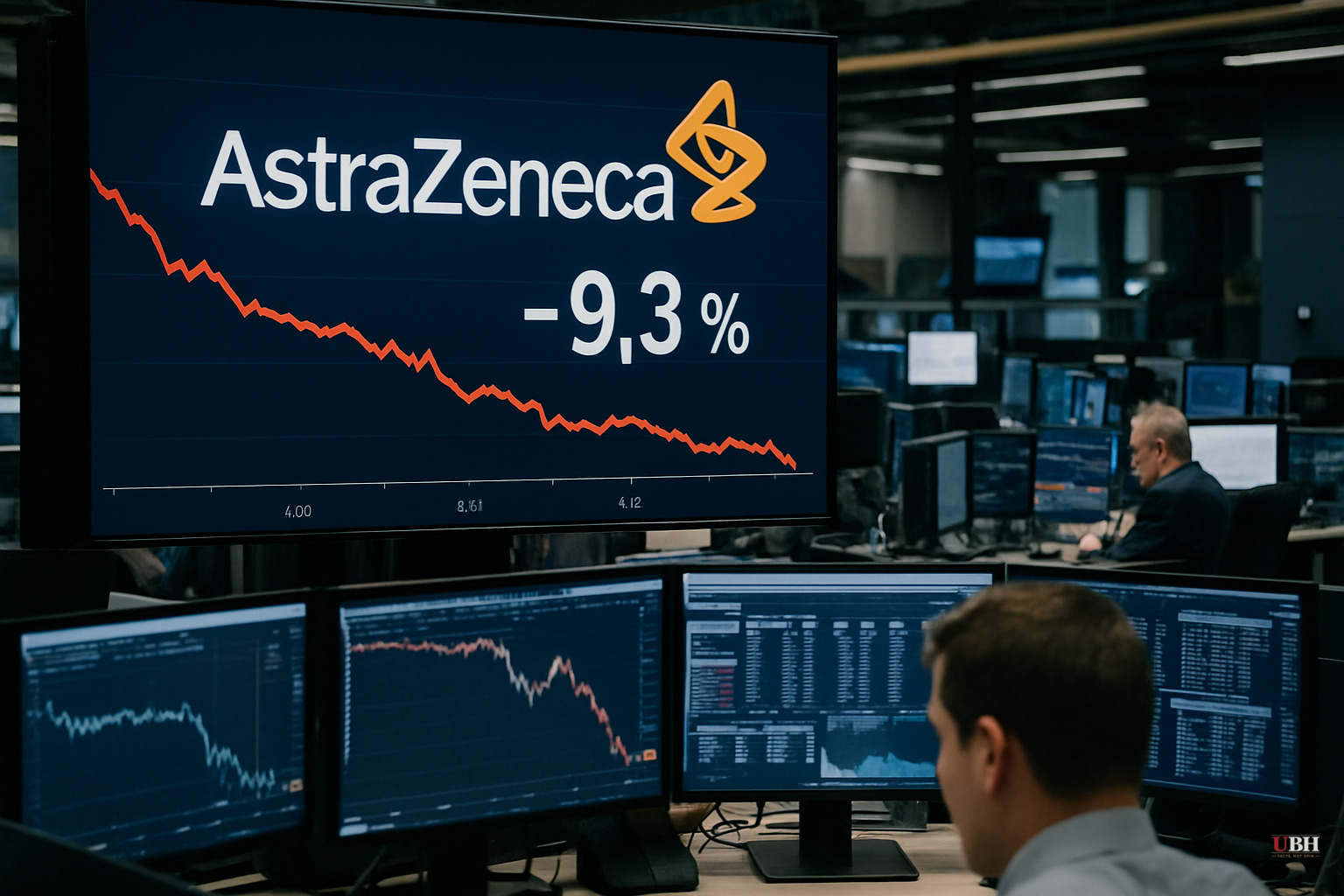
Since AstraZeneca disclosed the Wainua Phase III failure last week, the market reaction has grown into something larger than the drug itself.
Wainua was designed to treat ATTR cardiomyopathy, a rare and life-threatening heart condition. By most financial measures, its failure was a rounding error. Citi put the net present value impact at roughly 3%. Jefferies estimated around 2%. Leerink Partners' price target cut implied a similarly modest hit. Bank of America called the sales impact "mid-single digit." Morningstar said the decreased Wainua estimates "do not significantly change" its AstraZeneca valuation.
So why did the stock drop substantially more than those numbers would predict?
The Premium Under Review
For years, AstraZeneca has commanded among the richest valuations of any large European pharmaceutical company, according to CNBC. The logic was straightforward: under CEO Pascal Soriot's 14-year tenure, the company built a track record of late-stage trial success across oncology, rare diseases, and specialty medicines, and reliably replenished its portfolio with new blockbusters.
That track record was the product. Wainua's failure didn't blow up the product, but it introduced doubt about its consistency.
"This was meant to be a slam dunk making the outright failure surprising," Jefferies analysts wrote in a note to clients Thursday. The analysts went further, arguing the miss "puts a dent in the company's credibility" beyond whatever revenue Wainua would have contributed.
Dan Coatsworth, head of markets at AJ Bell, framed it plainly: AstraZeneca has had far more hits than misses recently, and that streak creates expectations that are punishing when they break.
The Strongest Counterargument
The bull case deserves a fair hearing. Wainua was never a pillar of AstraZeneca's financial story. It was a rare-disease asset in a crowded ATTR cardiomyopathy field where competitors like Alnylam already hold entrenched positions. One failed trial in a niche indication, in a pipeline as large and diversified as AstraZeneca's, is statistically inevitable over any multi-year span. Most analysts covering the stock still describe the long-term growth narrative as intact. AstraZeneca has publicly targeted $80 billion in annual sales by 2030, and Soriot's track record of delivering on ambitious targets is longer than one bad week.
That argument is reasonable. It also doesn't fully explain a two-day, roughly 10% slide on a drug that Citi says cost the company 3% of value.
Credibility and Valuation
The gap between analyst math and market behavior points to a credibility discount. Investors buying AstraZeneca at a premium to peers weren't paying for Wainua specifically. They were paying for confidence that Soriot's pipeline consistently converts late-stage bets into approved drugs. Wainua was considered a high-probability win. When high-probability wins fail, the models investors use to justify the premium get stress-tested.
AstraZeneca declined to comment on the share price reaction, according to CNBC.
What Comes Next
The concrete question now is whether the selloff is a repricing of the premium or a temporary sentiment reset. That answer depends on near-term pipeline readouts. AstraZeneca's 2030 target requires sustained clinical execution across a broad portfolio, and investors will scrutinize every upcoming data release with a sharper eye than they did two weeks ago. If the next major readout is clean, Thursday and Friday's losses will likely look like an overreaction. If another high-expectation program stumbles, the premium compression could continue regardless of what the individual financial models say.
Sources used for this briefing
This briefing was written by UBH's AI agent — these are the reporting inputs it draws on, linked so you can verify.


