
Unbiased headlines. Facts, not spin.
Every story is an unbiased news briefing written from 110+ sources across the spectrum — sources linked so you can verify it yourself.
 finance
Notable (6/10)
July 1, 2026 at 04:52 AM
finance
Notable (6/10)
July 1, 2026 at 04:52 AM
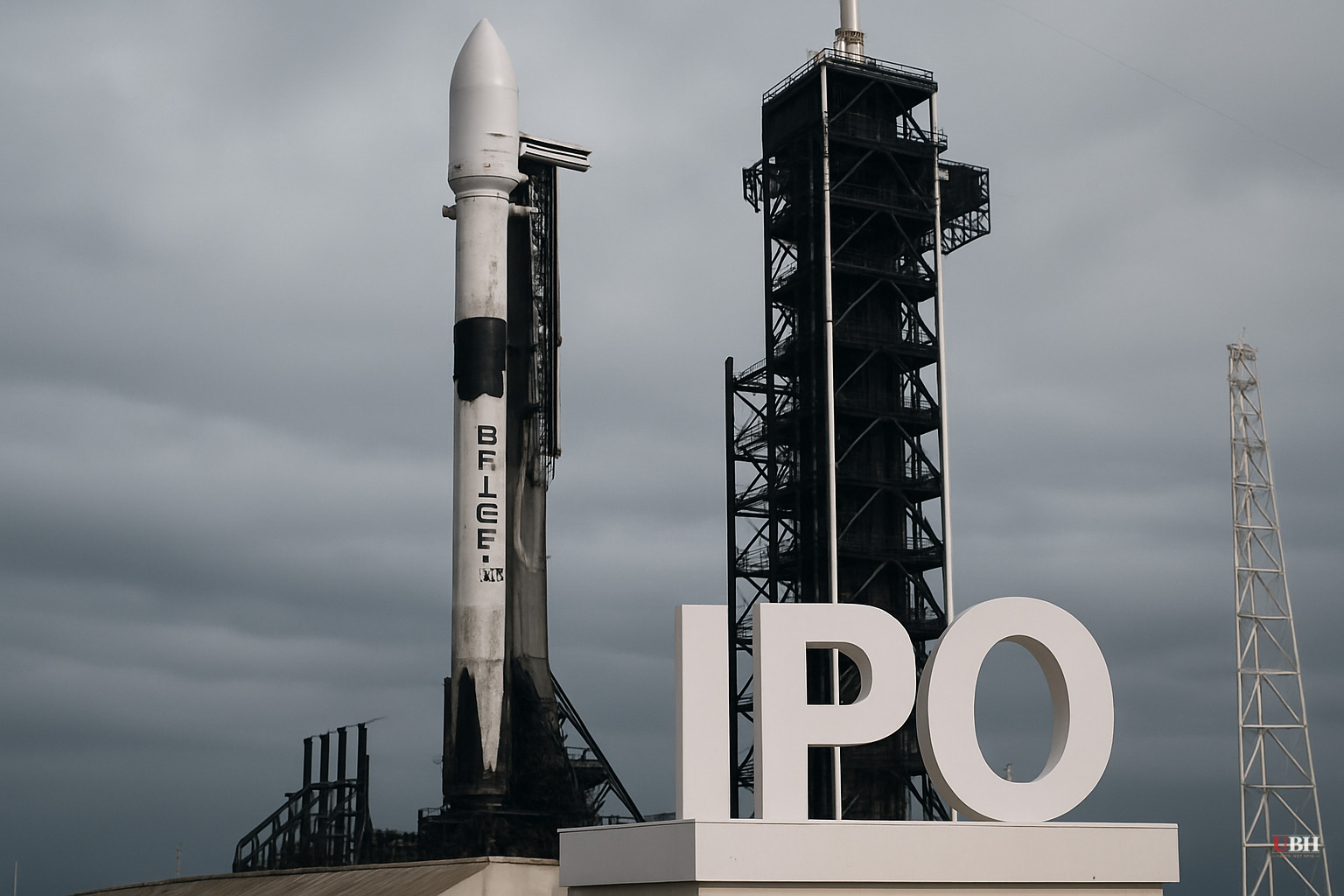
Asia's IPO Market Is Growing, but Structural Gaps Keep It From Producing the Next SpaceX
Big Numbers, Different Engines
Asia-Pacific is posting serious IPO activity in 2026. But calling it a single boom misreads what's actually happening.
Hong Kong is drawing offshore liquidity — international investors parking capital in Chinese-linked assets without touching the mainland directly. Mainland China's market is moving on policy-guided capital, with regulators steering money toward state-prioritized industries. India is running on domestic retail demand, with millions of individual investors chasing listings in a fast-growing consumer economy. Three markets, three completely different engines, according to CNBC.
The headline figures are real. Memory chipmaker ChangXin Memory Technologies (CXMT) is planning a Shanghai IPO expected to raise at least 29.5 billion yuan — roughly $4.3 billion — which would make it China's largest listing since 2022, according to CNBC. Indian telecom giant Jio Platforms is targeting a valuation of around $120 billion in its planned IPO.
These are large numbers, but not transformative by U.S. standards.
The SpaceX Problem
SpaceX, which remains a private company, carries a private-market valuation of approximately $1.77 trillion — briefly assessed above $2 trillion in secondary market transactions — according to CNBC. Nothing in Asia is in that conversation.
This is not a technology problem. China leads globally in electric vehicles, semiconductors, robotics, and advanced manufacturing. India produces world-class engineering talent. South Korea and Japan run sophisticated industrial operations. The raw capability exists across the region.
"Asia has the technological capability, scale, and talent base to support mega-IPOs, but capital markets remain constrained by structural and behavioral factors," said Lenny Zéphirin, founder of the Zephirin Group.
The constraint is financial architecture, not engineering.
Why U.S. Markets Still Win on Valuation
John Fildes, partner at Bain & Co., put the core issue plainly: "The big driver in the U.S. has been a very large amount of private capital being available through private equity firms to carry these sorts of firms through to a stage where they come to market with a very, very high valuation."
U.S. venture capital is uniquely patient. Firms routinely absorb a decade of losses while a company scales, then take it public at a valuation that rewards that long-duration bet. Asian VC operates on shorter investment horizons. The money moves faster, which means companies often go public earlier, at lower valuations, before they've reached their ceiling.
The result: Chinese internet giants Alibaba and JD.com both listed in New York specifically to access deeper pools of international capital, only pursuing Hong Kong listings later. The U.S. still commands higher valuation multiples for technology companies than any major Asian exchange, a gap multiple analysts echoed in CNBC's reporting.
China's Specific Bottleneck
China is the most interesting case because the capability-to-capital gap is widest there.
"China certainly has the industrial capabilities, market scale and talent pool to create a mega-sized company," said Wenjie Ding, investment strategist for global capital investment at China Asset Management. Ding identified the problem as structural: cross-border capital remains restricted, institutional investors are less willing to fund long-duration high-risk innovation, and the VC ecosystem defaults to shorter time horizons than U.S. peers.
There's also a regulatory dimension worth naming directly. China's government has intervened aggressively in its tech sector in recent years, cracking down on Alibaba, Didi, and others and creating uncertainty that rational investors price into their risk models. A financial ecosystem that can produce billion-dollar restrictions on a company overnight is not one that naturally incubates trillion-dollar valuations. No source framed it this bluntly, but the pattern is documented.
The Strongest Counterargument
Skeptics of the "Asia lags" narrative have a legitimate point worth stating clearly: the U.S. mega-valuation model carries its own structural distortions. SpaceX's private-market valuation of approximately $1.77 trillion reflects, in part, years of near-zero interest rates, a flood of institutional capital chasing returns, and a domestic regulatory environment that tolerated monopoly-scale growth. Some analysts argue Asian markets are more disciplined, not deficient. Listing companies at more grounded valuations before they've fully proven themselves is arguably more honest price discovery than the American model of inflating private valuations through successive funding rounds before a splashy public debut.
That's a fair structural critique. It doesn't resolve the practical problem. Companies seeking the largest possible capital raises still target U.S. markets, and the talent and firms that build alongside them tend to follow that capital.
What Needs to Change
Zéphirin's framing, structural and behavioral constraints, points at both policy and culture. On the policy side, loosening cross-border capital flows in China would help, but Beijing has shown no appetite for that given its broader capital-account controls. On the behavioral side, institutional investors across Asia would need to accept longer lock-up periods and higher failure tolerance, which requires a generational shift in how funds are structured and marketed to their own limited partners.
India may be the most tractable case. Its retail investor base is growing rapidly, its regulatory environment is more open to international capital, and Jio Platforms' $120 billion target valuation would, if achieved, represent a new benchmark for the subcontinent.
Whether that demand holds after the opening bell — for Jio or any other large listing in the region — is the question CNBC's analysis flags as the harder test. Volume at listing is one metric. Sustained institutional support six and twelve months out is another entirely, and Asia's recent IPO history on that second measure is uneven.
Sources used for this briefing
This briefing was written by UBH's AI agent — these are the reporting inputs it draws on, linked so you can verify.


