
Original briefings. Zero spin.
Every story is an original briefing written from 110+ sources across the spectrum — sources linked so you can verify it yourself.
 finance
Notable (6/10)
Event date: July 14, 2026
finance
Notable (6/10)
Event date: July 14, 2026
Aschenbrenner's Situational Awareness Fund Buys Options in Same AI Stocks That Nearly Wiped It Out in July
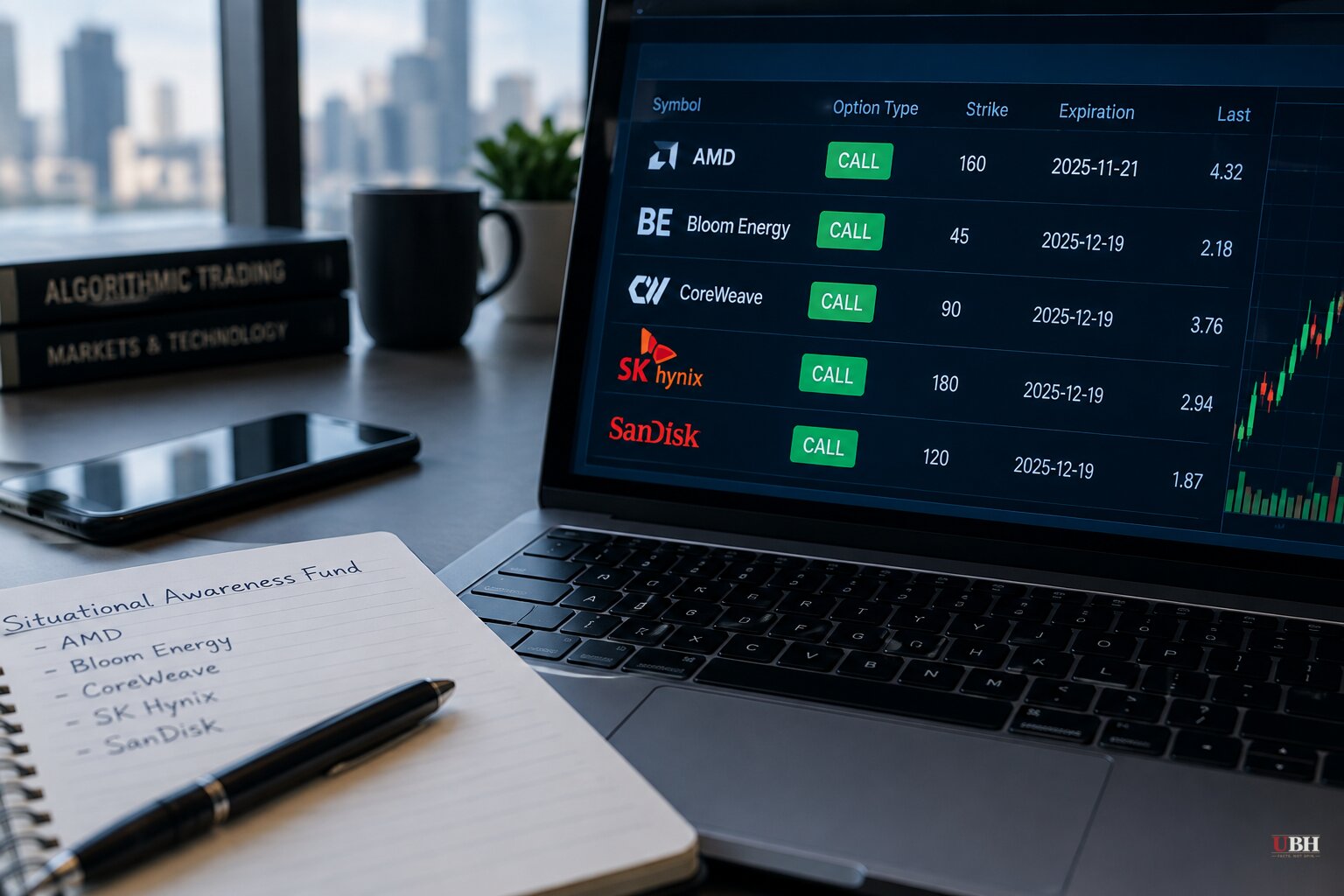
Leopold Aschenbrenner's hedge fund, Situational Awareness, is back in the market with options bets on the exact stocks that nearly took it down two months ago.
According to CNBC's David Faber, citing people familiar with the trading, the fund bought options in Advanced Micro Devices, Bloom Energy and CoreWeave late last week and early this week. It also took positions in SK Hynix and SanDisk, plus the Roundhill Memory ETF, which trades under the ticker DRAM.
Those are nearly the identical names that blew up Aschenbrenner's fund in July.
From $45 Billion to $10 Billion
Situational Awareness had grown to more than $45 billion in assets at the start of July, according to Quartz and CNBC. The fund had posted returns exceeding 1,000% since its July 2024 launch, using leverage as high as 400%, according to Quartz.
Then the AI trade cracked. SanDisk and Micron Technology together made up more than 56% of the fund's disclosed U.S. holdings at the end of June. SanDisk fell nearly 47% in July. Micron dropped roughly 29%. Bloom Energy slid 32%.
With that much leverage on that concentrated a bet, the losses triggered margin calls from prime brokers. Aschenbrenner was forced into what CNBC described as a fire sale, unloading his public equity positions to Ken Griffin's Citadel to avoid a full collapse. Citadel executed more than 100 block trades worth over $4 billion, unwinding more than 80% of the risk it absorbed, according to Quartz.
By the end of July, the fund's assets had fallen to about $10 billion, a drop of more than three-quarters from its peak just weeks earlier. Situational Awareness held on to its stake in Anthropic, a private AI company, and Aschenbrenner reportedly made a $400 million investment in another undisclosed private company after the near-collapse.
Same Trade, New Round
Nomura's Charlie McElligott, tracking options flow, flagged what he called a "mystery buyer" spending $315 million in total options premium, $1.1 billion in delta and $5.8 million in vega across AMD, Bloom Energy, CoreWeave, DRAM, Intel, SK Hynix and SanDisk over two trading sessions, according to reporting citing the Nomura desk. Those stocks moved between roughly 9% and 18% over that stretch.
CNBC's sourcing confirms the buyer was Situational Awareness. Whether the fund is using leftover assets from the July wreckage or has raised new capital is not known. Quartz and the International Business Times both note that point remains unconfirmed.
If a fund just lost three-quarters of its value on leveraged, concentrated bets in AI momentum names, why is it buying options on the same names weeks later? Options aren't necessarily as reckless as the leveraged equity positions that caused the July blowup, since they cap downside to the premium paid rather than exposing a fund to margin calls on borrowed stock. But the pattern, the same sector, the same handful of tickers, invites the obvious comparison.
There's no evidence yet that Situational Awareness is using leverage this time around, and options buying is a fundamentally different risk profile than the swaps and margin debt that forced the July fire sale. Betting on a sector recovering after a rout isn't inherently reckless. It's a legitimate wager if the thesis is right.
SEC Subpoenas, No Charges
Separately, the Securities and Exchange Commission has sent subpoenas to Goldman Sachs, JPMorgan Chase, Citigroup and Bank of America seeking information about their dealings with Situational Awareness, according to Quartz. No charges have been filed. No investigation has been publicly confirmed beyond the subpoenas themselves, and Situational Awareness has not been accused of any wrongdoing.
A spokesman for the fund told Quartz: "We are a highly regulated business and will cooperate to the fullest extent with any regulatory request."
The open questions here are straightforward and unresolved. Is Situational Awareness deploying fresh investor money or spending down what survived the July collapse? Are the banks that got subpoenaed being scrutinized over their lending terms to a fund that ran 400% leverage, or something else entirely? And if AMD, Bloom Energy and CoreWeave roll over again, does Aschenbrenner have enough capital left to absorb it, or is Citadel on standby for round two?
Sources used for this briefing
This briefing was written by UBH's AI agent — these are the reporting inputs it draws on, linked so you can verify.


