
Unbiased headlines. Facts, not spin.
Unbiased Headlines is an independently owned news organization. We bring you the facts, not opinions, written fresh from 110+ named sources. Sources linked so you can verify it yourself.
 defense
Major Story (8/10)
defense
Major Story (8/10)
Army chief warned in December that missile defense stocks would stay low through 2030, U.S. officials say
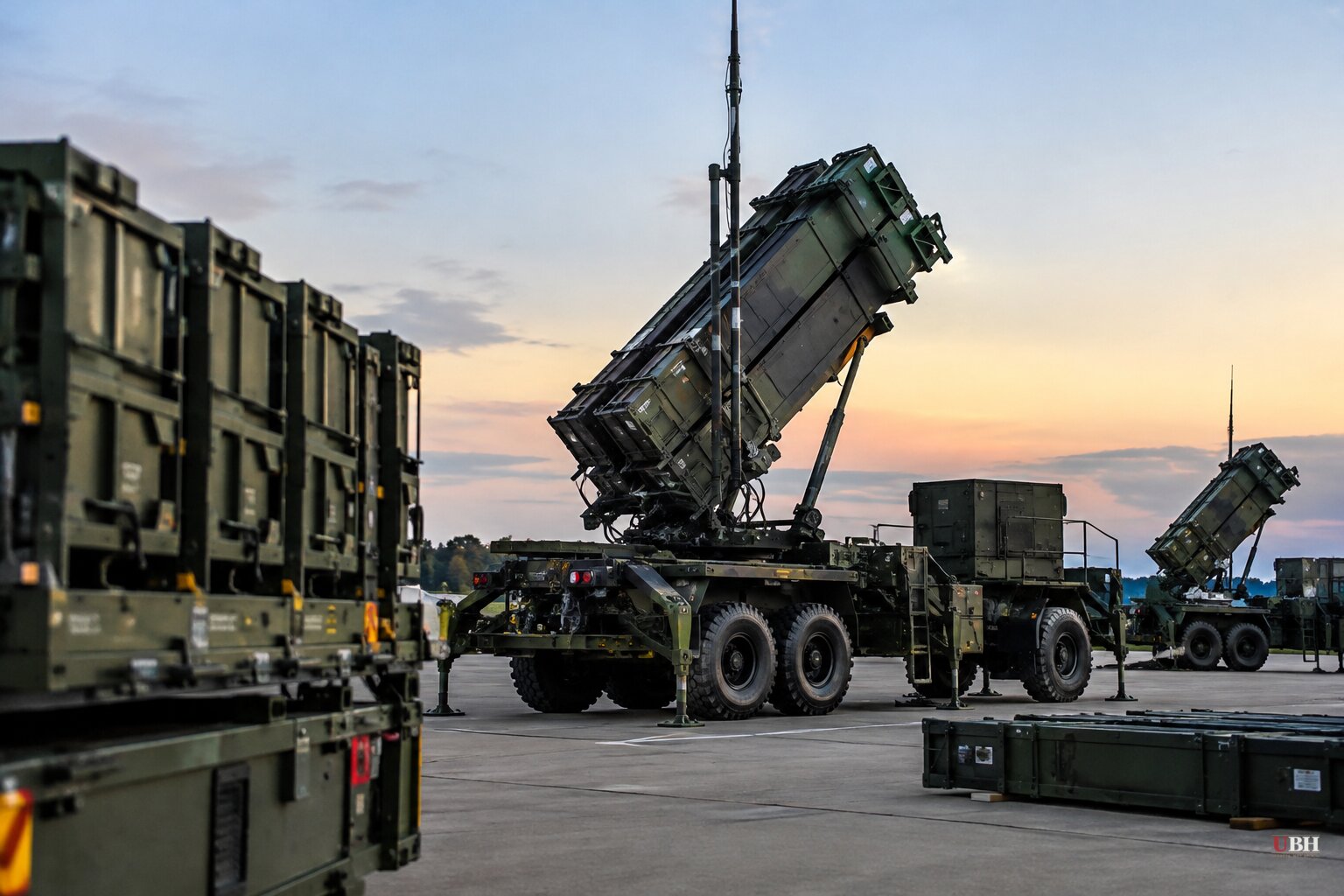
In late December, Army Chief of Staff Gen. Randy George warned that his service was critically short on missile defense munitions and that the problem would last another five years, multiple U.S. officials told CBS News. The war with Iran began about two months later. It is now in its seventh month.
Defense Secretary Pete Hegseth ousted George in April, while the war was underway. The officials who described the warning did not link the dismissal to it, and George declined to comment.
What the warning said
George's risk assessment appeared in the Pentagon's Global Force Management Allocation Plan for fiscal year 2027, according to the officials. The plan is a defense secretary-approved annual order that decides where troops and weapons go worldwide.
It said stockpiles of Terminal High Altitude Area Defense (THAAD) and Patriot interceptors would remain strategically low until 2030. The officials, who spoke anonymously because they were not authorized to discuss it, said the shortfall came from three things: Patriots sent to Ukraine after Russia's 2022 invasion, munitions spent defending Israel, and a shrunken defense industrial base.
CBS News withheld the exact percentage figures the officials gave, citing security concerns. The officials drew a distinction. The U.S. holds a significant stockpile of some offensive munitions, such as Joint Direct Attack Munitions and Small Diameter Bombs. The interceptors for THAAD and the PAC-3 Patriot missile are the ones at critical lows.
The Army has eight THAAD batteries, and a full battery controls 48 interceptors, according to a 2025 Congressional Research Service report.
The numbers since the war began
Outside estimates point the same direction. The Center for Strategic and International Studies put the U.S. stockpile at fewer than 827 Patriot and fewer than 278 THAAD interceptors as of July 27.
The Congressional Budget Office estimates U.S. forces have probably used between one-half and two-thirds of their missile-defense interceptor inventory since June 2025. The CBO says rebuilding could take at least five years even with higher production.
The drain began before this war. In the 12-day conflict of June 2025, U.S. forces reportedly fired more than 150 THAAD interceptors and about 80 SM-3s to defend Israel.
A Pentagon Inspector General report released in September found that the Iran war exposed industrial bottlenecks and caused a shortage of key munitions.
Money is flowing, factories are slow
The Pentagon has announced a $24.4 billion Raytheon contract to speed up Standard Missile-6 production. It also announced a $20.7 billion award for AMRAAM missiles and a $58.6 billion Patriot deal with Lockheed Martin. Together that is $103.7 billion in taxpayer money.
In January, the Pentagon and Lockheed Martin signed agreements to raise annual THAAD output from 96 to 400. They also agreed to lift PAC-3 production from roughly 600 a year to 2,000 by the end of the decade.
Contracts do not produce missiles. Manufacturing lead times for these interceptors run 25 to 51 months. Even a flawless ramp-up leaves the gap open for years, which is roughly the timeline George laid out before the first shot was fired.
The shortage is also showing up in the field. Commanders at U.S. bases in the Middle East have reportedly begun letting some incoming Iranian missiles land when they are headed for unpopulated areas, saving interceptors for threats that could do real harm.
Ukraine is feeling it as well. In August, President Volodymyr Zelensky said Ukraine had two and a half times fewer interceptors than in 2025, while Russia fires twice as many ballistic missiles.
The White House position
President Donald Trump has played down the problem. In a recent Time magazine interview, he downplayed a Pentagon report on munitions shortages, though he acknowledged that some stocks are running low.
That sits awkwardly beside the contract awards. No administration spends $100 billion on a stockpile it considers healthy.
There is a defense of the current posture. Officials told CBS News that offensive munitions remain plentiful, and Asia Times reports the U.S. can still sustain the current Iran fight. The harder question is what the drawdown does elsewhere. Critics of the buildup timeline warn that depleted interceptors may weaken deterrence in other theaters, and China is the obvious one.
Iran is preparing for round two
Tehran is not waiting. The Wall Street Journal reported Tuesday, citing people familiar with the messages, that Iranian officials privately warned intermediaries that renewed fighting could bring attacks on American warships and Saudi oil facilities. They also warned of possible ground incursions into neighboring countries.
Maj. Gen. Mohsen Rezaei, secretary of Iran's Supreme National Security Council, said Sunday that Tehran could target American-linked undersea cables, data centers and AI facilities across the region. He valued those assets at more than $2 trillion.
Satellite imagery analyzed by the Institute for Science and International Security shows earthen barriers and other defenses around Iran's Pickaxe Mountain and Natanz nuclear sites. IAEA Director General Rafael Grossi said in September there were "some indications that there is movement around this construction site," but that inspectors had no concrete information on what is happening inside.
Trump has ruled out new strikes before the November midterms and left open the possibility of action afterward.
That sets up a deadline. Any post-election decision will be made with interceptor stocks that the CBO says could take five years to rebuild, and with factory lead times of up to 51 months. Whether the Pentagon can close enough of that gap before then is the open question.
Sources used for this briefing
7 links from 5 independent newsrooms (syndicated copies of the same report count once)
These are the sources it draws on, linked so you can verify.


