
Unbiased headlines. Facts, not spin.
Unbiased Headlines is an independently owned news organization. We bring you the facts, not opinions, written fresh from 110+ named sources. Sources linked so you can verify it yourself.
 defense
Major Story (7/10)
Event date: October 15, 2026 ·
defense
Major Story (7/10)
Event date: October 15, 2026 ·
Army Activates 4th Multi-Domain Task Force at Fort Carson as New Guidance Details Strikes Inside First Island Chain
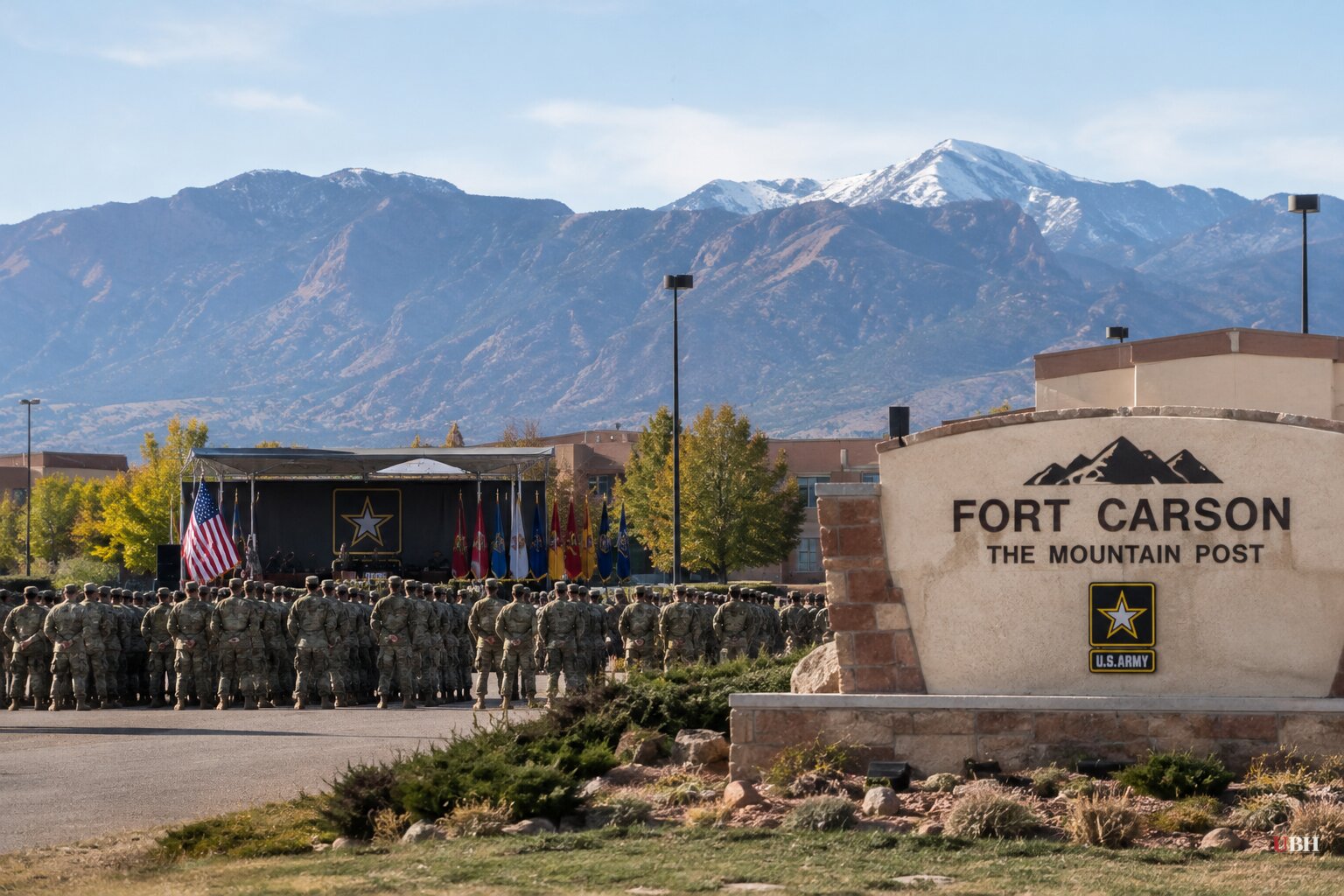
The US Army has formally added a fourth specialized task force to its Pacific playbook, and it has put the thinking behind it on paper.
The 4th Multi-Domain Task Force (MDTF) was established at Fort Carson, Colorado, on Oct. 8. It has nearly 2,100 soldiers. The unit is designed to counter Chinese efforts to keep American and allied warships and aircraft out of the western Pacific in a conflict.
It reports to the 7th Infantry Division, also known as Multi-Domain Command – Pacific, which was established in June. Earlier task forces were activated in Washington state, Germany and Hawaii.
What the October guidance calls for
The Army's October 2026 operational guidance lays out how its forces would operate in a potential conflict with China, according to Military Watch Magazine's account of the document. The guidance covers long-range strikes within the First Island Chain, dispersed combat formations, and sustaining operations across contested supply routes.
It includes a hypothetical Taiwan scenario. In it, Army strike capabilities are deployed from northern Luzon in the Philippines.
Long-range precision fires are listed as a core requirement. The guidance calls for enough range and ammunition capacity to hit adversary launch sites and maritime targets across the western Pacific. It also calls for the ability to penetrate anti-access/area-denial (A2/AD) defenses, the layered missile and sensor networks meant to keep an opponent out of a contested region.
The Army's Typhon launcher, which fires Tomahawk and SM-6 missiles, is the kind of system that fits that description. The guidance, as described, does not turn on any single weapon.
Protecting bases, moving supplies
The document spends as much time on survival as on offense. It calls for stronger air and missile defenses, counter-drone capabilities and more resilient installations. It also calls for spreading forces and equipment out so they are harder to hit in a concentrated strike.
Threats named include missile attacks and one-way attack drones. Logistics hubs and power-projection facilities are flagged as targets for long-range strikes, sabotage and cyberattacks.
On supply, the guidance calls for decentralized hubs, alternative transportation routes and autonomous systems that deliver ammunition and essentials to scattered units. It also points to forward-deployed manufacturing so units can repair equipment and produce critical components close to the fight, rather than depend on long, exposed supply lines.
Access is the other pillar. The guidance calls for tighter coordination with regional partners on bases, ports, airfields and flight routes.
The backdrop
Beijing continues to claim sovereignty over Taiwan and has not ruled out using force. On Oct. 10, the State Department described China's maritime activity near Taiwan as "deeply destabilizing," after Taipei raised concerns that the activity could be rehearsals for a blockade.
Taiwan, for its part, is acquiring an AI-powered satellite imagery system meant to quickly identify People's Liberation Army ships, aircraft and missile launchers. The aim is better early warning as Chinese military pressure grows.
Congress weighs in
Sen. Michael Bennet, a Colorado Democrat on the Senate Select Committee on Intelligence, wrapped up a trip to Hawaii, Japan and Taiwan this month. His office released an account on Oct. 15. He met Taiwan President Lai Ching-te and Joseph Wu, secretary-general of Taiwan's National Security Council. In Hawaii he met PACOM Deputy Commander Lt. Gen. George Rowell. In Japan he met Takayuki Kobayashi of the ruling Liberal Democratic Party and State Minister of Defense Kiyoshi Odawara.
Bennet said leaders in Japan and Taiwan told him they are ready to contribute their "fair share" to collective deterrence.
He also took a shot at the White House. Bennet said he will keep "pushing the Trump administration to advance the billions of dollars in arms sales to Taiwan that Congress has already authorized and appropriated." That is his characterization, and the administration's position on the pace of those sales is not laid out in his statement.
The Colorado angle matters to him. Bennet said Colorado-based Space Force and Army units play a role in regional deterrence, and the new task force sits at Fort Carson.
He is also pushing legislation on regional intelligence cooperation, space collaboration with Taiwan, and sharing drone expertise learned in Ukraine with Taipei and Tokyo.
The guidance puts numbers and logic behind striking from dispersed positions and keeping supplies moving under fire. Another task force is on the books. The Philippine scenario shows how much of the plan rests on allied territory.
The unresolved items are mostly political. The Army can write the guidance and activate the units. Access to bases in the Philippines and Japan is up to Manila and Tokyo. The Taiwan arms pipeline that Bennet says is stalled is up to the administration.
Bennet has said he will keep pressing on all three: the arms sales, his intelligence and space legislation, and the drone-sharing proposals.
Sources used for this briefing
7 links from 7 independent newsrooms (syndicated copies of the same report count once)
These are the sources it draws on, linked so you can verify.


