
Unbiased headlines. Facts, not spin.
Unbiased Headlines is an independently owned news organization. We bring you the facts, not opinions, written fresh from 110+ named sources. Sources linked so you can verify it yourself.
 health
Major Story (8/10)
Armed Men Kill at Least 33 in Cantine, DRC; Officials Blame ADF as 180 Ebola Patients Flee Attack
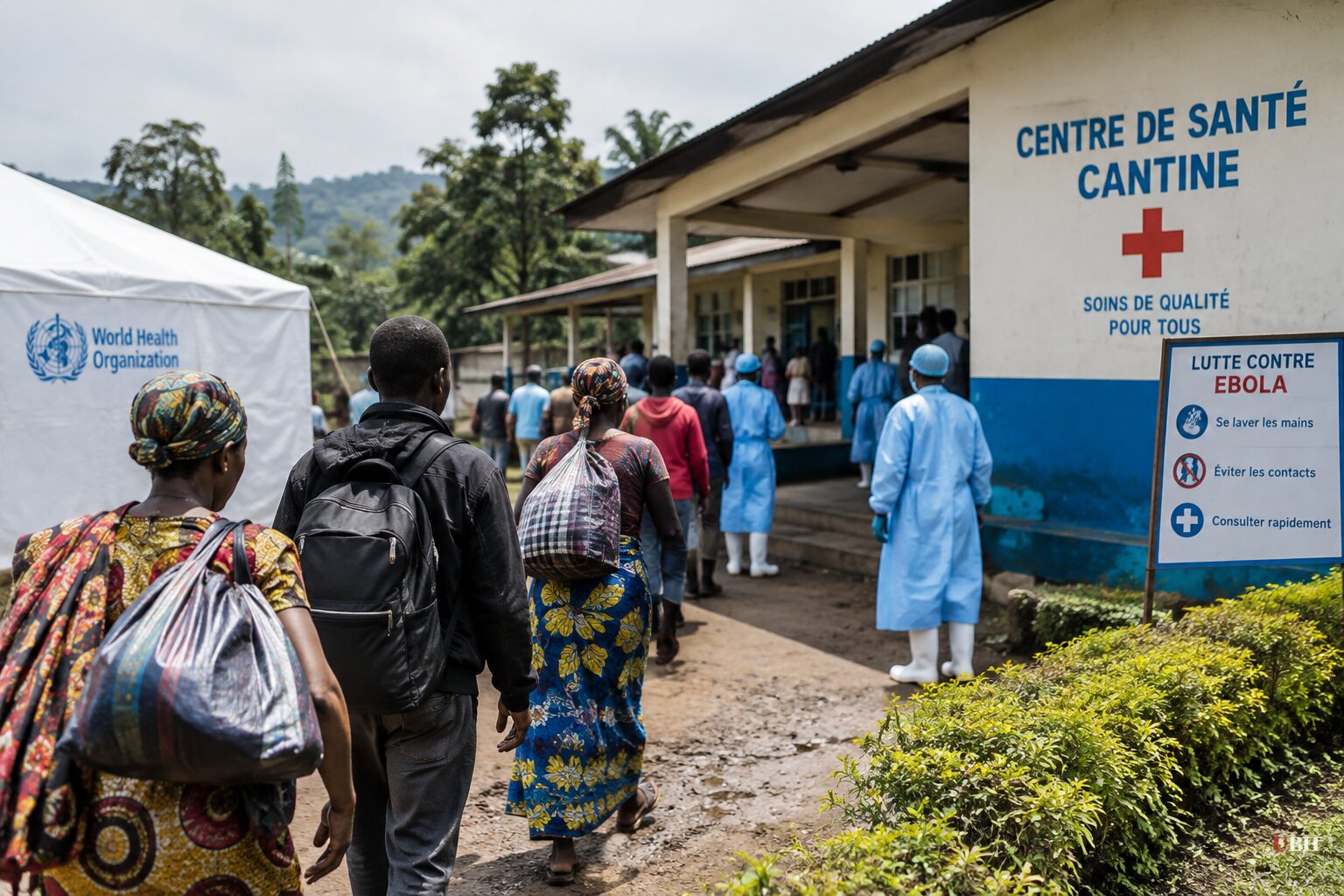
Armed men raided villages in eastern Democratic Republic of Congo overnight, killing at least 33 people and setting fire to a health post in the middle of the world's fastest-spreading Ebola outbreak.
The attack hit Cantine, about 50 km west of Beni in North Kivu province. Beni territorial administrator Colonel Charles Omeonga said Friday, Nov. 6, that fighters from the Allied Democratic Forces (ADF) set houses on fire and killed civilians.
Justin Paluku, head of a local civil society group, also blamed the ADF. "So far, we have counted 33 bodies and more than 50 houses set on fire, along with various other forms of material destruction," he said.
Tchetche Aliamini, another local civil society leader, confirmed the toll. Most victims suffered gunshot wounds, he said. Others were burned or hacked with machetes. No group has claimed the attack.
Ebola patients scatter
Christian Kakule, medical director of the Kelekele Hospital Centre in Cantine, said gunfire and burning homes came as close as 50 metres from the hospital. About 180 patients fled, including suspected Ebola cases and one confirmed case.
"High-risk contacts and other individuals under monitoring have all fled," Kakule said. "Our concern is that when probable cases end up out in the open like this, they can become a source of transmission and trigger an outbreak of the disease."
The flight of monitored contacts hits the weakest part of the response. Contact tracing is already failing. The Africa CDC says about 80% of new cases come from outside the chain of monitored contacts.
North Kivu accounts for almost half of all new infections in the Bundibugyo outbreak. It is the second most affected province after Ituri. Villagers fleeing Cantine are moving into other parts of that same province.
The outbreak by the numbers
The DRC Ministry of Health counted 5,026 deaths among 10,351 cases as of Oct. 31, a lethality rate near 50%. The Africa CDC now puts the toll at more than 10,000 cases and 5,300 deaths nationwide.
The outbreak was declared in mid-May and has reached 67 of the country's 178 health zones across eight of 26 provinces. Fifty of those zones have active cases. It is already the second deadliest Ebola outbreak on record. Only the 2014-2016 West Africa epidemic, which killed about 11,000 people, was worse.
There is no known vaccine or specific treatment for the Bundibugyo strain. Health workers treat symptoms. Dr. Patrick Otim of the World Health Organization said one-third of those who died never received care and died outside treatment centers before being tested.
"These are people we never had opportunity to try to save them," Otim said.
Hostility toward responders
Violence is not limited to armed groups. In Bafwasende, two community health workers were attacked by a mob, according to local officials. One, an experienced male nurse, was killed. The other, a teacher, was seriously injured but escaped.
The group that confronted them shouted, "Here are the people that are spreading the Ebola virus through peoples toilets and rivers!" according to local officials. Doctors and nurses in Bafwasende are sheltering at the hospital under police guard, a local health official said.
WHO Director-General Tedros Adhanom Ghebreyesus responded: "Everyone working to protect communities from this deadly disease must be able to work in dignity and safety. Healthcare must always be protected."
Health officials in the DRC blame disinformation, including material spread by insurgents, for the distrust. They say some people fear hospitals because they believe doctors inject patients with Ebola. Others deny the disease exists. Mobs have also turned violent when hospitals refuse to return bodies of Ebola victims for traditional burial.
Senior UN Ebola coordinator Julien Harneis called the nurse's killing "a loss to the Ebola response and an even greater loss to patients."
A crowded battlefield
The ADF has roots in Uganda and pledged allegiance to ISIL in 2019. It has long operated in the border region and routinely attacks civilians. In July 2025 it killed 66 people in eastern DRC in what the United Nations called a "bloodbath."
About 100 other armed groups operate in the country. The most prominent is the Rwanda-backed M23, which has seized key cities in the east while Ebola cases climb.
North Kivu was the epicentre of three earlier Ebola outbreaks, including the 2018-2020 epidemic that was the DRC's largest and deadliest until this year.
Neither authorities nor the health ministry have said where the 180 patients and their monitored contacts went, or whether teams can find them before symptoms spread the virus beyond Cantine.
Sources used for this briefing
7 links from 7 independent newsrooms (syndicated copies of the same report count once)
These are the sources it draws on, linked so you can verify.


