
Unbiased headlines. Facts, not spin.
Unbiased Headlines is an independently owned news organization. We bring you the facts, not opinions, written fresh from 110+ named sources. Sources linked so you can verify it yourself.
 health
Notable (6/10)
Stanford Team Reports Human Brain Tissue Filled Cavities in Mouse Brains in Nature Study
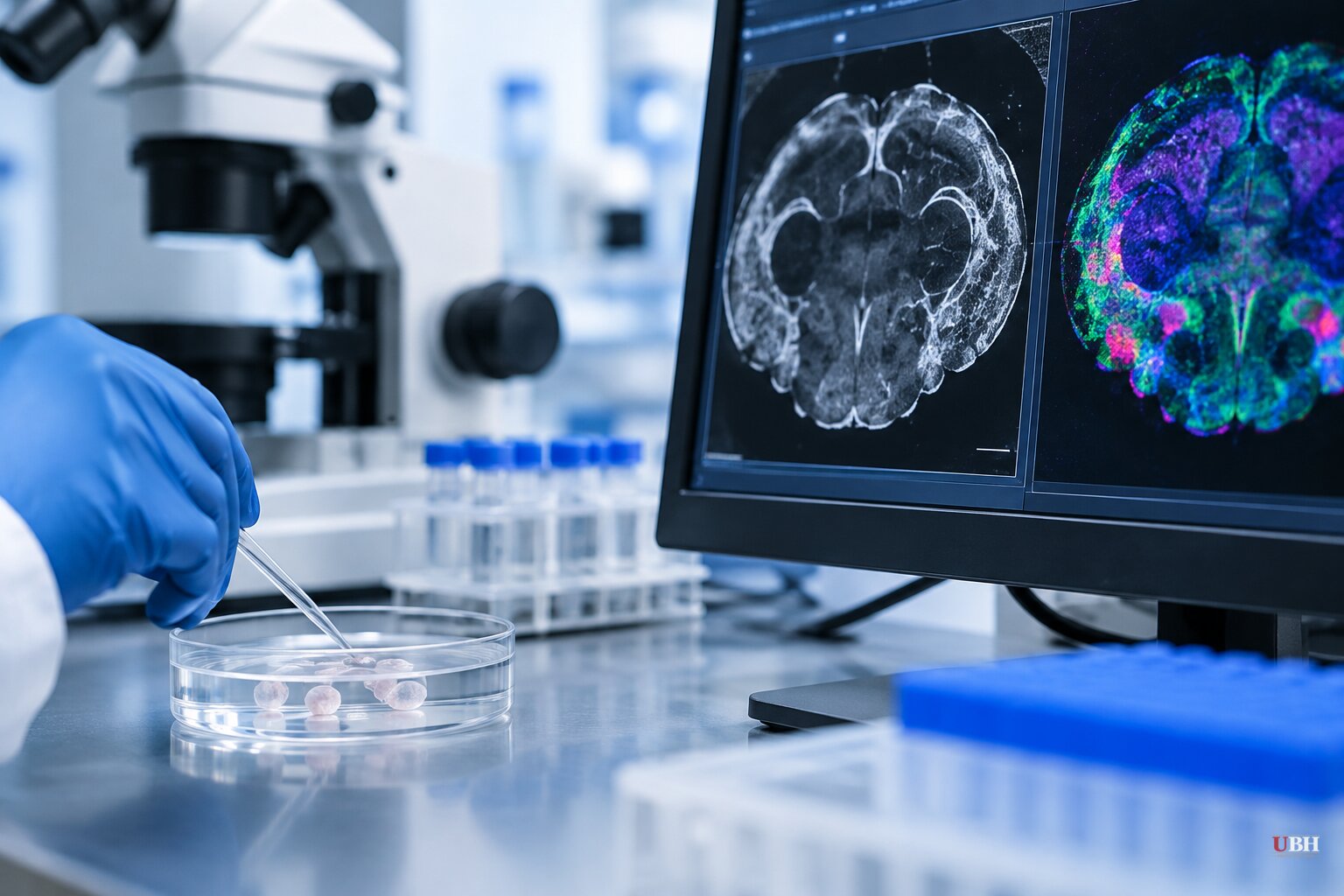
Mice at a Stanford University lab are running around their cages with millions of working human neurons in their brains.
According to a study published in Nature, researchers implanted lab-grown human cells into mice that had been genetically engineered to lack most of the cerebral cortex and the neighbouring hippocampus. The cortex handles perception, movement, decision-making and attention. The hippocampus is needed for learning and memory.
The researchers call the animals "alien-cortical mice." They say the model could offer a new way to study neural circuits and brain disorders including schizophrenia, cerebral palsy and dementia.
How the experiment worked
When the mice were two days old, the team injected human "organoids" into the empty spaces in their brains. Organoids are miniature masses of cells grown in a laboratory to mimic real organs. These were grown from the stem cells of healthy donors, and each held about 100,000 human cells.
In total, the engineering removed about 14 million mouse neurons, and the researchers added about 4 million human ones.
The team tried the procedure on 29 mice. It worked on 25.
What happened inside the brains
Within three months, the human tissue had grown about five times larger. It connected to the mice's blood supply and filled more than 90 percent of the cavities. Human tissue made up about half of the animals' brain volume.
The mice walked and vocalised mostly normally. In a maze test, mice without the implanted human tissue kept getting lost, while those with human cells did better. The researchers say that suggests the human tissue contributed to cognition.
Some of the implanted tissue also developed into von Economo neurons. These are long, rare cells normally absent in mice and almost impossible to make in a lab. They are found in highly social animals such as humans, apes, whales and elephants. The appearance of those cells was unexpected.
Why cerebral palsy is part of the study
Cerebral palsy has been hard to study in rodents. Human infants can suffer oxygen deprivation during childbirth, which is longer and more complicated for humans. Mouse pups rarely do.
When the modified mice were exposed to low oxygen, they showed brain damage, an altered gait and poor limb coordination. That gives researchers a rodent model with human cortical tissue that reacts to oxygen loss in a way ordinary mice do not.
The broader case for the work is the difficulty of studying human brain disease. The human brain contains about 86 billion nerve cells linked by trillions of connections, and that complexity is hard to reproduce in a dish or a standard mouse.
The ethical question the researchers anticipated
Putting human brain tissue into an animal raises obvious discomfort, and the Frankenstein comparison is hard to avoid. The researchers addressed it directly. They emphasised that this is not a brain transplant and that the animals are not "mice that think like humans."
The numbers back up the narrow scope of what was done. The human tissue fills space left by engineered deletions. The mice still run on a mouse brainstem and mouse circuitry elsewhere, and the behavioural results describe mostly normal walking and vocalising rather than anything resembling human cognition.
The maze result is the most interesting and the most limited finding. It shows that mice with human tissue outperformed mice with empty cavities. It does not show how the tissue is doing the work.
What remains open
The study reports a success rate of 25 of 29 animals, a small sample. How the human neurons wire into mouse circuits, and whether findings in these animals translate to patients with schizophrenia, cerebral palsy or dementia, are the questions the model is meant to answer. The cerebral palsy low-oxygen test is the first concrete application the researchers describe.
Sources used for this briefing
3 links from 3 independent newsrooms (syndicated copies of the same report count once)
These are the sources it draws on, linked so you can verify.


