
Unbiased headlines. Facts, not spin.
Every story is an unbiased news briefing written from 110+ sources across the spectrum — sources linked so you can verify it yourself.
 tech
Major Story (7/10)
July 8, 2026 at 06:07 AM
tech
Major Story (7/10)
July 8, 2026 at 06:07 AM
Apple Testing Chinese State-Backed Memory Chips for China-Market Devices, Lobbying Washington for Broader Clearance
What Apple Is Doing
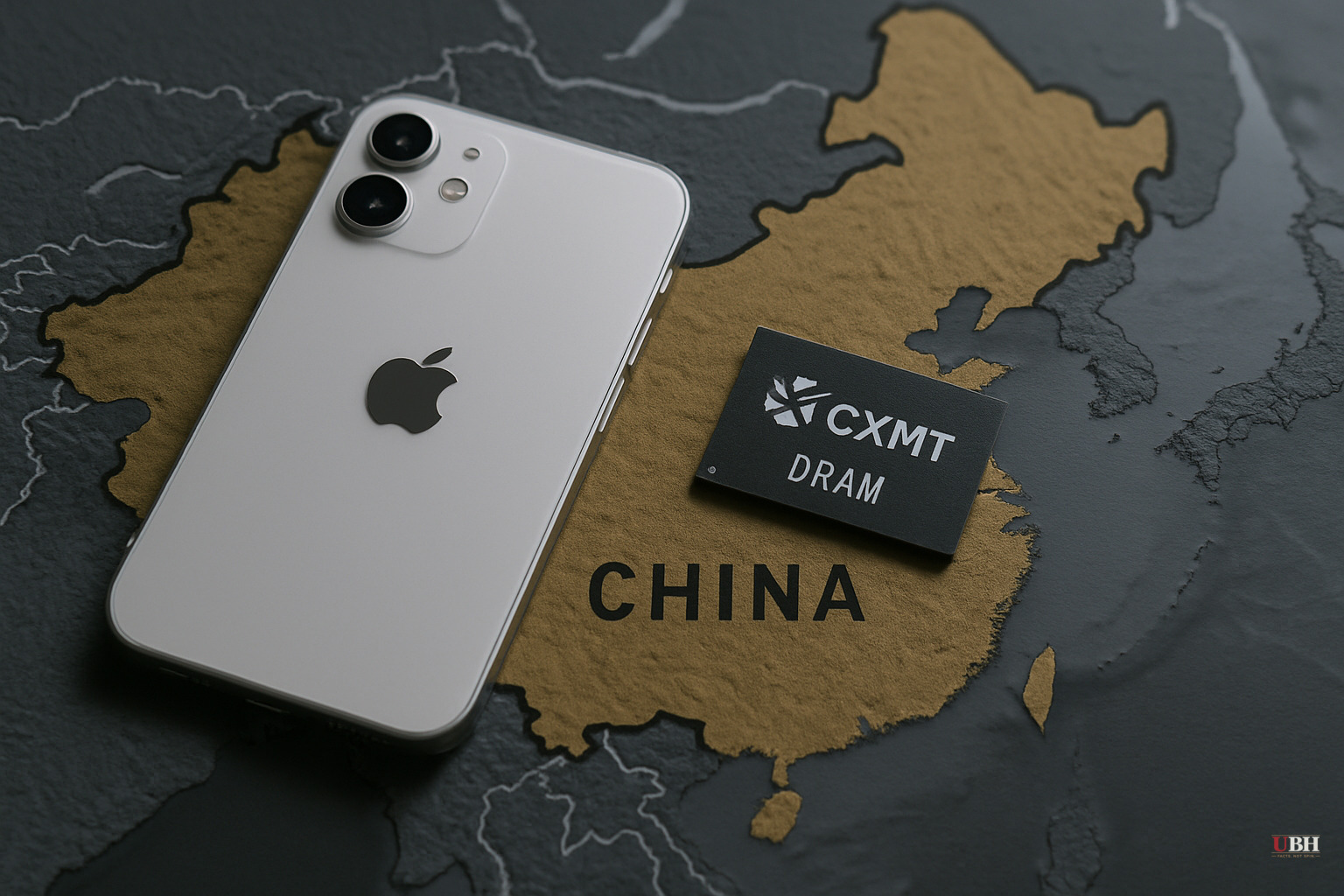
Apple has started testing DRAM chips from China's ChangXin Memory Technologies — known as CXMT — for devices intended for the Chinese market, according to the Financial Times, which cited people familiar with the matter. Alongside that testing, Apple is actively lobbying the U.S. government to permit broader use of CXMT's products.
CXMT is currently the world's fourth-largest producer of DRAM, the memory chip that powers everything from smartphones to data center servers. Its main global competitors are Samsung Electronics, SK Hynix, and Micron Technology — two South Korean firms and one American one.
Who Owns CXMT
At least 15 state-owned shareholders collectively hold 36% of CXMT, according to the Financial Times. Many of its private investment funds also carry backing from state-owned limited partners. CXMT is not a purely private company operating in a free market. It is deeply woven into the Chinese government's industrial strategy.
Beijing has positioned CXMT as central to building a self-sufficient AI supply chain. The company is reportedly planning an IPO on the Shanghai exchange, targeting a raise of at least 29.5 billion yuan, approximately $4.3 billion, according to the FT.
This Fight Is Not New for Apple
In 2022, Apple explored using Chinese memory suppliers and drew sharp pushback from U.S. policymakers. One of those critics was then-Senator Marco Rubio — now serving as Secretary of State. Apple is revisiting this territory with the same geopolitical backdrop now significantly more charged.
Reuters has separately reported that the Trump administration has held off on adding CXMT, AI startup DeepSeek, and more than 100 other Chinese companies to the U.S. trade blacklist, despite those companies being flagged internally as national security risks. The stated reason: avoiding escalation with Beijing. That decision conflicts with the administration's broader posture on China tech.
The Industry's Longer-Term Worry
CXMT's market share stood at roughly 11% last year. According to SemiAnalysis analyst Ray Wang, that figure is expected to climb to 15% by 2028, as new production lines come online in Hefei, Shanghai, and Beijing.
Wang also told the FT that CXMT is unlikely to immediately flood the global market with cheap chips. Its output is largely pre-committed for now. But the semiconductor industry is watching a familiar playbook unfold. State-subsidized capacity in solar panels and electric vehicles ultimately hammered global prices and squeezed foreign competitors into losses or consolidation. Memory chips could follow the same arc.
For Micron Technology specifically, this is a direct threat. Micron is the only major U.S. DRAM producer. If CXMT eventually gains cost advantages through state subsidy and scales to 15%-plus market share, the pricing pressure on Micron could be significant. Micron has no state backstop to absorb it.
The Strongest Argument for Apple's Position
Apple's defenders will make a reasonable point: the company sells hundreds of millions of devices in China and competes against heavily subsidized domestic brands. If Chinese smartphones ship with CXMT chips and Apple's China-market devices cannot, Apple is at a structural cost disadvantage in its single largest market outside the United States. Testing a local supplier for local sales is a rational business decision, not a geopolitical statement.
There is also no evidence presented in these sources that Apple is incorporating CXMT chips into devices sold in the United States or other markets. The reported testing is China-specific.
Where the Concern Is Legitimate
That reasonable defense does not resolve the harder question. Apple lobbying the U.S. government to expand its permitted use of a 36%-state-owned Chinese chip company goes beyond supply chain optimization for one market. It is asking Washington to soften the regulatory perimeter that Congress and multiple administrations have spent years building around Chinese state-linked tech firms.
Rubio made that argument in 2022 as a senator. He is now the nation's chief diplomat. Whether his office weighs in on Apple's current lobbying push and how is an open question that neither Apple nor CXMT has addressed. Both declined to respond to the Financial Times's request for comment.
The Unresolved Question
The Trump administration's decision to keep CXMT off the trade blacklist despite national security flags, combined with Apple's active lobbying for broader CXMT access, sets up a direct collision: at what point does accommodating American corporate interests in China actively undermine the semiconductor containment strategy those same officials publicly champion? That question has no answer yet, and the administration has not publicly explained the gap.
Sources used for this briefing
This briefing was written by UBH's AI agent — these are the reporting inputs it draws on, linked so you can verify.


