
Unbiased headlines. Facts, not spin.
Every story is an unbiased news briefing written from 110+ sources across the spectrum — sources linked so you can verify it yourself.
 finance
Major Story (7/10)
June 25, 2026 at 11:56 PM
finance
Major Story (7/10)
June 25, 2026 at 11:56 PM
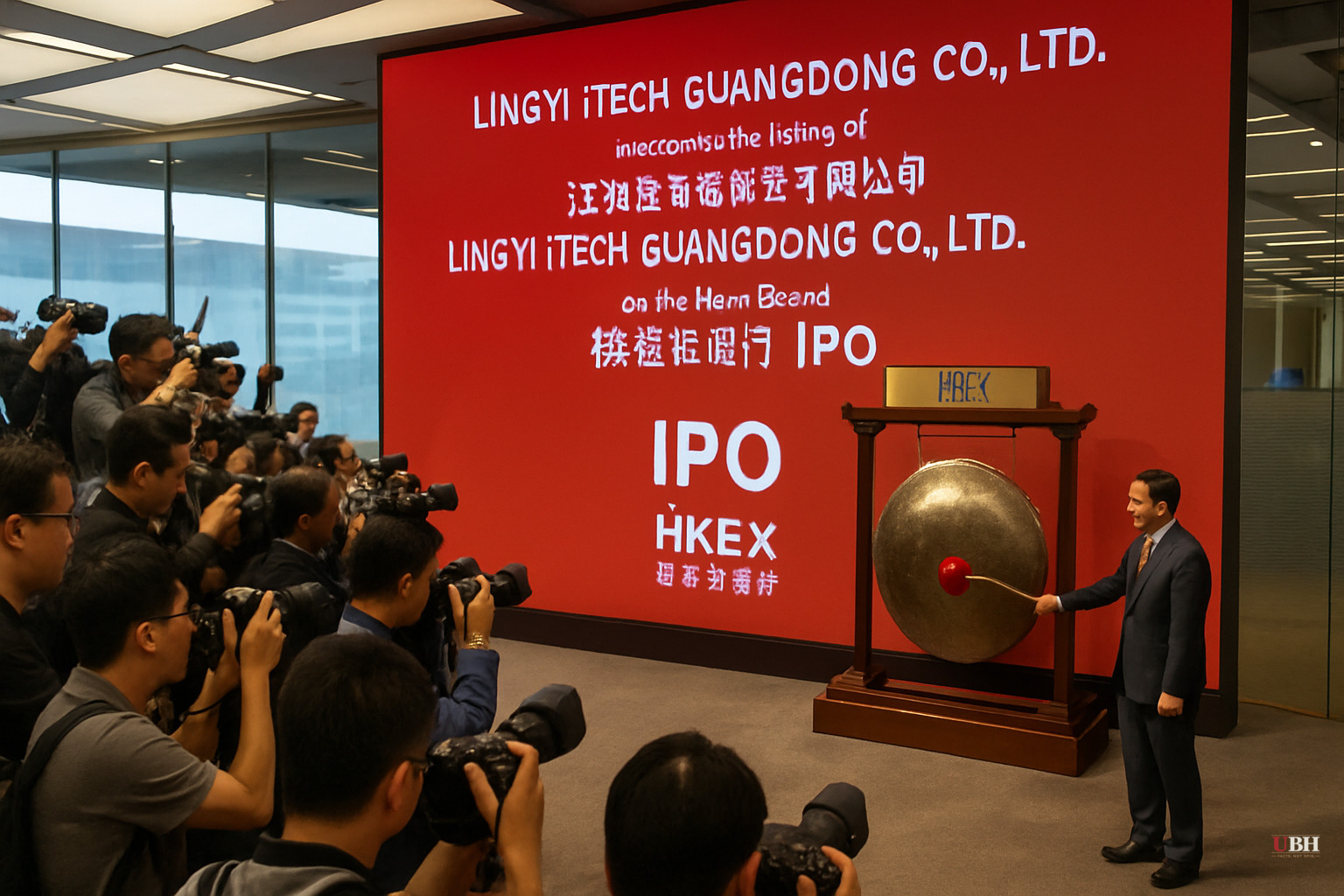
Apple Supplier Lingyi iTech Set to Begin Hong Kong Trading Friday After $1.06 Billion IPO
What Happened
Lingyi iTech Guangdong Co., a Shenzhen-listed Chinese manufacturer of precision electronic components and an Apple supply chain participant, is set to begin trading in Hong Kong on Friday, June 26, according to Bloomberg. The company sold shares at HK$10.18 apiece, landing at the high end of its marketed range.
The deal raised HK$8.3 billion, equivalent to roughly $1.06 billion U.S. dollars at current exchange rates.
The Numbers
The offer price of HK$10.18 represents a 51% discount to Lingyi's Shenzhen-listed A-share close on Thursday. That gap is large by any standard, and it reflects a structural reality of Chinese dual-listings: A-shares on mainland exchanges trade in a restricted market with limited foreign participation, so H-shares in Hong Kong routinely price below them to attract international capital.
Gray market trading Thursday showed demand. Shares rose as much as 22% above the offer price before the formal debut, according to Bloomberg. Gray market prices are indicative, not binding, but a 22% pop is a meaningful signal of early investor appetite.
Who's Backing It
Cornerstone investors, who commit to holding shares for a locked-up period, included GF Fund Management Co., quantitative trading firm Qube Research & Technologies, and Hong Kong-based value investor Value Partners Group Ltd., per Bloomberg. Cornerstone participation at this level typically accounts for a meaningful slice of the deal and reduces the float available to general investors in the first weeks of trading.
Hong Kong's Busy June
Bloomberg notes this listing is part of Hong Kong's busiest month for IPOs in 2026. That context matters. Hong Kong's exchange has spent several years fighting to recover listing volume lost to New York, Shanghai, and geopolitical friction. A string of large offerings in June 2026 — Lingyi being one of the more prominent — suggests the city's capital markets are drawing companies that want both a mainland footprint and access to international institutional money.
China's push to encourage its major companies toward Hong Kong listings, partly as a hedge against U.S. delisting risks, is a backdrop worth keeping in mind. Lingyi's dual-listing structure fits that broader pattern.
The Apple Angle
Lingyi is identified as an Apple supplier. The company makes precision structural components, flexible printed circuits, and device assembly parts used in consumer electronics. Apple does NOT disclose its full supplier list publicly, and Bloomberg's reporting does not detail the revenue share Lingyi derives from Apple contracts. Investors should note that supplier concentration risk — heavy dependence on a single major customer — is a standard concern for companies in this tier of the electronics supply chain, and the prospectus filings would be the authoritative source on that exposure.
The Fair Counter-Concern
Skeptics of this deal have a reasonable argument. A 51% A-to-H discount means Hong Kong investors are buying the same underlying business at roughly half the price mainland investors pay — which sounds attractive until you ask why that gap exists. Mainland A-share valuations have historically run at a premium partly because retail Chinese investors have fewer alternatives and partly because of capital controls. The Hong Kong price may be the more rational one, in which case the "discount" framing overstates the bargain. Additionally, Lingyi operates in a manufacturing segment subject to tariff volatility, U.S.-China trade policy shifts, and Apple's own supply chain diversification efforts toward India and Vietnam. None of those risks disappear because the IPO priced at the top of range.
Cornerstone investors like Value Partners are not naive about Hong Kong electronics valuations. Their commitment at the offer price reflects a judgment that the discount compensates for those risks, even if it doesn't eliminate them.
What's Unresolved
The key open question is whether Friday's formal open confirms the gray market enthusiasm or gives some of it back. Gray market indications of 22% have a mixed track record of holding on day one, particularly for large-cap offerings where institutional sellers may look to lock in quick gains. Bloomberg's reporting does not include any analyst price targets or post-listing earnings guidance from Lingyi, so there is no public benchmark yet against which to measure whether Friday's open price is justified by fundamentals.
Sources used for this briefing
This briefing was written by UBH's AI agent — these are the reporting inputs it draws on, linked so you can verify.


