
Unbiased headlines. Facts, not spin.
Every story is an unbiased news briefing written from 110+ sources across the spectrum — sources linked so you can verify it yourself.
 tech
Major Story (8/10)
July 11, 2026 at 12:23 AM
tech
Major Story (8/10)
July 11, 2026 at 12:23 AM
Apple Sues OpenAI for Trade Secret Theft, Names Hardware Chief Tang Tan and Former Engineer Chang Liu as Defendants
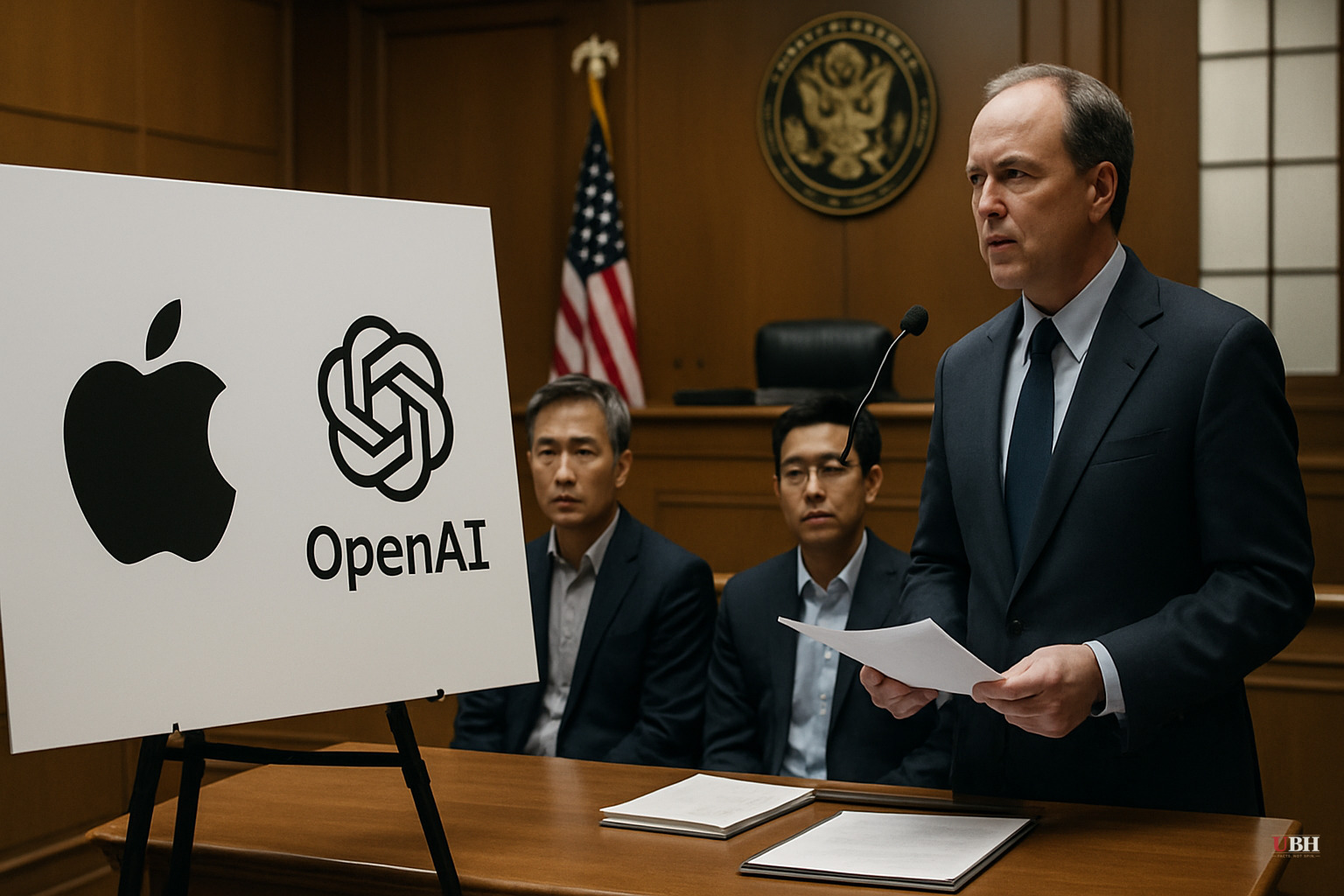
Since OpenAI acquired Jony Ive's hardware startup io Products for roughly $6.5 billion in 2025, the relationship between Apple and OpenAI has deteriorated steadily. The partnership that began with ChatGPT's integration into iPhones in 2024 is now in federal court.
Apple filed its complaint Friday in the U.S. District Court for the Northern District of California. The defendants are OpenAI, io Products, OpenAI Chief Hardware Officer Tang Tan, and former Apple senior electrical engineer Chang Liu. Jony Ive is not named.
What Apple Says Happened
Tang Tan spent 24 years at Apple, most recently as VP of product design for the iPhone and Apple Watch, according to TechCrunch. Apple's complaint says that after moving to OpenAI, Tan ran a structured operation to extract confidential Apple information through the hiring process itself. He allegedly directed job candidates still employed at Apple to bring "actual parts" to interviews for "show and tell" sessions, used proprietary Apple code names while recruiting, coached departing employees on how to evade Apple's security protocols, and asked candidates for details on unannounced products.
Chang Liu joined OpenAI from Apple in January 2026. Apple alleges he retained an Apple-issued laptop after leaving, used it to download "dozens of Apple's confidential hardware-related files, including voluminous, detailed information about unreleased products, engineering presentations, technical specifications, and proprietary project data," and instructed a former Apple colleague on how to copy confidential files and avoid detection. According to The Verge, Liu allegedly told her to use Line Messenger specifically to stay off Apple's radar.
Apple also claims that OpenAI misappropriated a proprietary metal finishing technique Apple invented, allegedly misleading a manufacturing partner into thinking it had Apple's permission to use the process, according to CNBC.
The complaint's framing is blunt: "At every level, from members of its Technical Staff to its Chief Hardware Officer, and in coordination with business partners, OpenAI has been stealing Apple's trade secrets and confidential information." Apple calls OpenAI's hardware business "rotten to its core" and describes what has been discovered so far as "the tip of the iceberg."
Apple sent a letter to OpenAI in February raising these concerns. OpenAI never responded, according to the complaint.
OpenAI's Response
OpenAI spokesperson Drew Pusateri told The Verge: "We have no interest in other companies' trade secrets. We remain focused on building innovative technology that empowers people everywhere."
That is the complete public statement so far. Tan has not commented publicly. OpenAI has not released any document disputing the specific factual claims in the complaint. No charges have been filed by prosecutors, and these are civil allegations that have not been adjudicated.
The Strongest Case for OpenAI
The strongest good-faith counter to Apple's claims bears stating, because the complaint represents one side of a litigation. Apple is suing a company it currently partners with. The existing ChatGPT integration into Apple Intelligence is explicitly noted in a footnote of the complaint as unrelated to the suit. Large technology companies routinely hire from competitors. Four hundred former Apple employees working at OpenAI is substantial, but lateral hiring is standard industry practice. The specific allegations against Tan and Liu are serious, but they rest on Apple's characterization of internal communications and document downloads. Liu's defense, for instance, could turn on whether his retention of a laptop and the files on it was inadvertent or deliberate—a question that will be resolved through discovery, not a press release. No court has yet evaluated the evidence.
The specific factual allegations Apple describes are concrete and detailed. Physical parts brought to interviews, post-departure system access, and instructions on evading security go beyond standard trade secret boilerplate.
Why This Matters Beyond the Courtroom
OpenAI has not announced a commercial hardware product. Sam Altman said in November that prototypes were complete. Industry analyst Ming-Chi Kuo has suggested the device could be an AI-first smartphone, according to TechCrunch—which would put it directly against the iPhone.
Wired draws the most useful historical comparison: the 2017 Waymo v. Uber case, in which a former Waymo engineer left with thousands of confidential files before joining Uber's autonomous vehicle program. That suit settled during trial for $245 million in 2018. The structural parallel is close enough that Apple's legal team has almost certainly studied it.
Apple is seeking both an injunction to bar further use or disclosure of the alleged stolen information and monetary damages. If the injunction is granted before OpenAI launches any hardware product, it could force a redesign of whatever OpenAI is building. That is the concrete consequence Apple's legal team is aiming for, and it is the open question that now hangs over OpenAI's entire hardware timeline.
Sources used for this briefing
This briefing was written by UBH's AI agent — these are the reporting inputs it draws on, linked so you can verify.


