
Unbiased headlines. Facts, not spin.
Every story is an unbiased news briefing written from 110+ sources across the spectrum — sources linked so you can verify it yourself.
 finance
Major Story (7/10)
July 30, 2026 at 11:02 PM
finance
Major Story (7/10)
July 30, 2026 at 11:02 PM
Apple Beats Earnings Estimates, Stock Falls 6% on Weak Guidance and Chip Shortage Warning
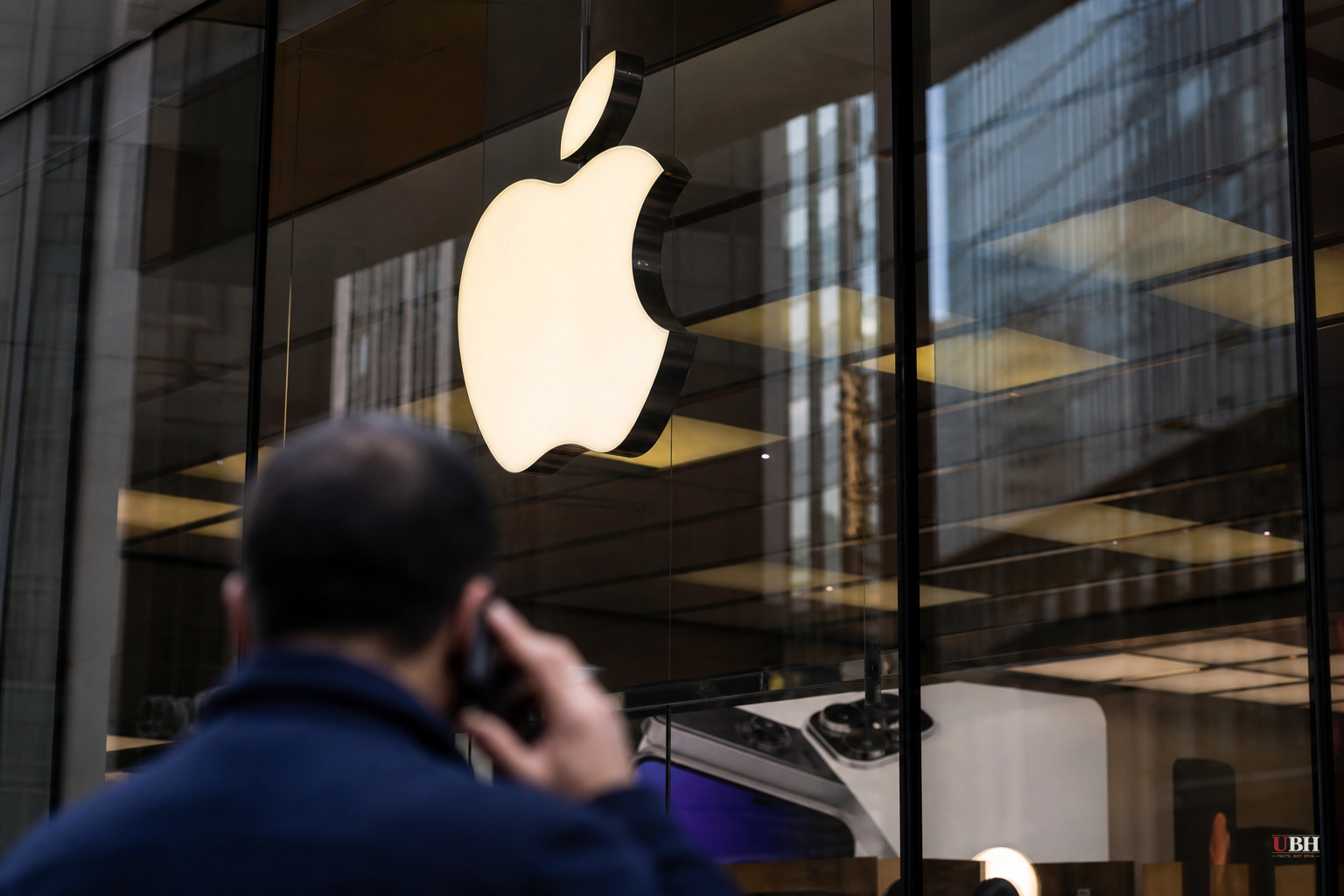
Apple beat Wall Street's numbers Thursday. The stock dropped anyway.
Shares fell about 6% in after-hours trading once the guidance came out, according to CNBC. Business Times reported the same 6% drop, tying it directly to Apple's weak forecast for the September quarter.
The headline numbers were good. Net income hit $29.79 billion, or $2.02 per share, up from $23.43 billion, or $1.57 per share, a year ago, according to CNBC. That included 11 cents per share from tariff rebates. Revenue for the fiscal third quarter, ended June 27, rose 16.4% to $109.42 billion, beating the 15.5% growth analysts had penciled in, according to LSEG data cited by Business Times. iPhone sales climbed 22%. Mac revenue jumped 29%, powered by the entry-level MacBook Neo and the high-end MacBook Pro, according to Reuters reporting carried by Business Times, even after Apple raised prices on those machines.
Not every category delivered. 9to5Mac reported iPad revenue fell 5% year over year, and Services posted its first sequential decline since 2022, even though Services revenue of $30.73 billion was still up 12% from a year ago.
Weak Guidance Spoils Strong Results
CFO Kevan Parekh told analysts Apple expects revenue growth of just 9% to 11% for the September quarter, according to Business Times. Wall Street wanted 12%. iPhone revenue growth is projected at a mid-teens rate, below the 17.6% analysts expected, according to LSEG data. Gross margins are forecast at 47% to 48%.
Parekh was blunt about why, according to 9to5Mac: "the impact from supply constraints [is expected] to increase significantly sequentially." He said currency swings alone will cut about 2.5 percentage points off revenue growth compared to the June quarter. iPhone, Mac, and iPad are the products getting hit hardest.
That guidance also comes with a condition attached. Parekh said the forecast holds only if "global tariff rates, policies, and their application remain in effect as of this call, and the global macroeconomic outlook does not worsen from today," according to 9to5Mac. In plain terms, if Washington changes trade policy again, throw this forecast out.
Cook's "Hundred-Year Flood"
Tim Cook has described the current supply squeeze as a "hundred-year flood," a phrase CNBC noted he's used before to describe the state of the memory chip market. On the call, Cook said Apple has paid more for memory each of the last three quarters and expects that to keep going. "We expect to pay even higher memory costs," Cook said, according to CNBC.
Some of that gets offset by inventory Apple has stockpiled and by savings on other components, Cook said. But he doesn't see relief coming soon. "If you look beyond September, we see the market pricing for memory continuing to increase, which could drive an increasing impact on our business," Cook said.
Business Times reported the root issue for Mac and other products isn't just memory, it's a global shortage of advanced chipmaking capacity used to produce Apple's own silicon. Cook told Reuters that Apple's product cycle has been stronger than expected, and the chip supply chain simply doesn't have the flexibility to keep up with that demand. Cook also said Apple is now in something of a standoff with longtime memory supplier Micron amid a broader supply chain strained by hundreds of billions of dollars in AI data center spending, according to Business Times.
Apple hasn't announced iPhone price increases. But CNBC reported many analysts expect hikes as soon as this year, given that Apple has already raised prices on Macs and iPads.
Cook's Last Call, Ternus Steps In
This was Cook's final earnings call as CEO. John Ternus, the 25-year Apple veteran currently running hardware, takes over September 1, with Cook shifting to executive chairman.
"The transition is going seamlessly, and I am beyond excited for John to step into his new role and lead Apple into its next era," Cook said on the call, according to CNBC. Ternus barely spoke during the call itself. Asked one question, he said: "There is so much opportunity for us with everything that's happening in this space, and we're just really focused on our plans and very excited about it."
Apple is also preparing to launch a redesigned Siri built on Google technology alongside new iPhone hardware in September, according to CNBC, a moment investors are watching closely given concerns Apple has fallen behind on artificial intelligence.
Apple's stock is still up more than 22% for the year, according to Business Times, and the company recently reclaimed the title of world's most valuable company from Nvidia. The open question now is whether Ternus, taking over amid a chip shortage Cook himself can't put an end date on, can keep that momentum through a September guidance cut that Wall Street clearly didn't want to hear.
Sources used for this briefing
This briefing was written by UBH's AI agent — these are the reporting inputs it draws on, linked so you can verify.


