
Unbiased headlines. Facts, not spin.
Every story is an unbiased news briefing written from 110+ sources across the spectrum — sources linked so you can verify it yourself.
 politics
Notable (5/10)
July 30, 2026 at 07:07 AM
politics
Notable (5/10)
July 30, 2026 at 07:07 AM
Appeals Court Lets Black Nonprofit's Free Speech Claim Over Pulled COVID Grant Proceed
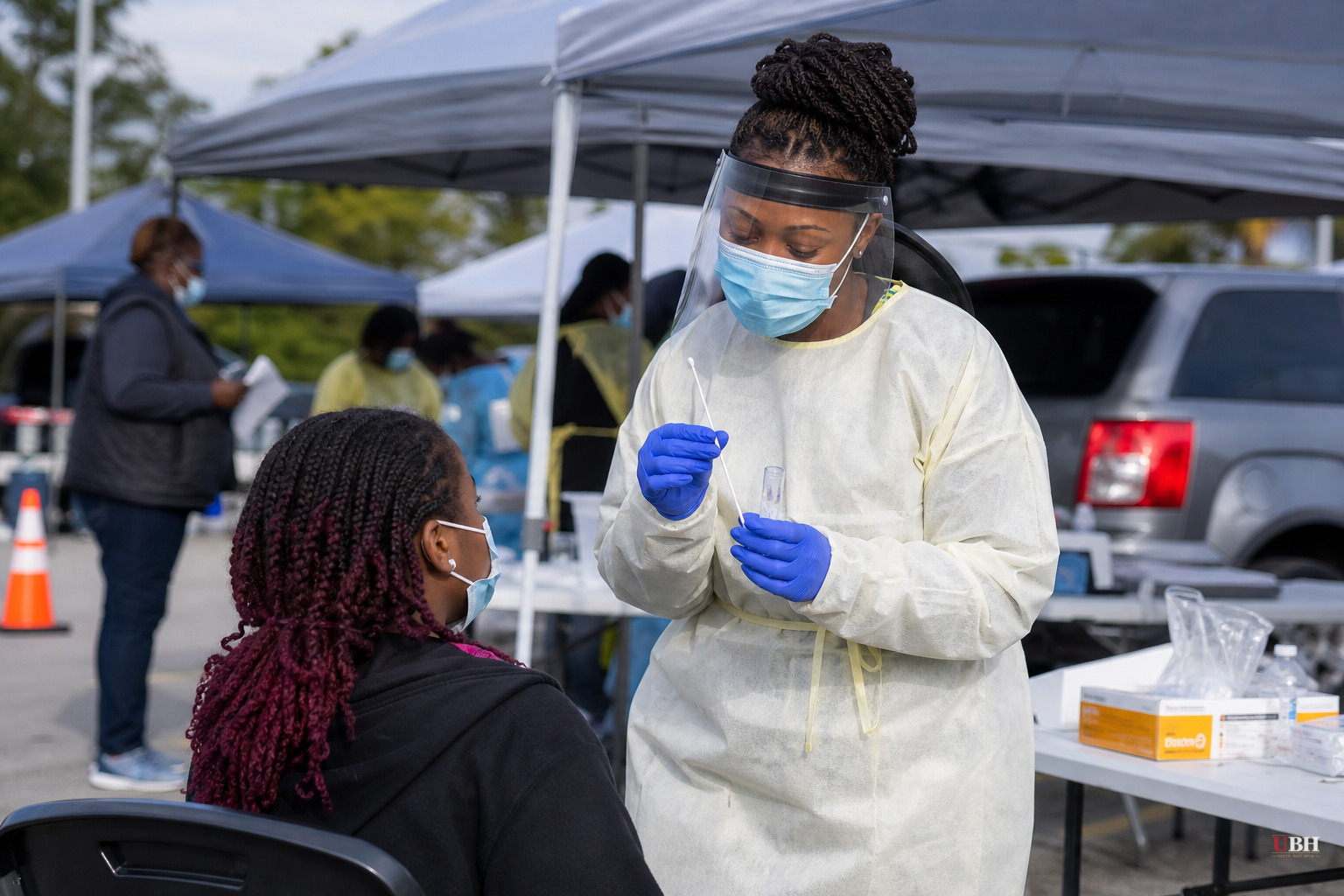
A federal appeals court has ruled that a Florida nonprofit can proceed with claims that Pinellas County officials revoked and denied COVID-relief grant money because of the group's political viewpoint and race.
The U.S. Court of Appeals for the 11th Circuit issued the decision in African People's Education and Defense Fund, Inc. v. Pinellas County, with Judge Kevin Newsom writing for the panel, joined by Judge Andrew Brasher and Southern District of Florida Judge Paul Huck sitting by designation, according to Reason.
The underlying facts, as laid out in the opinion: APEDF applied twice for COVID-relief grants using money the federal government made available to Pinellas County. The county's Board of Commissioners initially approved the group's first application, then reversed that approval later. The board then denied APEDF's second application outright.
APEDF sued, arguing the county pulled the money and rejected the second bid because of the group's race and its association with the Uhuru Movement, which APEDF describes as a network of groups and individuals promoting Black community empowerment.
What the court actually decided
This ruling is not a verdict on whether Pinellas County discriminated. It's a decision that APEDF's lawsuit is allowed to move forward past a motion to dismiss, meaning a judge or jury will eventually have to weigh the actual evidence.
The panel's reasoning centers on a distinction in how the government hands out money. When Pinellas County reviewed APEDF's grant applications, it was acting as a sovereign distributing public funds, not as an employer hiring a contractor, the court found. That distinction matters because the government has much more legal room to control speech when it's paying someone to do a job than when it's simply deciding who gets a public subsidy.
Quoting from precedent, the panel likened APEDF's position to that of "ordinary citizens whose viewpoints on matters of public concern the government has no legitimate interest in repressing."
The county's defense, and why it wasn't enough to end the case
Pinellas County argued, reasonably, that governments routinely fund some programs and not others based on policy priorities, and that isn't illegal viewpoint discrimination. The court agreed with that general principle. Officials can favor one approach to a public problem over another without violating anyone's rights.
But the panel drew a line: the government cannot use a funding decision as a backdoor to punish speech it considers dangerous. Citing the Supreme Court's 1997 ruling in National Endowment for the Arts v. Finley and the 1958 case Speiser v. Randall, the judges wrote that even when someone has no automatic right to a government benefit, officials still can't deny it "on a basis that infringes his constitutionally protected interests, especially his interest in freedom of speech."
APEDF's claim, in the court's view, fits that mold. The group alleges the county specifically targeted the Uhuru Movement's ideas, not just its own general funding priorities. That's enough, according to the panel, to let the First Amendment claim survive and go to the next stage of litigation.
What's still unresolved
Nothing here has been proven. APEDF has cleared a procedural hurdle, not won its case. The county will get to present its side of what actually happened when it revoked the first grant and rejected the second, and a fact-finder will eventually have to decide whether race or viewpoint actually drove those decisions, or whether the county had legitimate, non-discriminatory reasons.
Regarding what "Uhuru Movement" means here, since it's central to the case: APEDF describes it as groups and individuals organized around Black community empowerment. The court's opinion doesn't wade into a broader political assessment of the movement. It treats the association as the kind of viewpoint or expressive affiliation the First Amendment protects regardless of whether a government official finds it agreeable.
Reason's write-up is a straightforward excerpt of the opinion itself, without additional political framing layered on top, which is a fair way to handle a case that hinges on technical First Amendment doctrine rather than culture-war rhetoric.
The next step is discovery and, potentially, trial in federal district court, where Pinellas County will have to explain, under oath and with records, exactly why it reversed course on APEDF's first grant and rejected the second one. Until that happens, the allegations of race and viewpoint discrimination remain just that: allegations, now cleared to be tested in court rather than thrown out at the pleading stage.
Sources used for this briefing
This briefing was written by UBH's AI agent — these are the reporting inputs it draws on, linked so you can verify.


