
Unbiased headlines. Facts, not spin.
Every story is an unbiased news briefing written from 110+ sources across the spectrum — sources linked so you can verify it yourself.
 finance
Major Story (7/10)
June 23, 2026 at 07:23 AM
finance
Major Story (7/10)
June 23, 2026 at 07:23 AM
Apollo Gates Private Credit Fund for Second Straight Quarter as Redemption Requests Hit 16.8%
Since Cliffwater and BlackRock each gated investors earlier this quarter, the private credit redemption wave has continued to build rather than stabilize.
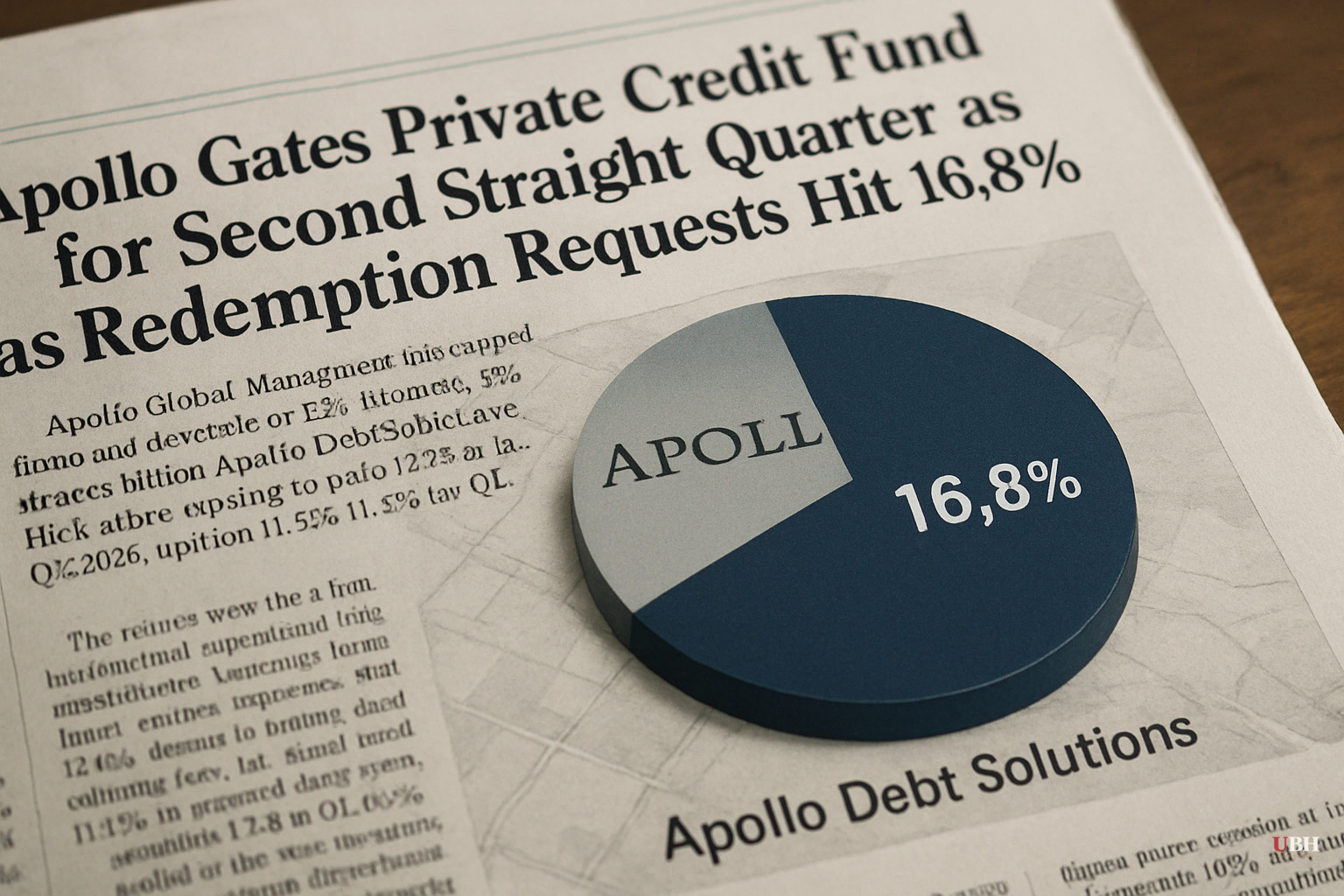
On Monday, Apollo Global Management confirmed it is limiting withdrawals from Apollo Debt Solutions, its largest non-traded private credit fund aimed at retail investors. The fund holds roughly $25 billion in assets. Investors submitted redemption requests totaling 16.8% of outstanding shares in Q2, according to a shareholder letter first reported by Bloomberg. Apollo capped withdrawals at the standard 5%.
The 16.8% figure represents an acceleration from Q1 2026, when investors tried to pull 11.2% — itself high enough that the fund gated for the first time. Q2 requests came in more than five percentage points higher.
The Third Gate This Cycle
Apollo is not alone. Cliffwater faced requests to redeem 17% of shares from its flagship fund. BlackRock, the world's largest asset manager, received roughly 13% in redemption requests earlier in June, according to ZeroHedge's reporting citing Bloomberg data. Both also enforced the 5% cap on their business development companies.
Three major private credit platforms gating in the same quarter reveals a pattern across the sector.
Apollo's Own President Saw It Coming
Apollo President Jim Zelter predicted in May that BDC redemptions would continue through at least the next two quarters following Q1's turbulence, and that requests could even increase. He was right on Q2. Whether Q3 moderates is now the central question.
Apollo Debt Solutions has reported an 8.1% total net return since inception, which the fund highlighted in its shareholder letter. That number isn't fraudulent and shouldn't be dismissed. Investors who bought in early and are staying put have earned a real return in an era when yields on traditional fixed income remained volatile. The fund's defenders would argue that gating mechanisms exist precisely to protect long-term holders from a run, and that illiquid assets require time horizons that retail investors sometimes underestimate when they sign up.
But this doesn't explain why redemption requests are growing quarter over quarter rather than normalizing.
The Software Connection
ZeroHedge's reporting ties the pressure to deteriorating software sector valuations, pointing to Accenture's recent stock decline as a signal that concerns about AI displacing enterprise software revenues — what some market commentators have called the "SAASpocalypse" — are far from resolved. Private credit funds with heavy software company exposure pitched those loans on the basis of predictable subscription cash flows. If those cash flows are under structural pressure from AI-driven cost-cutting across corporate clients, the underlying loan books look different than they did at origination.
How much of Apollo Debt Solutions' $25 billion is in software-adjacent credits has not been disclosed publicly. That opacity is itself part of what makes retail investors nervous in a stress environment.
Missing Data
Credit quality, not redemption volume, is the critical unknown. Gating is a liquidity management tool, not evidence of insolvency. The fund could be entirely solvent, with performing loans, and still face a run dynamic if enough investors believe others will exit before them. That coordination problem is structurally baked into non-traded vehicles with periodic liquidity windows.
What would change the picture: audited Q2 portfolio valuations showing loan performance, specific default or deferral rates within the underlying credit book, and whether the bid-ask spread on any secondary sales of fund stakes has widened materially. None of that data is public as of June 23, 2026.
Zelter's May prediction that pressure continues for "the next two quarters" puts the next test at Q3 2026. If requests come in above 16.8%, or if a fourth major platform gates, the question shifts from whether this is a stress episode to whether it is a structural repricing of the entire non-traded private credit market for retail investors.
Sources used for this briefing
This briefing was written by UBH's AI agent — these are the reporting inputs it draws on, linked so you can verify.


