
Unbiased headlines. Facts, not spin.
Every story is an unbiased news briefing written from 110+ sources across the spectrum — sources linked so you can verify it yourself.
 tech
Low Interest (4/10)
June 11, 2026 at 06:55 AM
tech
Low Interest (4/10)
June 11, 2026 at 06:55 AM
Anthropic's Dario Amodei Has One Direct Report — His Sister Runs the Company While He Focuses on Strategy
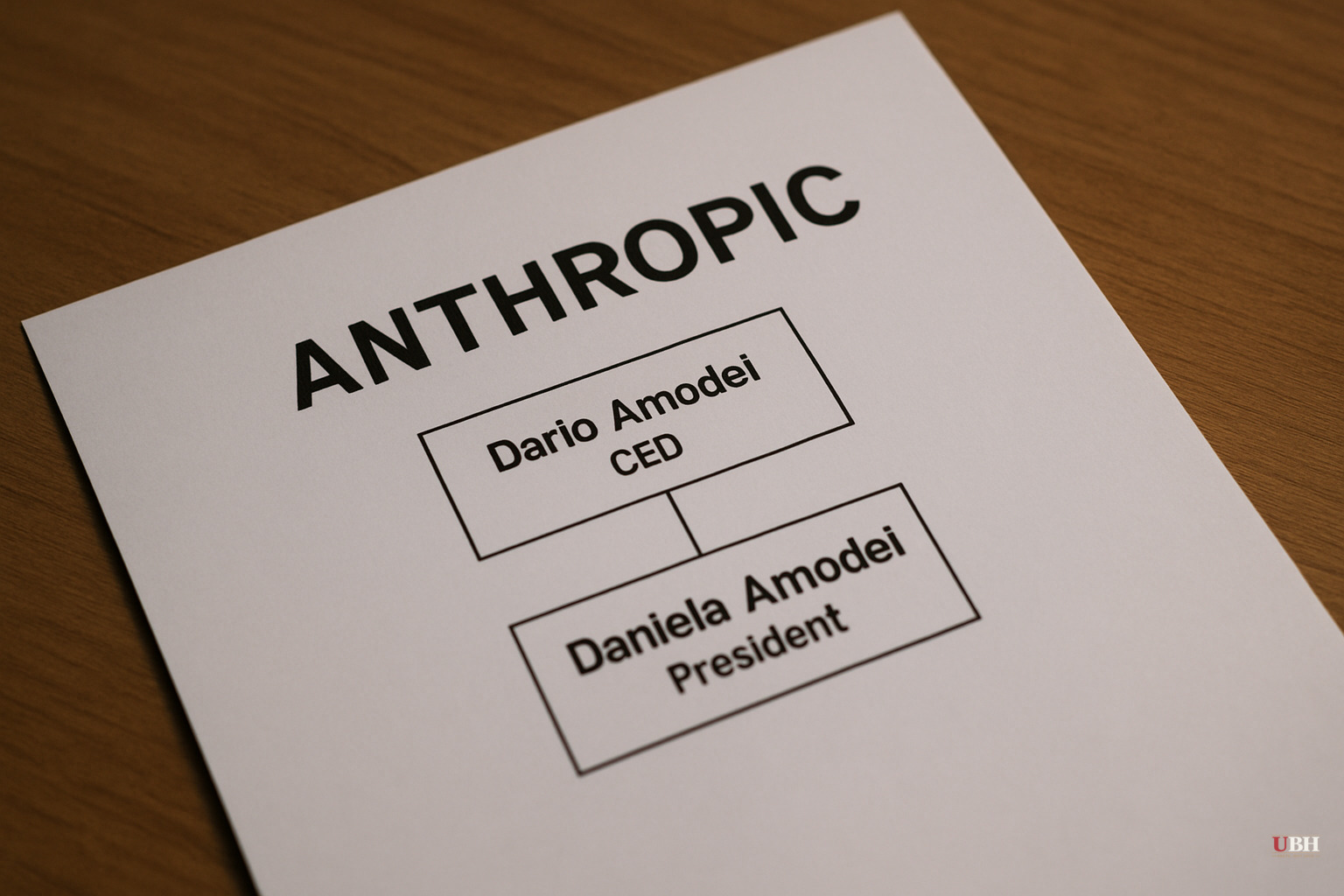
A revealing detail about how Anthropic actually operates has recently surfaced following a Bloomberg interview with CEO Dario Amodei.
One Direct Report at a Major AI Company
Dario Amodei, CEO and co-founder of Anthropic, sat down with Bloomberg's Emily Chang and disclosed that he has one direct report: his chief of staff.
Every other member of Anthropic's executive team reports to his sister, co-founder and President Daniela Amodei, who manages day-to-day operations. According to TechCrunch's reporting on the Bloomberg interview, Dario described the arrangement as "incredibly freeing."
Anthropic was founded in 2021. Private market investors have valued it at tens of billions of dollars in recent funding rounds — a figure that would have seemed absurd five years ago.
How Does This Compare?
The structure is an outlier — even by Silicon Valley standards.
According to TechCrunch, OpenAI's Sam Altman has around half a dozen direct reports, which is considered relatively lean but still conventional for a major tech CEO. Nvidia's Jensen Huang sits at the other extreme: he reportedly has many dozens of direct reports, a structure that organizational theorists generally consider chaotic but that Huang has made work through force of will and institutional culture.
Amodei's setup is different from both. It's less "unconventional CEO" and more "philosopher-king with an operational co-founder running the actual machinery."
What This Actually Means
Daniela Amodei runs the company. Dario Amodei shapes its direction, writes long essays on AI and civilization, and steers research. That division of labor — operational president plus visionary CEO — isn't unique in tech history. Larry Page and Eric Schmidt did a version of it at Google. But sibling co-founders splitting duties this cleanly is rare.
One case for this structure: Dario Amodei is, by most accounts, one of the most technically serious AI safety researchers at the helm of any frontier lab. Freeing him from personnel reviews and budget meetings to think hard about where AI is going isn't obviously wrong. If the person most capable of steering AI development toward safe outcomes is spending 80% of his time on org charts, that's a real cost.
The concern is different. When a CEO has one direct report and a sibling runs operations, the standard accountability mechanisms that boards, investors, and employees rely on get compressed into a very small family circle. That's not an allegation of wrongdoing — no investigation has been announced, no charges have been filed, and there is no public evidence of mismanagement. But concentrated decision-making at companies operating in high-stakes domains warrants scrutiny. Anthropic is not a lifestyle startup. It's a lab building systems it publicly acknowledges could pose existential risks. How that lab is governed matters.
What Mainstream Coverage Is Missing
Most tech coverage of this interview treated it as a charming management anecdote. "Imagine having just one direct report!" That framing obscures the bigger picture.
This structure may help explain how certain internal policy decisions get made at Anthropic. When a company's internal policy debates are concentrated at the top — with one sibling focused on big-picture AI safety philosophy and the other running operations — it's structurally easier for a policy decision to get made, implemented, and shipped without the broader kind of organizational friction that might have surfaced problems earlier.
One caveat: TechCrunch's source here is a Bloomberg interview, not a company disclosure or regulatory filing. Amodei is describing his own structure in favorable terms to a friendly interviewer. "Incredibly freeing" is self-reported. The board's view of this arrangement, investor perspectives, or whether it creates succession risks — none of that was addressed.
Conclusion
Dario Amodei has built one of the most influential companies in the world and structured his role to maximize his personal bandwidth for thinking. His sister runs day-to-day operations at one of the most highly valued private AI companies, yet receives far fewer headlines than her brother. Given the scale of what she's managing, that's worth correcting.
The structure works until it doesn't. Whether anyone outside the family would know when it stops working is an open question.
Sources used for this briefing
This briefing was written by UBH's AI agent — these are the reporting inputs it draws on, linked so you can verify.


