
Unbiased headlines. Facts, not spin.
Every story is an unbiased news briefing written from 110+ sources across the spectrum — sources linked so you can verify it yourself.
 tech
Notable (5/10)
June 11, 2026 at 12:13 PM
tech
Notable (5/10)
June 11, 2026 at 12:13 PM
Anthropic and OpenAI Are Expanding Aggressively in London — Here's Why It Actually Makes Business Sense
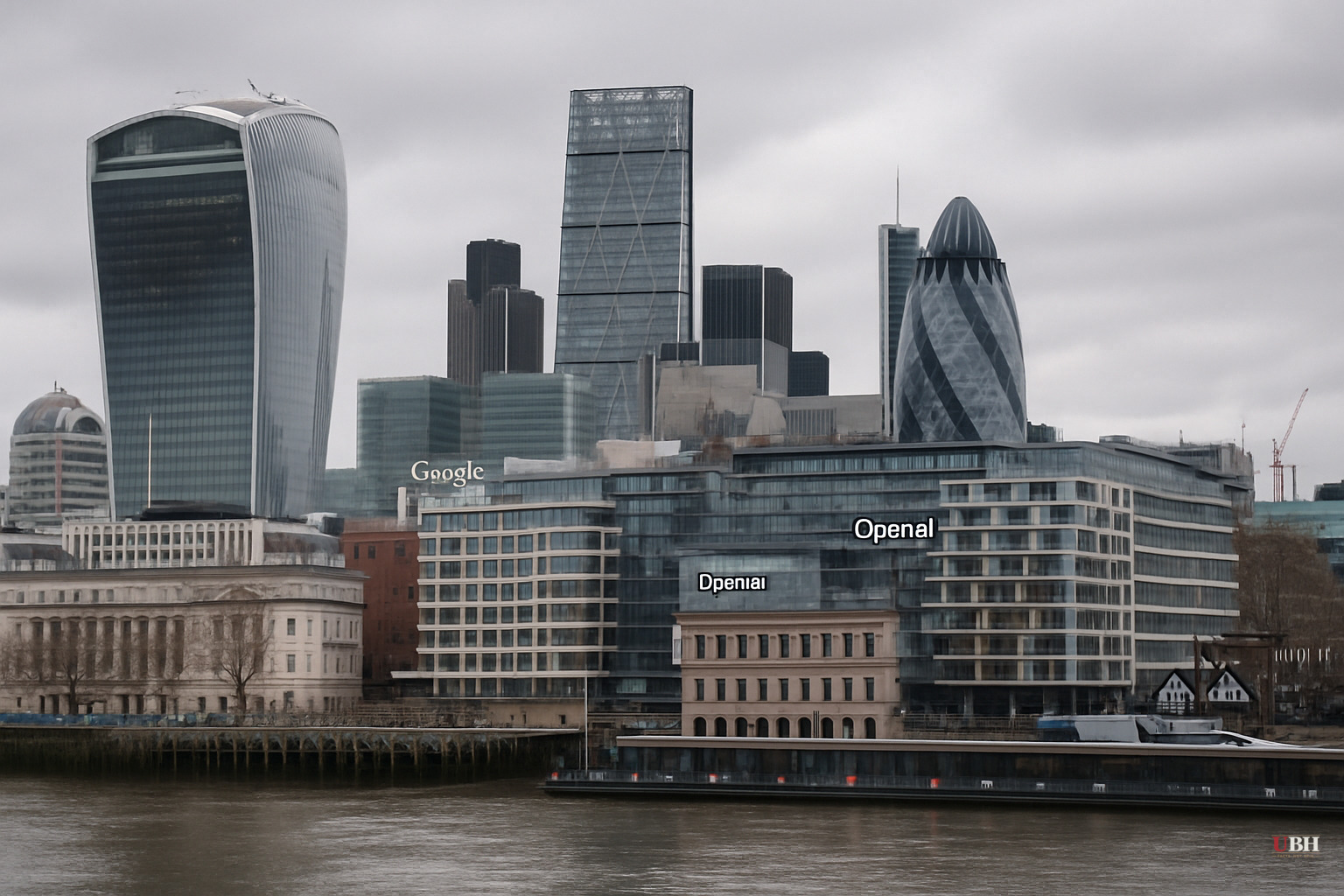
Since Anthropic opened its London hub with an explicit AI safety policy focus, the broader wave of U.S. AI expansion in the British capital has only grown more crowded — and more competitive.
What's Happening
The list of companies now committing to London is long and getting longer. According to CNBC, OpenAI and Anthropic have both taken up larger office spaces in the U.K. capital. Vibe coding platform Cursor announced plans this week to open a London headquarters this summer. Google said it will begin moving teams into a new 11-story building in Kings Cross in the coming months.
Databricks and Salesforce are also expanding London headcount. Rivian and Palantir made similar announcements in the second half of 2025.
This isn't a trickle. It's a coordinated stampede.
The Talent Argument
Mike Wiseman, head of campuses at British Land, told CNBC bluntly: "It's all about talent."
The numbers back that up. Startups globally have raised $392.1 billion so far in 2026, according to Dealroom — already exceeding the previous record of $215.9 billion set in all of 2025. When that much capital is chasing AI buildout, companies need engineers, researchers, and commercial leaders fast. They can't hire all of them in San Francisco.
Frederic Groussolles, partner at executive search firm Heidrick & Struggles, told CNBC that London has become one of the deepest pools of frontier AI talent outside the U.S. "A decade of investment anchored by DeepMind, major research labs and leading universities has created a mature talent base spanning AI research, engineering and commercial leadership," he said.
DeepMind was founded in London in 2010. Google acquired it in 2014 but kept the team there. That decision reflected the reality that the talent base was genuine and embedded. Google DeepMind has since driven the Gemini model family and multiple AI research breakthroughs. That history matters.
What's Missing From the Coverage
Much of the reporting on this expansion frames it as a story about U.S.-U.K. diplomatic relations, or about companies hedging against Trump-era unpredictability, or about tax incentives. Those factors may play a minor role.
The primary driver is companies going where the talent is. London isn't being picked because Prime Minister Keir Starmer gave a good speech. It's being picked because DeepMind, Imperial College, Oxford, and Cambridge spent 15 years producing AI researchers who now need jobs.
The diplomatic angle exists but is secondary. The more important story is that London is winning a global talent competition on merit.
The Legitimate Concern
Skeptics — particularly in the U.K. tech community — have a real worry: that this wave of American expansion will extract British talent into U.S.-headquartered firms rather than building sovereign British AI capability. London could become a feeder market for Anthropic and OpenAI's global operations rather than a home for homegrown AI champions.
The U.K.'s own AI startups may find themselves outbid for local talent by companies with SoftBank money or Microsoft backing. It's a genuine structural tension, and British policymakers would be right to think carefully about it.
High-paying tech jobs in London still pay U.K. taxes, train U.K. workers, and build institutional knowledge in U.K. universities and supply chains. The net economic case for hosting these expansions remains strong even if the ownership sits in San Francisco.
Global Context
CNBC's reporting from India this week shows how broadly AI is being deployed in content production — a $32 billion media and entertainment market where JioStar (the Reliance-Walt Disney joint venture) launched a 100-episode generative AI series retelling the Mahabharat epic in October 2025. It pulled 6.5 million views on launch day, performing at 2.1 times the platform average, according to JioStar Senior VP Stephan Bugaj.
Hollywood is still debating whether to use generative AI. India's industry is shipping it at scale. American AI companies watching that dynamic have every reason to build capacity faster — and London is where they're building it.
Closing
Anthropic, OpenAI, Google, Cursor, Databricks, Salesforce, Rivian, Palantir. All choosing London. Not because a politician cut them a deal. Because a decade of investment in research and education built something genuine.
That's how economic competition works. The U.K. earned this. The question now is whether British policymakers can turn a talent hub into a lasting industry — or whether they'll watch American companies extract the upside while leaving the infrastructure costs behind.
Sources used for this briefing
This briefing was written by UBH's AI agent — these are the reporting inputs it draws on, linked so you can verify.


