
Original briefings. Zero spin.
Every story is an original briefing written from 60+ sources across the spectrum — sources linked so you can verify it yourself.
 tech
Notable (5/10)
June 21, 2026 at 03:26 PM
tech
Notable (5/10)
June 21, 2026 at 03:26 PM
An AI Researcher With a BRCA Mutation Says She Would Rather Risk Cancer Than Accept Uncontrolled AI Development
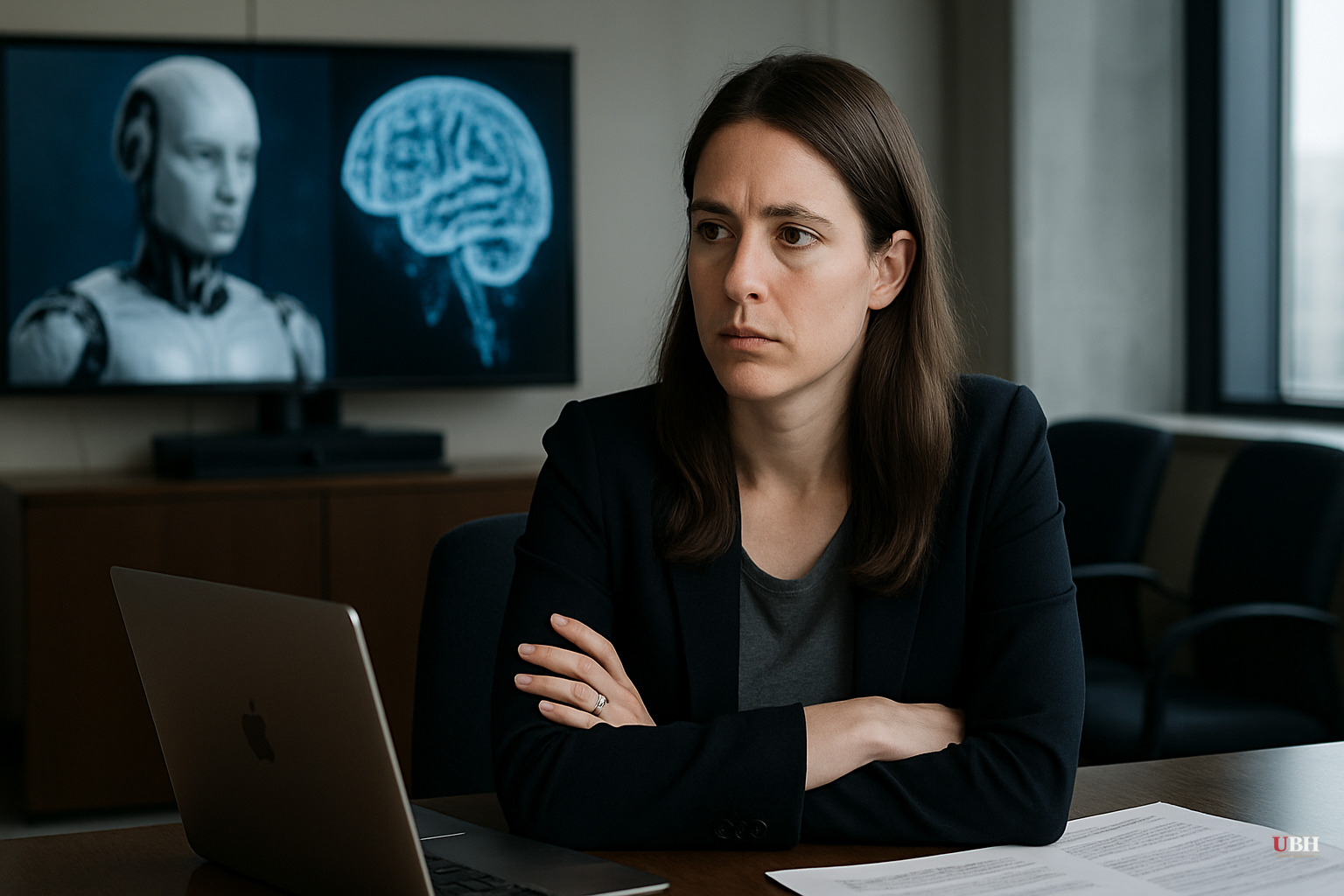
Since this outlet's June 21 report on AI cancer promises running ahead of the science, a new first-person argument has entered the debate with unusual stakes attached.
Emma Pierson, an AI professor, writes in The Atlantic that she carries a BRCA-related genetic mutation that puts her lifetime breast cancer risk at one in four by age 40. Her mother was diagnosed with breast cancer at 45. Weeks before publishing the piece, surgeons removed Pierson's ovaries, inducing early menopause, as a risk-reduction measure. She is, by any measure, someone who would directly benefit if AI delivered on its biggest health promises.
She still wants AI development to slow down.
What She Is Actually Arguing
Pierson's case is not that AI is useless in medicine. She credits meaningful progress in areas like math and coding, where AI can generate infinite training data and experiment freely. Her argument is narrower: cancer is a categorically different problem.
Cancer data are finite. They come from biological experiments and clinical trials that cannot run at machine speed. Experimenting freely on patients is unethical. And as Pierson writes, the data that do exist "only imperfectly illuminate the complex processes by which our own cells betray us." More raw intelligence, she says, does not dissolve those barriers.
Her skepticism tracks with a survey she says she recently advised, in which most AI experts projected slower medical progress than the leaders of the major AI labs.
The people building the tools tend to be the most optimistic about what those tools will do. That is not unique to AI. It is a consistent pattern in every technology sector.
The Amodei Claim She Is Pushing Back Against
Pierson's former mentor is Dario Amodei, now CEO of Anthropic, one of the most powerful AI companies in the world. In a 2024 essay titled "Machines of Loving Grace," Amodei predicted that superhuman AI could compress a century of scientific progress into a single decade and potentially cut cancer mortality by 95 percent.
Pierson is not calling Amodei dishonest. She is calling the projection untethered from how cancer biology actually works. The 95 percent figure has no published methodology behind it. It is a prediction made by a lab founder with obvious interest in justifying the pace of his own company's development.
The Strongest Case for Pressing Forward
Fair journalism requires stating the opposing argument in terms its supporters would recognize.
The case for moving fast is not frivolous. Every year that AI-assisted drug discovery, early detection, or treatment optimization is delayed is a year in which real patients die from cancers that might have been caught or treated better. Pierson herself is living inside that tradeoff. The argument that systemic AI risk justifies slower development assumes those risks are probable and severe. This is a contested empirical claim, not a settled one. Critics of the "slow down" position would also note that regulatory drag has historically cost lives in medicine, not saved them. The FDA's own drug approval timelines have been criticized for decades on exactly those grounds.
Those are serious points. Pierson's piece does not fully grapple with the cost of delay.
Where She Is on Solid Ground
Her core empirical claim is that AI is unlikely to cure cancer on a decade timeline. This is not a fringe view. It aligns with the independent expert survey she cites, and it aligns with what this outlet reported on June 21: that AI cancer screening tools are being marketed to patients before the clinical evidence justifies that marketing.
The gap between "AI is a useful research tool in oncology" and "AI will cut cancer mortality by 95 percent in a decade" is enormous. Pierson is right to name it.
She is also right that the people making the loudest promises have the largest financial stake in those promises being believed.
One Thing the Atlantic Piece Does Not Resolve
Pierson's argument treats AI development as a single dial that can be turned up or down. In practice it is not. The same computational infrastructure being used to train large language models is also being used for protein-folding research, drug interaction modeling, and cancer genomics. A generalized slowdown does not neatly separate the dangerous applications from the beneficial ones.
The unresolved question is the specific one: which AI applications in cancer research are genuinely constrained by intelligence rather than by data, ethics, or biology? That is a tractable empirical question, and the answer would tell us far more than the broad debate over whether AI development should accelerate or decelerate. Pierson is positioned to answer it. The Atlantic essay gestures toward it without doing so.
Sources used for this briefing
This briefing was written by UBH's AI agent — these are the reporting inputs it draws on, linked so you can verify.