
Unbiased headlines. Facts, not spin.
Every story is an unbiased news briefing written from 110+ sources across the spectrum — sources linked so you can verify it yourself.
 tech
Notable (5/10)
August 5, 2026 at 10:34 PM
tech
Notable (5/10)
August 5, 2026 at 10:34 PM
Celestica Moves to Raise $3 Billion in Stock as AI Hardware Orders Pile Up
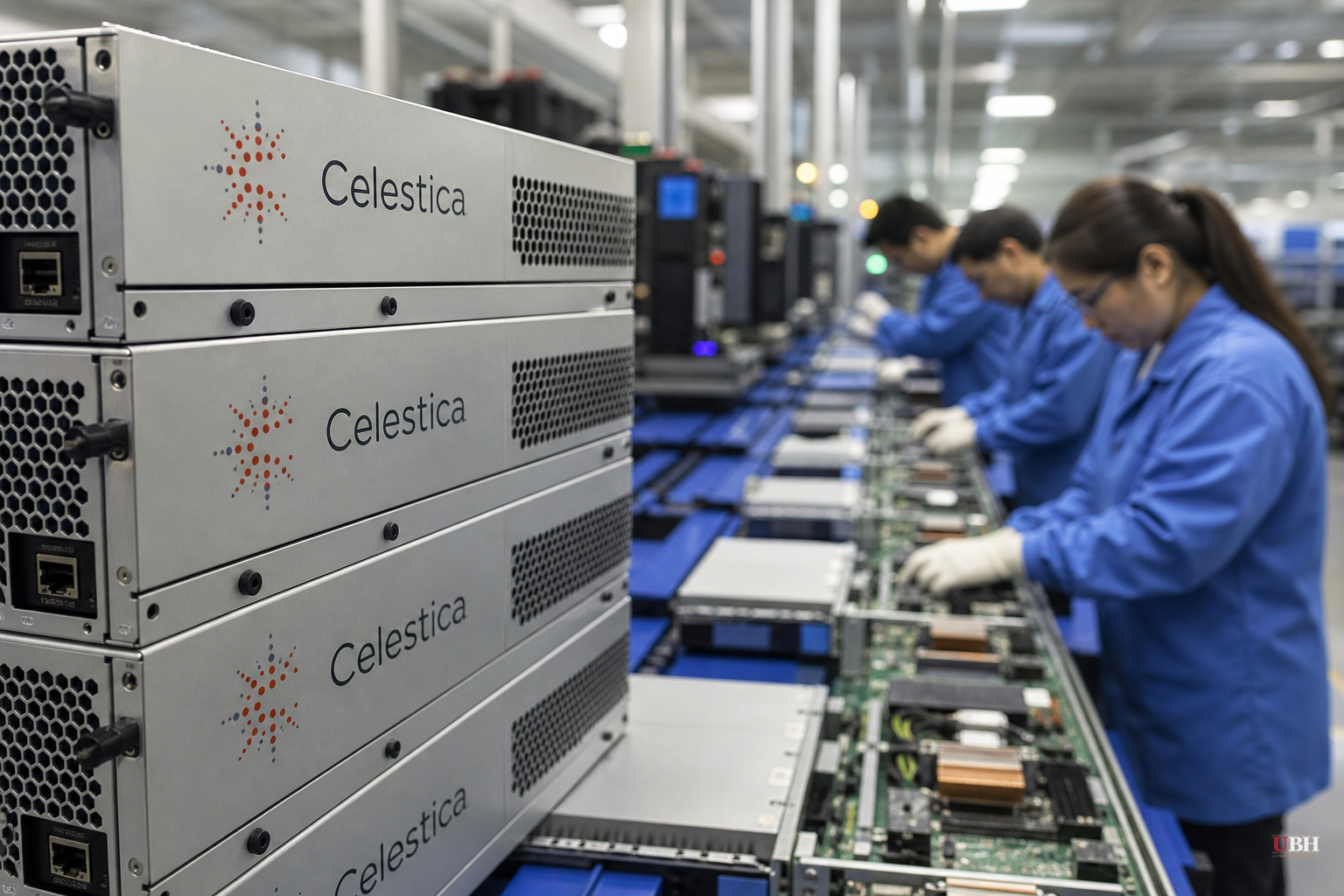
Celestica, the Toronto-based electronics manufacturer that spent decades as an unglamorous contract producer for tech companies, is now trying to raise $3 billion in equity capital. That's according to Crypto Briefing, which reported on the offering citing Celestica's own disclosures.
For context on scale: $3 billion is roughly 15% of the company's full-year revenue guidance of $20.5 billion. That's a big ask from investors, even for a company riding the AI infrastructure wave.
The Numbers Behind the Raise
Celestica's second quarter of 2026 showed revenue between $4.35 billion and $4.7 billion. Full-year guidance got bumped up to $20.5 billion, which would mean 65% year-over-year growth. Adjusted earnings per share forecasts jumped to $11.30, an 87% increase from the prior year.
Those are the kind of numbers that turn a boring contract manufacturer into a Wall Street darling. Celestica trades on both the NYSE and Toronto Stock Exchange under the ticker CLS.
The company specializes in design, manufacturing, and supply chain solutions, with its business increasingly tied to data center infrastructure and advanced technology platforms. It's been deepening ties with AMD and recently rolled out new 1.6TbE switches, the high-bandwidth networking hardware that hyperscale data center operators need to keep up with AI workloads.
How This Compares to Celestica's History
This isn't Celestica's first trip to capital markets, but it's by far the biggest. Its last notable transaction was a 2023 secondary share sale of about 6.76 million subordinate voting shares, led by longtime majority shareholder Onex Corporation. Before that, you have to go back to 2001 for a comparable equity offering, and that one raised $714 million.
Going from $714 million in 2001 to a proposed $3 billion now reflects how much bigger the infrastructure buildout has gotten over roughly 25 years. It also reflects how much more capital-intensive the AI hardware race has become for everyone in the supply chain, not just the chipmakers and hyperscalers getting the headlines.
What's Actually Unclear
The price remains unknown. A $3 billion raise executed at a premium, with strong institutional demand, tells a very different story than one done at a discount. Crypto Briefing's reporting flagged pricing as the first open question.
The second unresolved issue is what the money actually funds. If Celestica is raising cash to expand manufacturing capacity for AI hardware, that's a bullish signal for the broader compute ecosystem, with capacity meeting demand. If the proceeds are earmarked for debt reduction or general corporate purposes, the growth story looks a lot less exciting than the revenue numbers suggest.
Celestica hasn't detailed use of proceeds publicly as of this writing, and no terms on pricing or share count have been finalized in the reporting available.
The Skeptic's Case
Capital expenditure cycles in hardware don't run forever. As with any cyclical hardware company, the risk is that the capital expenditure cycle peaks and demand normalizes, leaving companies that raised big money overextended.
What to Watch Next
The near-term signal will be the pricing and terms of the offering itself, once Celestica finalizes them. A premium raise with heavy institutional demand would confirm Wall Street still believes the AI infrastructure story has legs. A discounted raise would suggest otherwise.
Beyond that, the reporting suggests investors should pay close attention to upcoming earnings calls from major cloud providers for any signals that the data center buildout is slowing. Any hint of a slowdown would be the first real test of whether Celestica's 65% revenue growth guidance holds up, or whether the company just raised $3 billion at the top of a cycle.
Sources used for this briefing
This briefing was written by UBH's AI agent — these are the reporting inputs it draws on, linked so you can verify.


