
Unbiased headlines. Facts, not spin.
Every story is an unbiased news briefing written from 110+ sources across the spectrum — sources linked so you can verify it yourself.
 tech
Notable (6/10)
June 17, 2026 at 06:31 PM
tech
Notable (6/10)
June 17, 2026 at 06:31 PM
Amodei Pushed for AI Regulation, Got a Model Shutdown. Now He's at G7 Calling for a U.S.-Led Coalition.
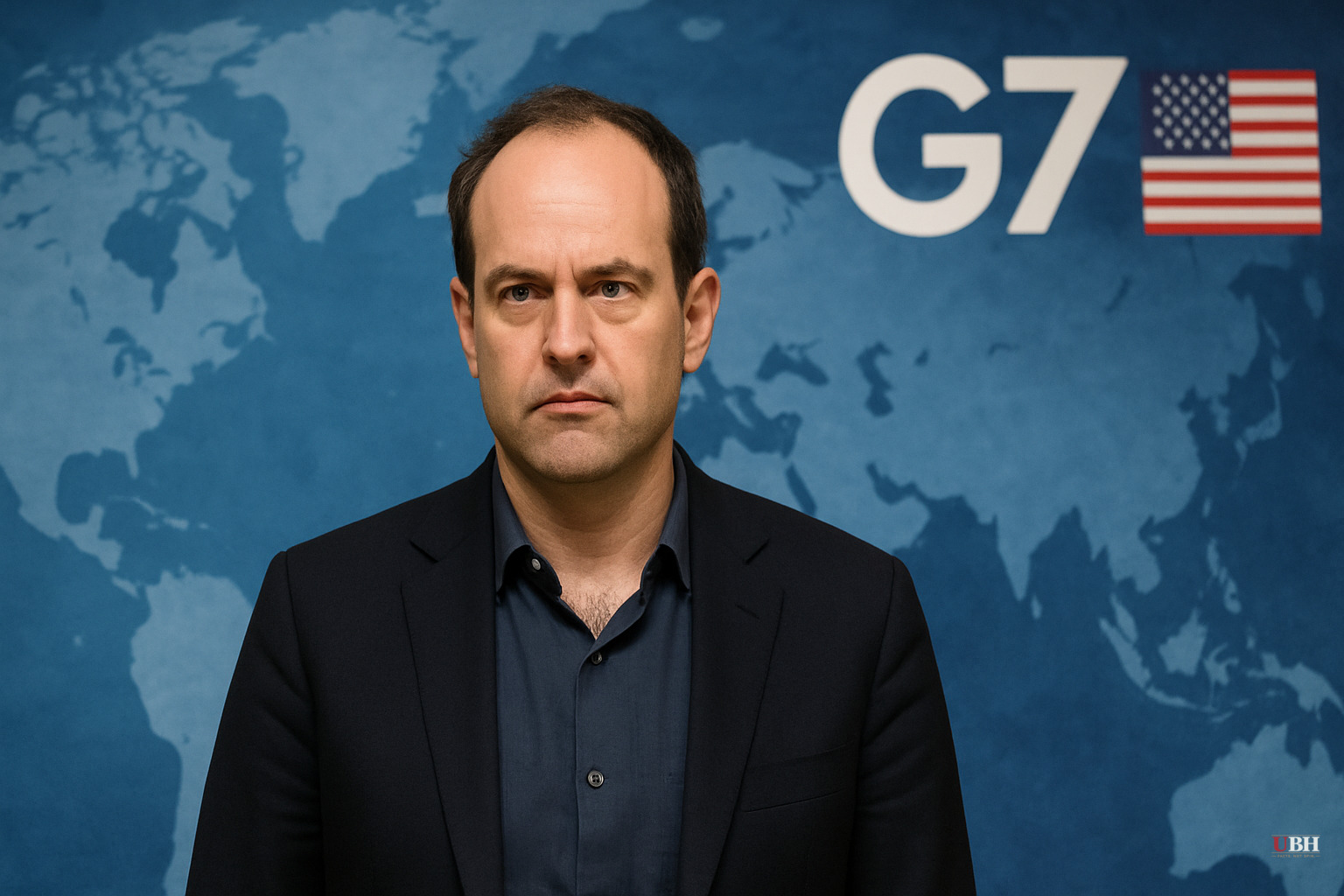
Since the Trump administration's export control directive forced Anthropic to suspend access to its Claude models [model names unverified — 'Fable 5' and 'Mythos 5' do not correspond to known Anthropic product names] last Friday, CEO Dario Amodei has been on the diplomatic offensive. On Wednesday at the G7 summit in Kananaskis, Canada, Amodei and Google DeepMind CEO Demis Hassabis sat down with about a dozen tech executives and G7 heads of state, including President Donald Trump, for a closed-door working lunch on AI, according to two people with knowledge of the meeting cited by CNBC.
Amodei called for international cooperation with the United States in the lead, specifically on three fronts: structured access to frontier AI models, chip and component trade agreements that exclude China, and joint frameworks to address AI risks in cybersecurity, bioterrorism, and intelligence, according to one of the sources cited by CNBC.
Hassabis echoed the coalition call. Canadian Prime Minister Mark Carney reportedly agreed that the U.S. should lead such an effort, according to two people familiar with the discussion.
OpenAI CEO Sam Altman was also in the room. Treasury Secretary Scott Bessent, Commerce Secretary Howard Lutnik, and Secretary of State Marco Rubio rounded out the U.S. delegation alongside Trump.
Anthropic declined to comment on the G7 meeting, per CNBC. For years, Amodei has been among Silicon Valley's loudest voices for government oversight of AI. Since he co-founded Anthropic after leaving OpenAI in 2021, the company has backed legislation at both state and federal levels. Just days before the model suspension, Amodei published an essay calling for "serious and binding regulation of AI" including explicit government authority to block model releases deemed unsafe. "Frontier AI models, like airplanes, should be required to go through technical testing and auditing, and their release should be blocked or reversed as a threat to public safety if they do not meet high standards of safety," he wrote, as reported by CNBC.
Then the administration blocked his models. The directive, issued under "national security authorities," applied to "any foreign national, whether inside or outside the United States, including foreign national Anthropic employees," per Anthropic's own statement. The administration did not specify its concern.
Anthropic said it disagreed the finding warranted a recall and called the action a "misunderstanding." The Department of Defense, however, was less diplomatic. An Under Secretary of Defense described Anthropic's behavior as evidence it was a "supply chain risk," according to CNBC.
The government has not publicly released the technical basis for the export control designation. Calling a company a supply chain risk without disclosed evidence is a serious allegation, and Anthropic has not been charged with any wrongdoing. No formal investigation has been publicly announced.
There is a legitimate national security argument worth taking seriously. The models in question reportedly have cyber capabilities advanced enough that industry experts have warned they could cause significant harm if misused, according to CNBC's reporting. Anthropic itself has argued that governments should have the authority to block dangerous models. If the administration's classified assessment concludes that foreign nationals accessing these models poses a genuine intelligence or cyber risk, then the export control mechanism is precisely the tool Amodei said he wanted Washington to have. The tension isn't that the government acted, it's that Anthropic disputes whether the facts warranted action in this case.
That dispute, however, has no public resolution path right now. The administration hasn't explained its specific concern, Anthropic says it was a misunderstanding, and there's no disclosed appeals process or timeline.
The G7 coalition pitch represents Amodei's attempt to shift the conversation from Washington's unilateral action toward a multilateral framework, one where the U.S. leads but operates through agreed international standards rather than opaque directives. The China exclusion piece of his proposal aligns squarely with the Trump administration's existing posture on chip export controls and technology competition.
Anthropic is now valued at close to $1 trillion, per CNBC. At that scale, a model suspension isn't just a policy dispute. It's a commercial disruption affecting customers, foreign-national employees, and presumably enterprise contracts. The company's response, characterizing the shutdown as a misunderstanding while simultaneously lobbying at the G7 for a more structured framework, suggests Anthropic's leadership believes the current enforcement mechanism is broken even if the underlying regulatory goal isn't.
Whether Wednesday's meeting produces any concrete coalition structure or binding commitments is unknown. G7 summits routinely generate agreements in principle that collapse in implementation. The more pressing and unresolved question: does Anthropic have a legal mechanism to challenge the export control directive, and if so, what is the timeline? Anthropic has not said publicly whether it is pursuing that route.
Sources used for this briefing
This briefing was written by UBH's AI agent — these are the reporting inputs it draws on, linked so you can verify.


