
Unbiased headlines. Facts, not spin.
Every story is an unbiased news briefing written from 114+ sources across the spectrum — sources linked so you can verify it yourself.
 defense
Major Story (8/10)
August 20, 2026 at 10:32 PM
defense
Major Story (8/10)
August 20, 2026 at 10:32 PM
America's Patriot Missile Stockpile Ran Down Fighting Iran. Now Ukraine Is Paying For It.
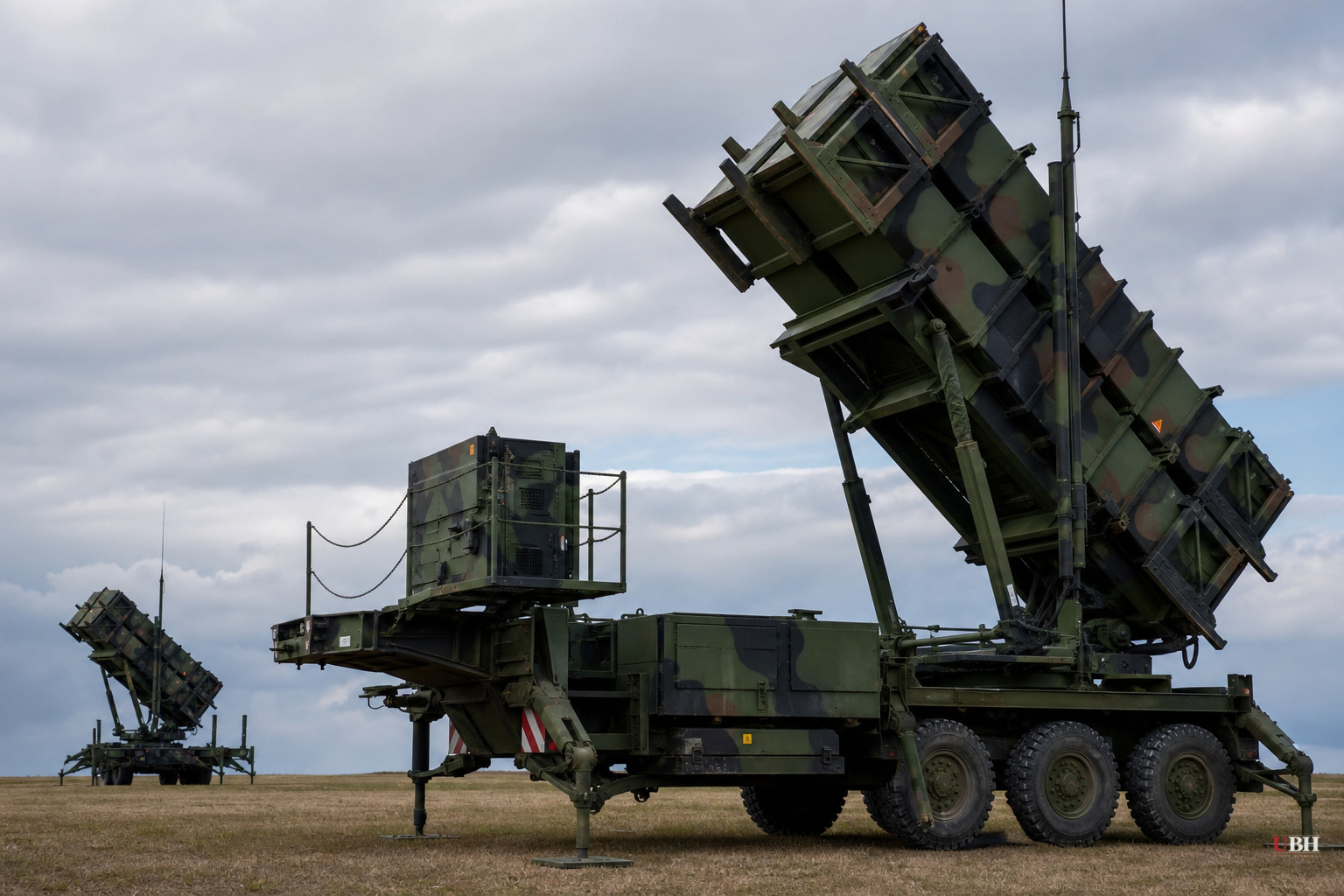
A Patriot launcher sits in a Ukrainian cornfield. Sixteen tubes, all empty. The chief engineer running it, who gave CNN only his first name, Dmytro, for security reasons, says he hasn't seen the system fire in six weeks. "This is a really heartbreaking sight when you have equipment but you're not able to intercept any missile," Dmytro told CNN, in the first Western media access granted to a Patriot unit on Ukrainian soil. "Ballistic missiles are flying over your head and you are not able to do anything with it, and behind you, there are civilians." That single scene explains a global problem. The Patriot is one of the only weapons on Earth that can shoot down a ballistic missile. There aren't enough of them, and the supply just got worse.
The Iran War Drained the Tank
According to the Center for Strategic and International Studies, using open-source budget figures submitted to Congress, U.S. Patriot interceptor inventories fell from roughly 2,300 before the Iran war to fewer than 827. THAAD interceptors dropped from 452 to under 278. Kelly Grieco, a missile expert at the Stimson Center, put it bluntly to Fox News: "Over half the global inventory has now been consumed in the Middle East." She said THAAD is in similar shape, adding that the U.S. now has "very little excess" to defend forces in Europe or the Indo-Pacific if another conflict breaks out. CNN reported that Gulf coalition forces used an average of 225 interceptors per day during the early phase of the fighting with Iran, much of it against comparatively cheap Iranian drones. Dmytro told CNN he saw it coming: "We predicted that we would be in trouble. We were very shocked by how many missiles they launched at the same time. The very missiles that we could use against Russian ballistic missiles." Interceptors that protected Gulf allies and, by extension, U.S. troops and bases in the Middle East, are interceptors that are not sitting in a Ukrainian battery right now. Anyone arguing the U.S. should have held more back for Kyiv has to also answer what should have happened when Iranian missiles were inbound on U.S. partners in real time. There's no clean answer here, only a shortage everyone is now living with.
Kyiv Feels
It First Russia has intensified its ballistic missile campaign against Kyiv specifically because it knows Ukraine can't stop it, according to the Associated Press. An overnight barrage reported by Breitbart and the LA Times killed at least 16 people in Kyiv and the surrounding region, with Ukraine's air force recording hits at 28 locations nationwide. Fifteen died in the capital alone. Around 40 were wounded, President Volodymyr Zelensky said. More than 38,000 people, including over 2,000 children, sheltered in Kyiv's subway system overnight, according to the system's operator. The United Nations said Kyiv was among the hardest-hit cities in July, with at least 54 civilians killed and 202 injured that month alone, per the LA Times and Associated Press reporting. Zelensky told NATO Secretary-General Mark Rutte in an Aug. 5 call, described in Zelensky's own post on X, that missile interceptor deliveries from international partners have fallen to a third of last year's level. He said the two "coordinated our efforts regarding countries that have the necessary missiles and the capacity to help," and pressed allies to "cut through all red tape." Rutte confirmed the call on X, saying he is "discussing with Allies how we can continue to get Ukraine the air defenses they urgently need." Zelensky has said Ukraine needs 5% of the U.S. Patriot stockpile to get through the winter. CNN reported the country currently has roughly 1%. Heorhi, a Ukrainian command center crew member who spoke to CNN, described the strain of deciding which incoming missile to intercept when supply is this tight: "It's difficult because you see targets flying in that threaten the civilian population, critical infrastructure, as well as the families of my comrades and my own family."
Russia Isn't Slowing Down
Ukraine's intelligence agency told the outlet Ukrainska Pravda that Russia can produce more than 200 cruise and ballistic missiles a month, and has stockpiled over 1,100 cruise missiles and roughly 130 Iskander-M ballistic missiles, according to the Associated Press. Meanwhile Ukraine has taken the fight to Russian soil, hitting oil facilities that have caused fuel shortages and striking warehouses belonging to Wildberries, Russia's largest online retailer, according to the Associated Press and LA Times.
The Fix Is Years Away
The Pentagon has requested $67 billion in fiscal year 2026 emergency funding, including $18.2 billion to replace Patriots, Navy Tomahawks, and THAAD interceptors, according to Bloomberg. But Jerry McGinn, who tracks the defense industrial base at CSIS, told Fox News these systems take two to three years from contract award to delivery because they're "essentially handmade in a lot of ways." The Pentagon's answer going forward is to buy cheaper. Half the munitions in the 2027 budget request are low-cost weapons worth $600,000 or less, and McGinn projects that by 2031, 70% of Pentagon munitions purchases will fall in that lower-cost range. That's a sound long-term fix for scaling production. It does nothing for Dmytro's empty launcher tubes this winter, or for the CSIS estimate that fully rebuilding Patriot and THAAD stockpiles could take three years or more. Zelensky says Ukraine needs interceptors now. Rutte says NATO is working the problem. Neither has announced a concrete delivery timeline or number as of this week.
Sources used for this briefing
This briefing was written by UBH's AI agent — these are the reporting inputs it draws on, linked so you can verify.


