
Unbiased headlines. Facts, not spin.
Every story is an unbiased news briefing written from 110+ sources across the spectrum — sources linked so you can verify it yourself.
 tech
Notable (5/10)
June 12, 2026 at 06:42 PM
tech
Notable (5/10)
June 12, 2026 at 06:42 PM
Americans Hate Data Centers, But the Evidence Behind That Rage Is Complicated
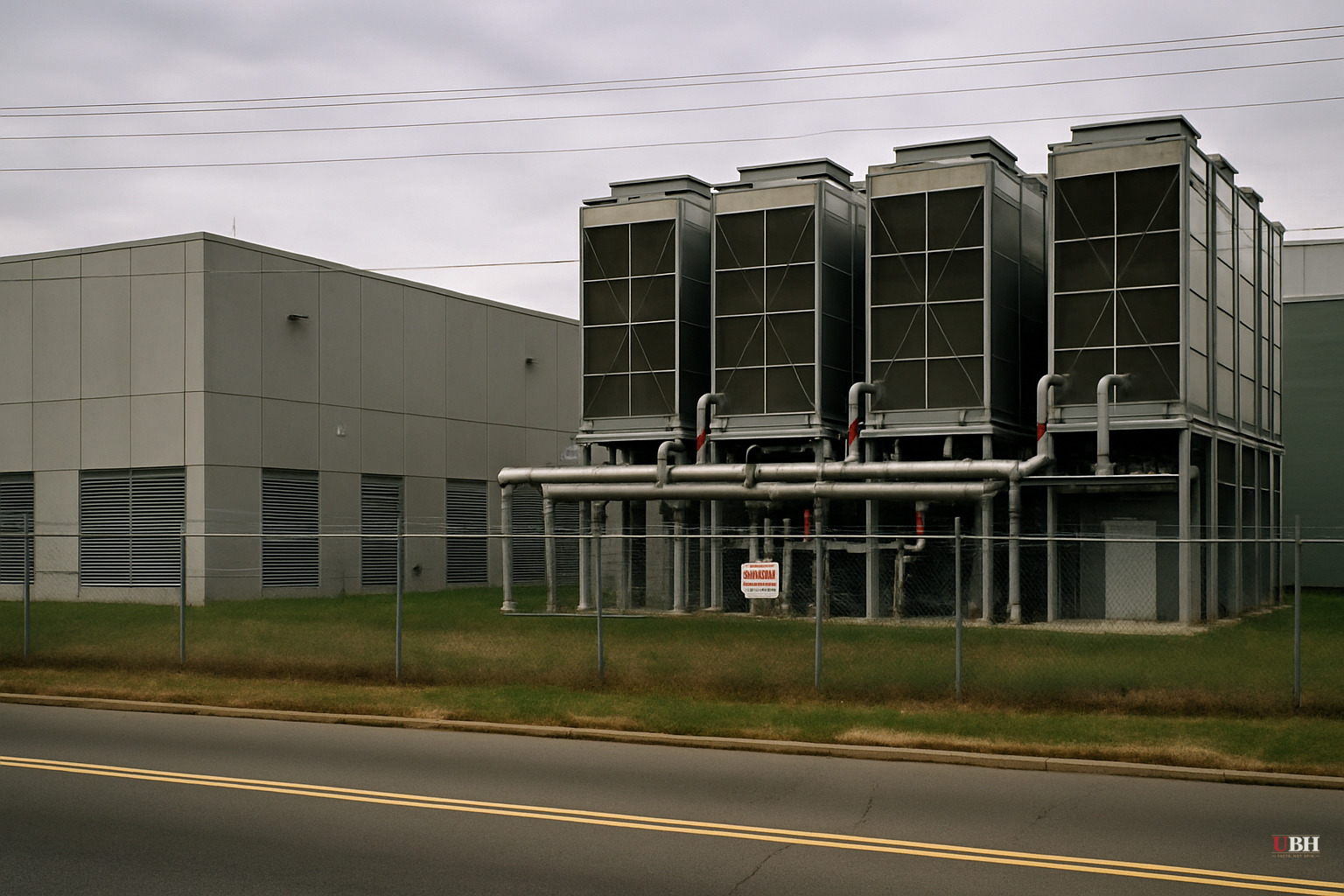
Since this outlet covered the EPA's refusal to set federal standards for data centers and the grid infrastructure gap driving renewable energy bottlenecks, the political fight over data center construction has opened a new front: Washington is now arguing about whether Beijing is behind the whole thing.
The China Claim
Senator Tom Cotton sent a letter to Attorney General Todd Blanche this week asking for a federal investigation into Chinese Communist Party-directed foreign influence targeting data center opposition. Republican leaders on the House Energy and Commerce Committee sent a parallel letter to the White House and FBI. Interior Secretary Doug Burgum told Fox Business that communities trying to build data centers are "getting bombarded" with foreign propaganda.
OpenAI added fuel to this framing when it released a report describing a cluster of accounts originating in China that it said had been spreading anti-data-center messages on social media.
The problem: the data does not back up the scale of the claim.
Graphika, a social media analytics firm that has tracked data center opposition across Facebook, Bluesky, and TikTok for the past year, says it has found no evidence of "organized or scaled influence operations or campaigns that can be traced back to a foreign actor," according to analyst Dina Sadek. The two exceptions Graphika identified are narrow: a cross-platform network using AI-generated avatars that "sporadically" mentions U.S. tech companies, and some Facebook pages producing AI-generated anti-data-center images. The administrators of those pages appear to be based in Bangladesh rather than China. Experts across the disinformation research field have expressed skepticism about the funding claims.
Canadian investor Kevin O'Leary, who is developing a controversial large-scale data center in Utah, deployed a graphic from the Bitcoin Policy Institute, a cryptocurrency advocacy organization, in a May video claiming foreign influence was driving opposition to his project. That is not independent corroboration. That is a developer with financial skin in the game citing an industry-adjacent source.
The Opposition Is Real and Domestic
The strongest case for the critics of the China narrative is simply the polling. A Heatmap poll released last week found more than half of Americans support a moratorium on new data center construction. Public First, a UK-based policy research agency, found in early June that U.S. support for data centers was the lowest of 15 countries surveyed. A separate Gallup poll found 71 percent of Americans oppose new data center construction in their own communities.
Those numbers do not require a Beijing influence operation to explain. Data centers draw real local complaints: water consumption, pressure on electric grids, rate increases, and minimal visible employment. Florida Governor Ron DeSantis captured the sentiment bluntly last month: "Oh, we've got to build a data center and charge you more because we want to do videos where I can put your head on Marlon Brando's body."
Wired's reporting and The Atlantic's analysis both agree on this point: whatever foreign interference exists, it is adding on to pre-existing tensions, not manufacturing them from scratch.
The Economic Case Most Critics Ignore
The Atlantic published a substantive counter-argument this week. Economists Dany Bahar and Greg Wright compared counties that built data centers against comparable counties that did not. Their findings: overall local employment rose 4 to 5 percent, construction employment rose 11 percent, and information-sector employment rose 22 percent. Average wages in those counties ticked up 3 to 4 percent. The employment gains lasted at least five to six years past the construction phase.
Bahar told The Atlantic that the workers filling those jobs tend to be locals, not transplants. And the jobs—electricians, engineers, plumbers—are not easily automated.
There is a legitimate caveat here. Much of the historical employment data comes from co-location facilities, essentially landlord-style operations renting rack space. Modern AI-era hyperscale data centers operated by Google, Amazon, and Microsoft are structurally different and may produce different outcomes. Bahar and Wright found that hyperscale centers create more information-sector employment than co-location facilities, which would make the economic case stronger, not weaker. But the dataset for hyperscale facilities is still relatively thin.
The Unresolved Tension
The congressional letters demanding FBI and DOJ investigations into Chinese data center interference are not automatically wrong. Foreign actors do attempt to shape American public opinion, and concern over influence operations is legitimate regardless of which party raises it. Graphika has found no large-scale coordinated operation as of now, but the absence of evidence in available data is not a guarantee that no operation exists.
What is clear is that framing all domestic data center opposition as astroturfed propaganda serves a convenient political purpose for developers and their allies in Washington. The opposition is broad, bipartisan at the local level, and rooted in genuine cost and resource concerns that elected officials approved without adequate community input.
The unresolved question, as Data Center Knowledge noted in its June 12 coverage of New York's grid reform debate, is whether states can build a workable regulatory framework for data center siting, power allocation, and water use fast enough to prevent the backlash from hardening into outright legislative bans. New York is currently the only state actively working through that process in a structured way. Everyone else is improvising.
Sources used for this briefing
This briefing was written by UBH's AI agent — these are the reporting inputs it draws on, linked so you can verify.


