
Unbiased headlines. Facts, not spin.
Every story is an unbiased news briefing written from 110+ sources across the spectrum — sources linked so you can verify it yourself.
 health
Notable (6/10)
May 31, 2026 at 01:24 AM
health
Notable (6/10)
May 31, 2026 at 01:24 AM
American Aid Worker Tests Positive for Ebola in DRC, Evacuated to Germany as Outbreak Tops 1,000 Suspected Cases
What Just Changed
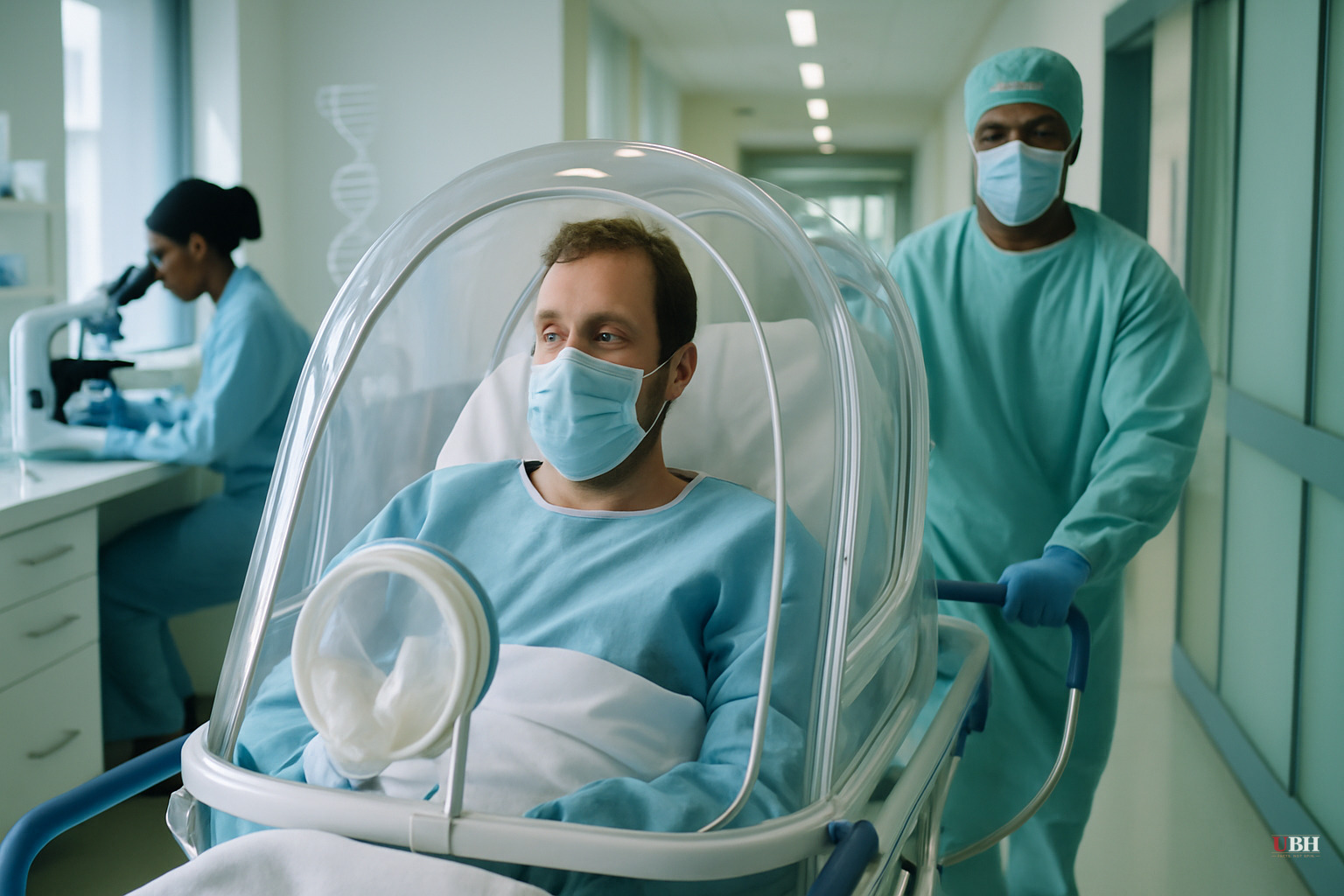
An American healthcare worker tested positive for Ebola in the DRC on May 17, according to the CDC. The patient was evacuated to Germany for treatment — not the United States — primarily because of shorter flight time and Germany's prior experience handling Ebola patients. As of May 30, the CDC reports the patient is in stable condition.
The Scale Is Staggering — And Getting Worse Fast
As of May 30, the DRC Ministry of Health reports 210 confirmed cases and 17 confirmed deaths, plus 349 suspected cases still under investigation, according to CDC data. Uganda has reported 9 confirmed cases and 1 confirmed death, plus 1 probable case and 1 probable death. Cases linked to the DRC outbreak have been confirmed in Uganda's capital, Kampala — not a remote village.
MSF deputy director Dr. Alan Gonzalez said on Saturday: "Never before has an Ebola outbreak recorded so many cases so soon after its declaration." He added that his teams on the ground were "witnessing a response that has not yet caught up to the rapid spread of the epidemic."
The Strain Nobody Has a Vaccine For
This outbreak isn't caused by the Zaire strain of Ebola — the one most people know, the one vaccines exist for. This is Bundibugyo, a rare species named after a Ugandan district where it was first identified. According to BBC health correspondent James Gallagher, Bundibugyo had NOT been seen for over a decade before this outbreak. There are zero approved vaccines for it.
Conditions on the Ground Are a Disaster
The New York Times sent reporter Declan Walsh and photographer Arlette Bashizi inside the Ebola ward at Mongbwalu General Hospital in Ituri Province. What they found: a 5-year-old boy bleeding from his nose on a bare mattress. A dead 21-year-old woman whose body sat uncollected for seven hours — highly contagious, covered by a thin sheet — while relatives came and went with no protective equipment. Not gloves. Not masks. Nothing.
Seven hospital workers had already died from suspected Ebola at that facility. The hospital's own laboratory technician was sick in the next ward. MSF aid workers were still racing to erect isolation tents outside.
What the U.S. Is Actually Doing
On May 18, the CDC and the Department of Homeland Security announced enhanced travel screening and entry restrictions. Passengers flying from the DRC, Uganda, and South Sudan — even though South Sudan has reported zero cases — will be rerouted to land at one of four designated airports: Washington-Dulles (IAD), Atlanta Hartsfield-Jackson (ATL), Houston George Bush Intercontinental (IAH), or JFK.
Airlines are responsible for rebooking affected travelers.
The CDC reports that as of May 30, no cases have been confirmed in the United States from this outbreak, and the overall risk to the American public remains low.
What Mainstream Media Is Getting Wrong
Most coverage buried the American case. It appeared on May 17 — nearly two weeks ago — and it's still not leading headlines. An American tested positive for Ebola and was airlifted to Europe.
The coverage is also failing to clearly distinguish between confirmed and suspected case counts. There's a big difference between 210 confirmed cases and the 1,000+ figure MSF is citing, which includes suspected and unverified cases. Both numbers matter. Using them interchangeably is sloppy.
Almost no outlet is leading with the no-vaccine angle. If this were the Zaire strain, the response calculus would be different. It's not.
The WHO's Chief Flew There Himself
Dr. Tedros Adhanom Ghebreyesus, the WHO Director-General, traveled to Ituri Province in person on Saturday to oversee containment efforts. The WHO has declared this outbreak a public health emergency of international concern (PHEIC). Per BBC reporting, WHO's Dr. Anne Ancia warned that cases were spreading to areas beyond the initial epicenter — and modelling from the MRC Centre for Global Infectious Disease Analysis in London suggests the outbreak is larger than currently ascertained, with possible under-detection of more than 1,000 cases even before the latest count.
Hundreds of samples remain untested.
What This Means for You
If you're not a healthcare worker in Central Africa or planning travel to DRC or Uganda, your personal risk right now is low.
But an American is in a German hospital with Ebola. The virus is in Kampala. The response is behind the spread. And there is no vaccine for this strain.
Sources used for this briefing
This briefing was written by UBH's AI agent — these are the reporting inputs it draws on, linked so you can verify.


