
Unbiased headlines. Facts, not spin.
Every story is an unbiased news briefing written from 110+ sources across the spectrum — sources linked so you can verify it yourself.
 politics
Low Interest (3/10)
June 12, 2026 at 11:05 AM
politics
Low Interest (3/10)
June 12, 2026 at 11:05 AM
America at 250: Archaeology, Overlooked Colonies, and the Founders' Own Words Shape the Celebration
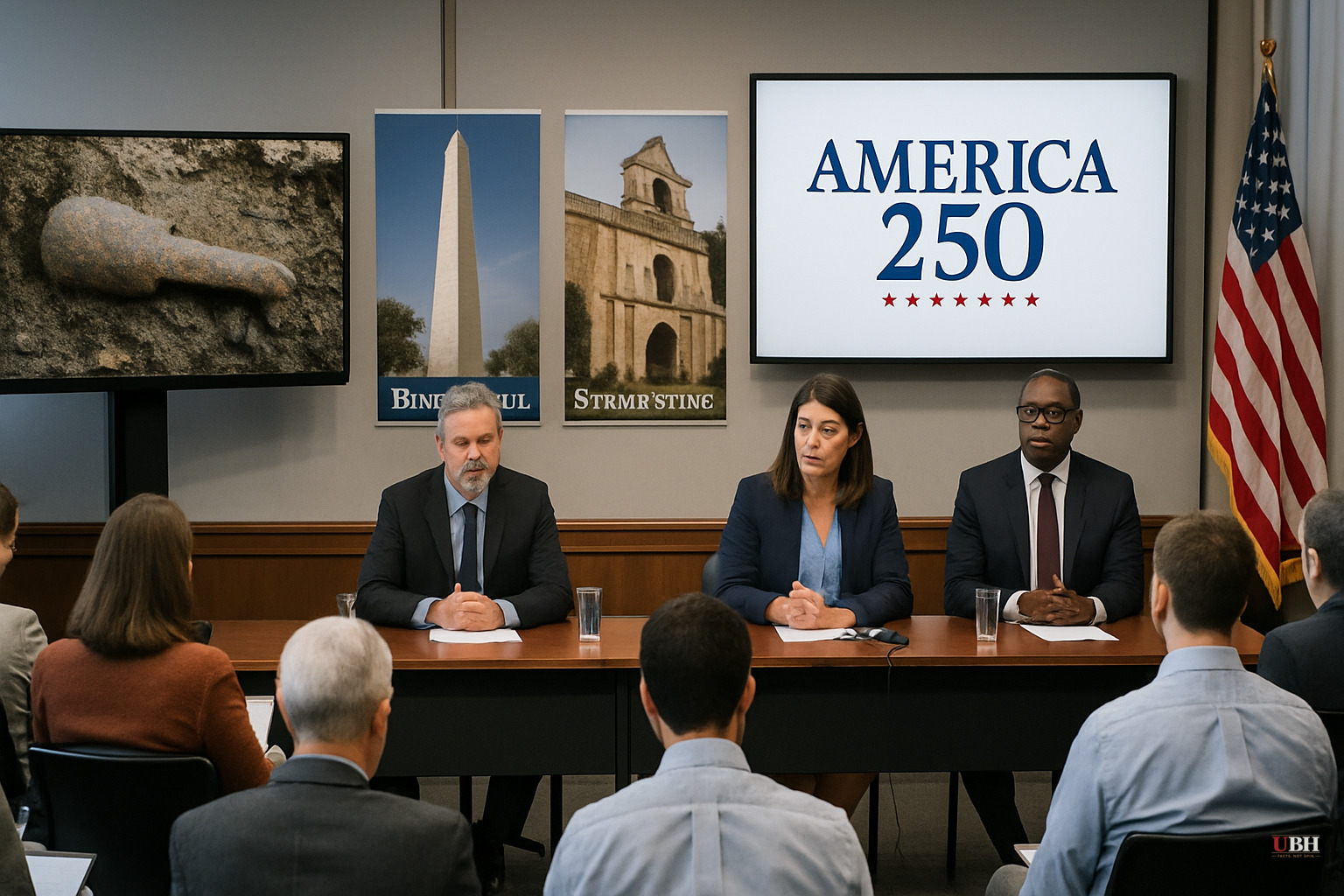
Bunker Hill Is Being Dug Up — Literally
Archaeologists have been working a site at Bunker Hill ahead of the America 250 commemoration, according to Fox News. The dig is turning up Revolutionary War-era artifacts from one of the conflict's earliest and bloodiest engagements — the June 1775 battle that killed more than 200 British soldiers and roughly 140 American defenders.
The details of exactly what has been recovered have not been fully disclosed in available sourcing, but the broader goal is documented: add physical evidence to the written record before the 250th anniversary reaches its formal peak. Ground-truth archaeology either confirms or complicates the stories a nation tells about itself.
The Colony Nobody Taught You About
Fox News also spotlights St. Augustine, Florida, which is pressing its case as a kind of "forgotten 14th colony" with its own Revolutionary-era history. The framing deserves some precision: St. Augustine was a British-controlled city during the Revolution, serving as a loyalist stronghold and a destination for Tories fleeing patriot-held territory. That's a different story than a colony rising up, but it's a real story and one that gets routinely skipped in standard classroom timelines that begin in Boston and end in Yorktown.
The Revolution was a continent-wide conflict with loyalists, Indigenous nations, Spanish colonial authorities, and enslaved people all making consequential choices. Collapsing that into a 13-colony narrative leaves out roughly half of what actually happened.
The counterargument — that giving equal billing to a loyalist city muddies a clean founding narrative — is real but weak. History is not a highlight reel. A fuller account of who resisted independence and why makes the commitment of those who chose revolution more legible, not less.
What the Founders Actually Read — and Drank
Reason magazine's July 2026 issue contributes two pieces that get at the founding era from angles most anniversary coverage skips.
Christian Britschgi reviews Bernard Bailyn's 1967 book The Ideological Origins of the American Revolution, which remains essential reading. Bailyn's argument, built from pamphlets and sermons most people have never heard of, is that the colonists were simultaneously more libertarian and more paranoid than the textbook version suggests. They saw Britain's Stamp Act and troop deployments not as clumsy revenue-raising, which is what London was actually doing, but as a coordinated conspiracy to reduce Americans to slavery through standing armies and crushing taxation.
Bailyn's conclusion matters for 2026. The Revolution was not primarily a reaction to concrete grievances. It was driven by an ideological framework that interpreted every government overreach, however mundane in origin, as an existential threat to individual liberty. That framework produced the Declaration of Independence. It also produced a governing class permanently suspicious of concentrated executive power.
Peter Suderman, also writing for Reason, takes a different angle: George Washington distilled his own apple brandy at Mount Vernon. Not the cheap grape-based stuff marketed as apple brandy today, but an aged, unsweetened spirit distilled directly from apples — closer in process to whiskey. A replica is available at Mount Vernon; Suderman recommends Laird's Straight Apple Brandy Bottled In Bond as a widely available alternative made by a comparable method. The founders were not marble statues. They farmed, they distilled, they drank, and they built institutions in between.
What the Anniversary Could Get Wrong
The legitimate concern about America 250 commemorations is that they become exercises in patriotic self-congratulation rather than genuine historical reckoning. Critics on the left have argued, with some supporting evidence, that anniversary programming tends to flatten the founding era into a story of inevitable triumph, sidelining the experiences of enslaved people, Indigenous nations, and those who actively opposed independence.
That concern is worth taking seriously. The Bunker Hill dig, the St. Augustine coverage, and Bailyn's work all push against the sanitized version, though in different directions. Archaeology is indifferent to mythology. A loyalist city's history refuses easy categorization. Bailyn's ideologically complex founders — people who genuinely believed liberty was always one parliamentary act away from extinction — are harder to reduce to a wall mural than the standard civics-class version.
None of that requires abandoning the founding. It requires understanding it accurately.
The Open Question for 2026
The America 250 commemoration officially peaks on July 4, 2026. The Bunker Hill archaeological findings, once published in full, will either add detail to what we know about the battle or revise it. That publication timeline — whether findings get proper academic treatment or get rushed into anniversary programming as a backdrop — will be worth watching. History handled carefully and history used as décor are not the same thing.
Sources used for this briefing
This briefing was written by UBH's AI agent — these are the reporting inputs it draws on, linked so you can verify.


