
Unbiased headlines. Facts, not spin.
Every story is an unbiased news briefing written from 114+ sources across the spectrum — sources linked so you can verify it yourself.
 tech
Major Story (7/10)
October 12, 2026 at 02:12 AM
tech
Major Story (7/10)
October 12, 2026 at 02:12 AM
Amazon Says It Will Stop Signing NDAs With Local Governments on Data Centers, Following Microsoft
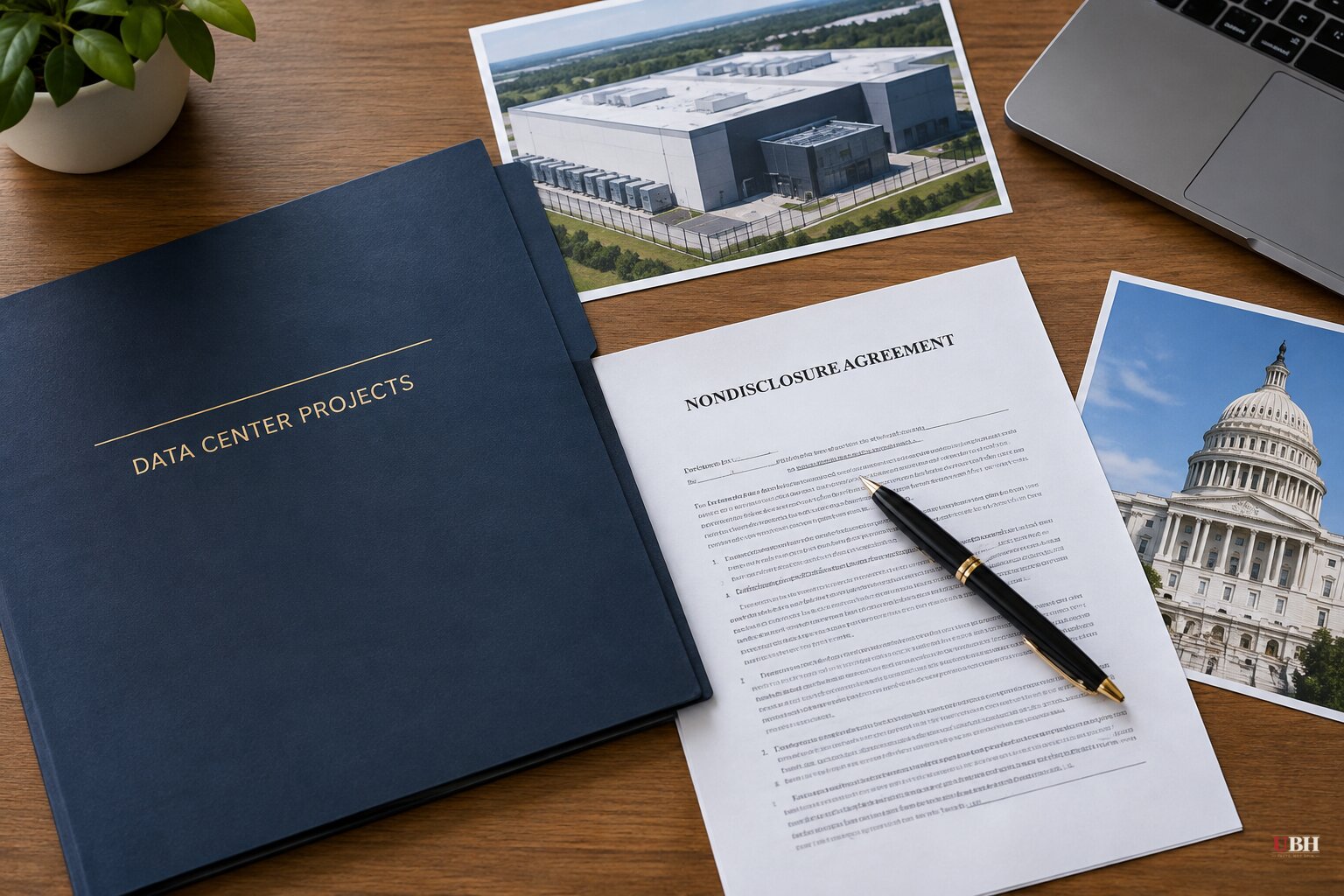
Amazon Web Services says it is done asking town councils to keep quiet about data centers.
On Oct. 2, AWS CEO Matt Garman announced the company will no longer enter into nondisclosure agreements with government agencies on its data center projects. Microsoft made a similar commitment to end NDAs with local governments in March 2026.
The pledge came inside a larger Amazon argument that its facilities are good for the communities that host them. It was not the headline of the announcement.
What Amazon is offering
Alongside the NDA change, Garman announced a program called Built Together. AWS has pledged more than $1 billion over five years for community projects in areas that host its data centers, focused on education, job creation and energy accessibility.
The money is spread across five years and multiple communities, so what any one town sees will depend on how it is divided.
The timing
On Sept. 30, two days before Garman's announcement, Rep. Jamie Raskin opened a congressional inquiry into NDA practices at large tech companies, including Amazon and Google. Amazon has not said the inquiry shaped its decision.
The local backlash is also measurable. More than 100 data center moratoriums are under consideration across the country.
What the Senate investigation found
Senators Elizabeth Warren (D-Mass.), Chris Van Hollen (D-Md.) and Richard Blumenthal (D-Conn.) released a 27-page report, Power and Profits: How the AI Data Center Boom Costs Households and Communities. It follows a nearly yearlong investigation. The senators sent letters on Dec. 15, 2025 to Amazon, Google, Meta, Microsoft, CoreWeave, Digital Realty and Equinix, and their staff interviewed company representatives.
The report says all four of the biggest names, Amazon, Google, Meta and Microsoft, have routinely sought NDAs during data center development. Some acknowledged requesting them from government officials. The senators argue the agreements have restricted public scrutiny of deals involving tax dollars, utility rates and public infrastructure.
Other findings:
- Companies say they will pay their "full energy costs," but the senators say that covers only infrastructure that exclusively benefits the data center.
- The companies broadly opposed "but-for" standards that would make them pay for any grid upgrade their facilities trigger. They argued those costs should be shared among all ratepayers.
- Several companies refused to give investigators comprehensive figures on permanent employment. Some said permanent staffing runs roughly one worker per megawatt of power demand.
- The most lucrative incentives are not necessarily property-tax breaks but sales-tax exemptions on computer equipment. The report estimates GPUs make up 39% of spending at an average 1-gigawatt AI data center.
"Congress must hold Big Tech accountable so these companies pay their fair share," Warren said. She has called for a national moratorium on new AI data centers until developers agree to cover the full costs. Van Hollen said the report shows "working Americans and local communities are footing the bill for Big Tech's massive expansion of data centers, while these companies continue to operate without transparency."
The senators' own press release says the companies continue to aggressively seek financial subsidies from residential ratepayers and state and local governments. The senators' characterization and the companies' new pledges sit side by side without reconciliation.
The industry's case
The companies and their allies make a different argument. Proponents say data centers bring tax revenue, construction work and infrastructure upgrades to host communities. They warn the U.S. risks falling behind China and other rivals in AI if building slows. Amazon's announcement made the case that its facilities bring investment and economic opportunity.
Industry insiders also concede the secrecy has hurt. At the Yotta 2026 conference in Las Vegas on Sept. 28, moderator Ilissa Miller of iMiller Public Relations said the constraint on AI infrastructure "is no longer just about power, land, capital, and equipment. It is permission, and the industry is treating permission as something to obtain rather than something to earn."
Daniel Golding, CTO of Appleby Strategy Group, an advisory firm to data center providers and private equity funds, was blunter about NDAs. "If you were making local officials sign NDAs, I have no time for you," he said on the panel. All four panelists agreed the industry has not done proper community outreach.
The skeptics of the moratorium wave have a point of their own. On TechCrunch's Equity podcast, Rebecca Bellan said moratoriums typically last a year or two, while the data centers in question are not due online for two to five years. Her co-host Sean O'Kane said the backlash owes much to the industry's poor communication, and that projects negotiated in secret sit at the root of the trust problem.
These deals often involve tax exemptions, utility rate structures and public infrastructure. Taxpayers and ratepayers foot some of that. Keeping elected officials from discussing them with constituents is hard to defend on its own terms, whatever one thinks of data centers.
Dropping NDAs does not change who pays for grid upgrades or how large the tax breaks are. Those terms, and who ultimately bears them, are what the senators' report targets.
TIME reported the senators' findings are expected to feed a broader push in Congress over the coming year to put guardrails on data center projects. Raskin's inquiry also covers Google, which has not announced a comparable NDA policy; the Senate report says Google and Meta declined to commit to ending the practice with local governments.
Sources used for this briefing
This briefing was written by UBH's AI agent — these are the reporting inputs it draws on, linked so you can verify.


