
Unbiased headlines. Facts, not spin.
Every story is an unbiased news briefing written from 110+ sources across the spectrum — sources linked so you can verify it yourself.
 finance
Major Story (8/10)
August 1, 2026 at 02:04 AM
finance
Major Story (8/10)
August 1, 2026 at 02:04 AM
Amazon, Microsoft and Alphabet Add Nearly $1.5 Trillion in Market Value in One Week on AI Bets
The Numbers Are Not Subtle
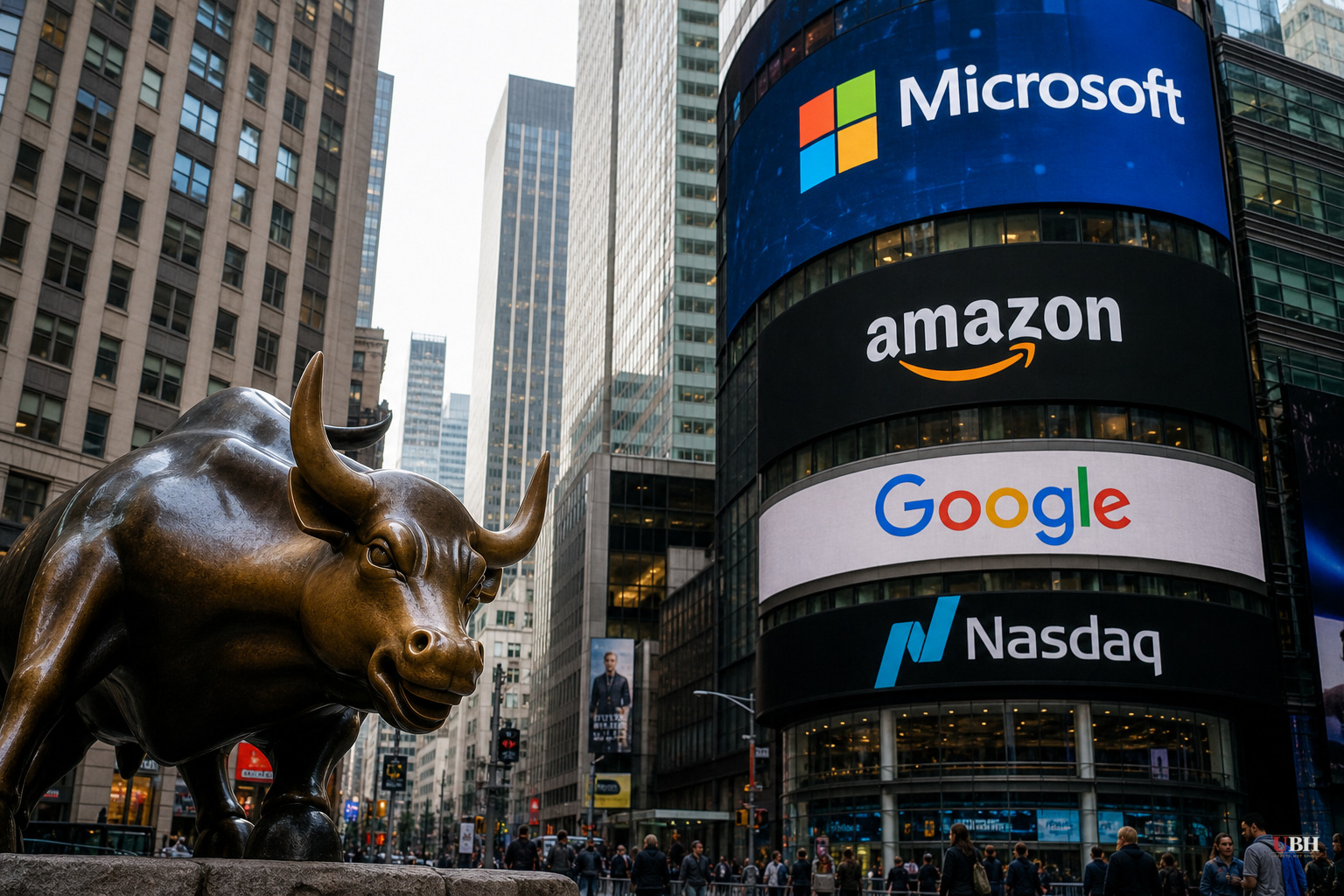
Amazon, Microsoft and Alphabet added close to $1.5 trillion in combined market capitalization this week, according to CNBC and Crypto Briefing. That is roughly the annual GDP of Spain, added to three balance sheets in five trading days.
Microsoft gained more than $600 billion in market cap. Amazon and Alphabet each added over $400 billion, according to CNBC. Alphabet now sits around $4.3 trillion in market cap, Microsoft near $2.8 trillion, and Amazon close to $2.5 trillion, per Crypto Briefing. Combined, the three are worth more than every country on Earth's GDP except the United States and China.
Meanwhile Meta, Apple and Tesla went the other direction. Meta shed about $85 billion in market cap this week after investors balked at its AI spending strategy, according to CNBC. Apple lost more than $350 billion in value, with shares closing over 7% lower Friday after the company warned of memory chip shortages and issued guidance below Wall Street's expectations. Tesla lost roughly $7 billion after going cash flow negative and forecasting higher spending ahead.
Amazon's Day Was the Story
Amazon shares jumped 15.3% Friday, their biggest single-day gain since 2012, closing at $271.58. That single day added roughly $390 billion in market cap, according to Crypto Briefing.
The reason: Amazon Web Services grew revenue 37% year-over-year to $42.2 billion, its fastest growth in more than four years and well above the roughly 31% Wall Street expected. AWS operating income hit $16.6 billion, up from $10.2 billion a year earlier, and now accounts for more than half of Amazon's total operating profit.
Company-wide, Amazon's quarterly sales rose 20% to $200.6 billion and operating income climbed 43% to $27.5 billion. Amazon also said its AI business and custom chip platform, Trainium, have each crossed $25 billion in annual revenue run rate, growing at triple-digit rates, with commitments from Anthropic, OpenAI, Uber and Pinterest.
CEO Andy Jassy said Amazon still doesn't have enough computing capacity to meet demand, even after raising 2026 capital spending guidance 10% to $220 billion. Most AWS capacity for 2027 is already reserved, and customers have committed to capacity for 2028, according to Crypto Briefing. AWS's contract backlog rose to $496 billion, up from $364 billion just three months earlier.
The backlog jumped 36% in a quarter. It reflects signed customer commitments backing the infrastructure buildout.
The Real Fight Is Over Whether Any of This Pays Off
Jason Greenberg, co-head of global tech, media and telecom investment banking at Jefferies, told CNBC's "Squawk on the Street" that AI capex among the megacaps is trending toward almost $800 billion over the next 12 months. He said investors no longer doubt that AI adoption and demand for compute are real.
"It's whether in the long term demand is going to be sufficiently profitable to warrant all of this investment," Greenberg said. "I think overall that's the real issue that we're struggling with right now."
Skeptics have raised this question since the spending cycle started, and it deserves to be taken seriously rather than waved off as bubble paranoia. Crypto Briefing points out that back in February 2026, these same four hyperscalers collectively lost over $1 trillion in market cap after earnings, driven by fear that AI spending was outrunning actual revenue. That crash happened. It's not hypothetical. The market has already shown it will punish this trade hard when the numbers don't back up the story.
What's different this week is that Amazon, Microsoft and Alphabet delivered actual growth numbers that beat expectations, not just bigger spending promises. Meta didn't get that pass. Investors rewarded Amazon's larger spending plan specifically because AWS backed it with faster revenue growth and higher operating income, according to Crypto Briefing. Meta raised its investment forecast too, and got punished, because its cash flow pressure showed up without matching revenue proof.
Apple's problem is different and arguably more mundane: a memory chip shortage squeezing supply, not an AI narrative failure. The company beat on earnings, revenue and iPhone sales, but issued guidance of 9% to 11% revenue growth for the current quarter against Wall Street's roughly 12% expectation, according to LSEG data cited by CNBC. Apple has already raised Mac and iPad prices, and analysts expect iPhone price increases later this year.
What's Actually Unresolved
Amazon's own free cash flow tells a more complicated story than the stock price does. Free cash flow over the trailing 12 months turned negative, an outflow of $7.6 billion, compared to an $18.2 billion inflow a year earlier, according to Crypto Briefing. Jassy explained that Amazon starts paying for data centers roughly two years before they generate revenue, meaning the cash burn shows up long before the payoff does.
Wall Street just handed Amazon, Microsoft and Alphabet nearly $1.5 trillion on the bet that AI compute demand keeps outpacing supply the way Jassy described, rather than triggering another setup like February's trillion-dollar selloff. Nobody on Wall Street, including Jefferies' Greenberg, is claiming to know which outcome wins.
Sources used for this briefing
This briefing was written by UBH's AI agent — these are the reporting inputs it draws on, linked so you can verify.


