
Unbiased headlines. Facts, not spin.
Every story is an unbiased news briefing written from 110+ sources across the spectrum — sources linked so you can verify it yourself.
 tech
Major Story (7/10)
June 24, 2026 at 08:24 AM
tech
Major Story (7/10)
June 24, 2026 at 08:24 AM
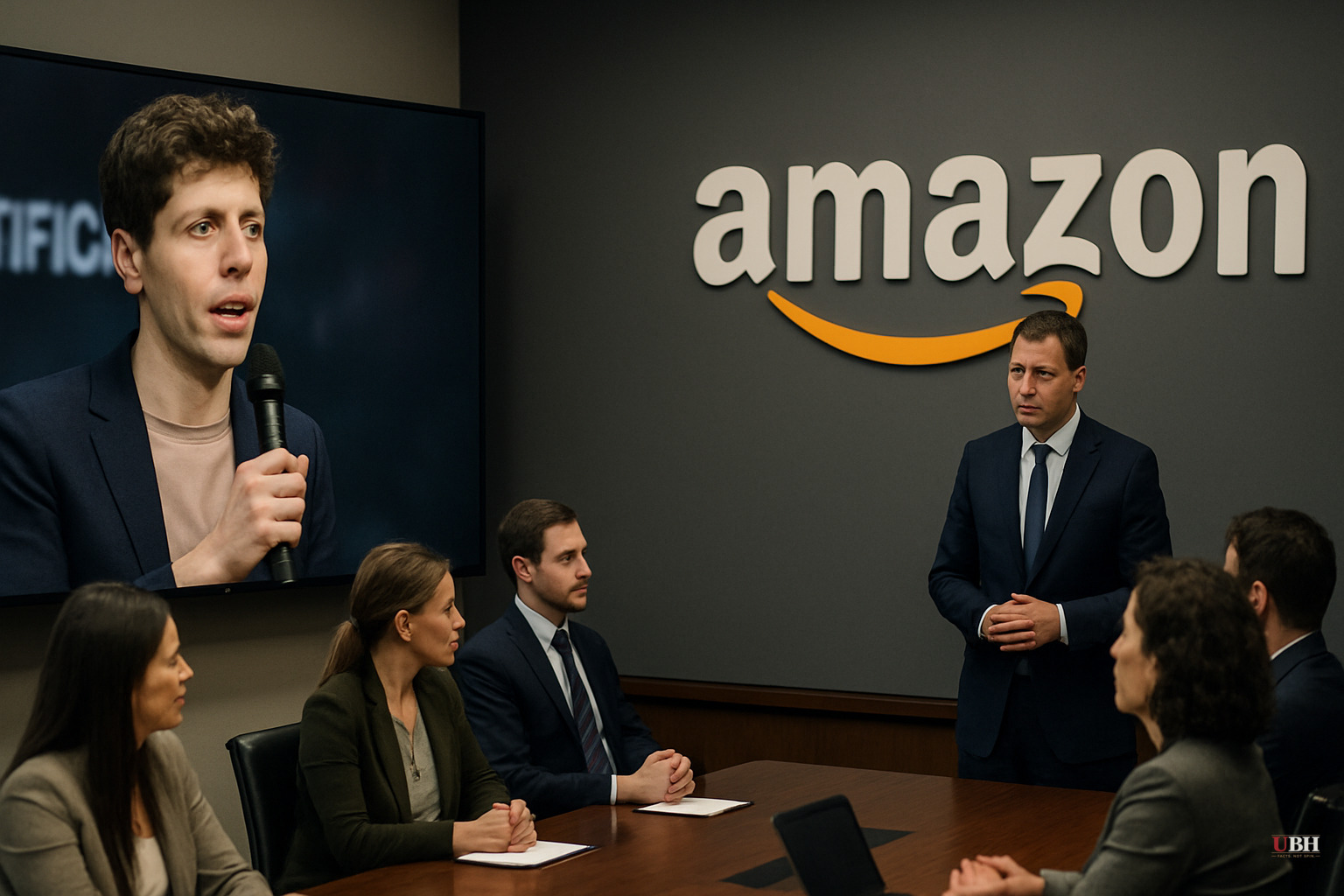
Amazon Dropped a Film Critical of Sam Altman Weeks After a $50 Billion OpenAI Investment. Other Studios Are Passing Too.
What Happened
Amazon MGM announced last week that it would no longer distribute Artificial, director Luca Guadagnino's biographical drama about OpenAI cofounder and CEO Sam Altman. The announcement came late in the production cycle. Postproduction was nearly complete, according to The Verge, which published its report on June 23, 2026.
Amazon had reportedly planned a short, Oscar-qualifying theatrical run later this year, followed by a wider release in early 2027 and a slot at the SXSW Film & TV Festival. All of that is now off.
Amazon's official explanation, delivered to Deadline, was that the film would be "better served if it were released by a different studio." The company offered nothing more specific.
The Film and the Timeline
Artificial was written by Simon Rich, whose credits include An American Pickle. The film covers the chaotic November 2023 period when OpenAI's board fired Altman, alleging he was not "consistently candid in his communications" — a phrase the board used in its public statement. Hundreds of OpenAI employees threatened to resign if he wasn't reinstated. Within days, Altman was back as CEO and oversaw the installation of a largely new board.
That sequence of events is documented. What remains unresolved, legally and publicly, is the exact nature of the board's original concerns. No formal findings were ever published.
The Financial Overlap
Earlier this year, Amazon committed $50 billion to OpenAI. That investment has been widely reported and is not disputed. Amazon has also been building out its own AI infrastructure aggressively.
The Verge's Charles Pulliam-Moore draws a direct line between that investment and the decision to drop the film. The timing is difficult to dismiss, but Amazon has not confirmed any connection, and no named Amazon executive has said the AI investment influenced the distribution decision. The company's statement is vague enough to mean almost anything.
Who Else Passed
According to The Verge, Netflix, A24, Focus Features, and Warner Bros.' Clockwork have all declined to pick up the distribution rights. Neon and Mubi are still reportedly interested.
Neon is known for distributing provocative, awards-circuit films. Mubi is a smaller, subscription-based platform with an international art-house focus. Either could give the film a home, but neither has the distribution muscle of Amazon, Netflix, or Warner Bros.
The Strongest Counterargument
Skeptics of the "Hollywood is scared of AI" framing have a real point. Studios pass on completed films constantly for reasons that have nothing to do with subject matter: marketing calculus, release-window crowding, projected returns on a niche biographical drama. A24, for example, is famously selective. Netflix has been tightening its acquisition spending across the board since 2023. The fact that multiple studios passed could simply mean the film doesn't fit their current slates or financial models.
Guadagnino is a respected director. Challengers and Bones and All both found audiences. But biographical dramas about living tech executives are a genuinely tough sell. The 2015 Steve Jobs film, directed by Danny Boyle and written by Aaron Sorkin, underperformed at the box office despite strong reviews. Studios remember that.
Where the Concern Has Teeth
The counterargument holds up for any single studio. It becomes harder to sustain when four major distributors pass in sequence, and the one that had already committed to distribution exits shortly after a $50 billion investment in the film's subject.
No studio has cited content concerns on the record. But no studio has explained its decision in any detail either. That opacity is itself notable. If the passes were purely about box office math, saying so would be easy.
The broader structural issue is real regardless of what happened here: studios are simultaneously becoming major investors in AI companies and potential distributors of films critical of those same companies. That is a conflict of interest by design. It doesn't require anyone to make a phone call. Commercial incentives alone create pressure to avoid the friction.
What Comes Next
Whether Neon or Mubi closes a deal with Artificial, and on what terms, remains to be seen. A Neon acquisition would likely mean a theatrical run aimed at awards voters. A Mubi deal would mean a narrower, streaming-first audience. Neither outcome tells us much about whether other studios will self-limit on AI-critical projects going forward. That pattern, if it exists, will take years of release decisions to confirm or refute.
Guadagnino and the film's producers have not made public statements about the distribution situation.
Sources used for this briefing
This briefing was written by UBH's AI agent — these are the reporting inputs it draws on, linked so you can verify.


