
Unbiased headlines. Facts, not spin.
Every story is an unbiased news briefing written from 110+ sources across the spectrum — sources linked so you can verify it yourself.
 tech
Notable (6/10)
June 24, 2026 at 07:11 AM
tech
Notable (6/10)
June 24, 2026 at 07:11 AM
Former NOAA Team Launches Climate.us After Trump Administration Shut Down Climate.gov
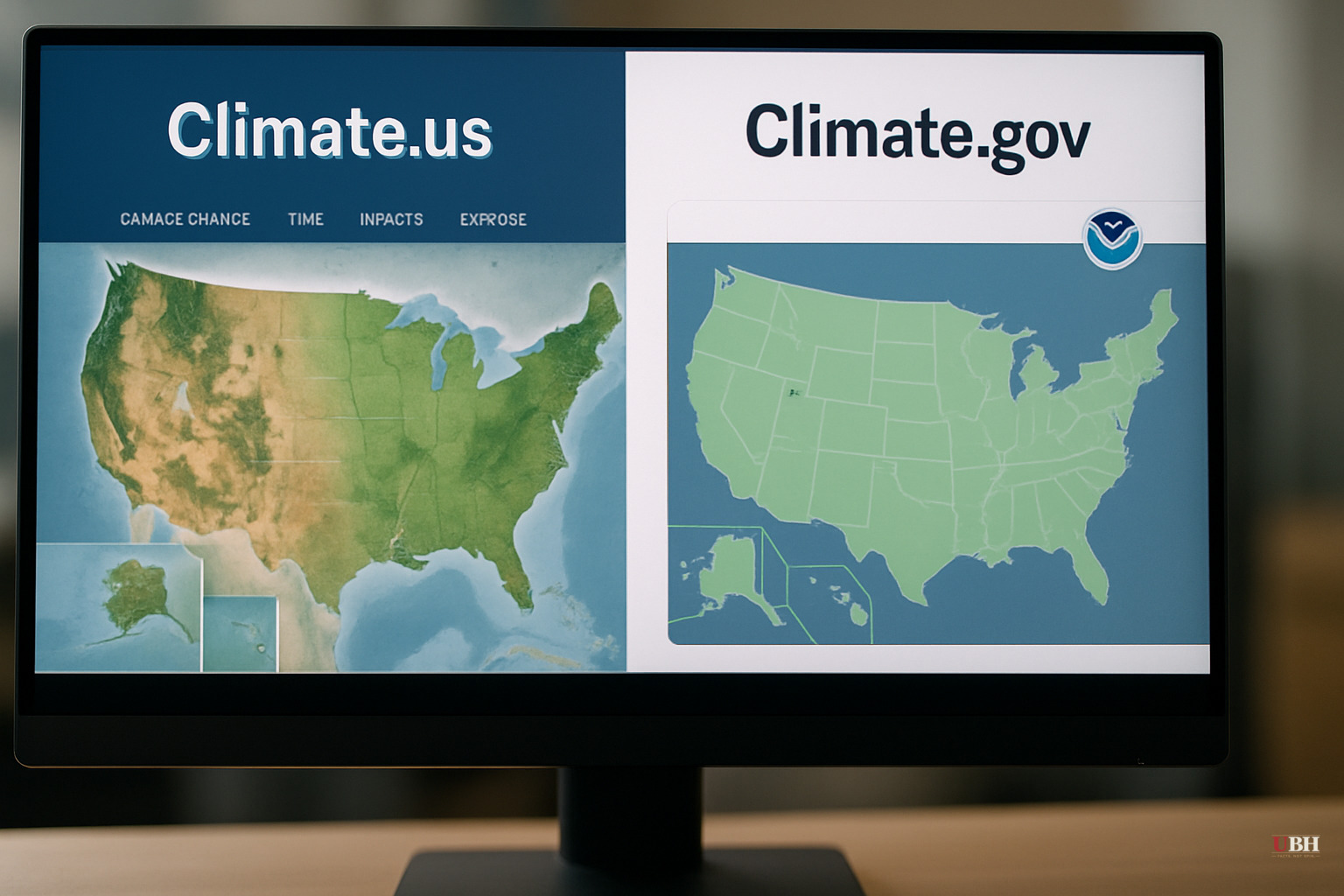
What Happened to Climate.gov
In the summer of 2025, the Trump administration effectively ended climate.gov, one of the federal government's most-used public science portals. NOAA's current redirect page cites Executive Order 14303, titled "Restoring Gold Standard Science," and a June 23, 2025 White House Office of Science and Technology Policy memo as the basis for the change, according to Ars Technica.
Anyone navigating to climate.gov today gets sent to NOAA.gov/climate, where a message informs visitors that future research products will be housed there. The site contained 15 years of climate news, expert blogs, educational materials, interactive maps, data pathways, and the Fifth National Climate Assessment, according to the climate.us launch announcement.
The production team was fired in the process, according to The Guardian's reporting from earlier this summer.
Who Built the Replacement
Rebecca Lindsey, climate.gov's former managing editor, led the effort to rebuild. She recruited former colleagues to volunteer their time, secured early legal support and a short-term grant, and established a nonprofit structure to sustain the work long-term, according to The Guardian.
This week, climate.us announced the completion of that rebuild. The site is now fully operational, run by an independent nonprofit, and includes the full archive of climate.gov's content.
More than 2,500 individual donors contributed roughly $250,000, representing one-third of the nonprofit's launch funding, according to the climate.us press release. Over 80 scientists have volunteered as subject matter expert reviewers.
What the New Site Contains
According to the University of Georgia's climate and agriculture extension blog, authored by Pam Knox, the new site covers material that NOAA.gov is NOT replicating, including discussions of ENSO (El Niño-Southern Oscillation), polar outbreaks, and long-term climate trends. Knox credits the former climate.gov authors directly for preserving what she calls "this important source of information."
The content is legally available for reuse because federal government works cannot be copyrighted, which made the preservation effort straightforward from a legal standpoint, according to Ars Technica.
The Administration's Case
The strongest good-faith argument for what the administration did: the EO and accompanying OSTP memo represent a policy position that federally produced science should meet a defined evidentiary standard, and that public-facing government websites should not function as advocacy platforms. The administration is not claiming climate science does not exist. It is claiming the government's role in communicating it should be restructured. NOAA's redirect explicitly states that climate research products will continue to be available at NOAA.gov and affiliate sites.
Whether the NOAA.gov replacement is actually equivalent to what climate.gov offered is a factual question, not purely a political one. Knox's assessment, based on direct comparison, is that it is not.
Outside the Federal Bureaucracy
Lindsey told The Guardian that the transition out of government has come with unexpected freedoms. "We're allowed to use TikTok now. We're allowed to have a little bit of fun." She also said the team is targeting major foundation support to move beyond the current volunteer-and-small-donor model.
The nonprofit structure means climate.us can do things a federal agency could not, including offering direct services to local governments, such as mapping flood risk increases, according to The Guardian.
"Trusted climate information should not disappear when politics change," Lindsey said in the climate.us launch statement. "Climate.us is building an independent, durable platform so people can continue to find the data and information they need."
The Unresolved Question
What climate.us cannot replicate is access to ongoing federally funded research and real-time government datasets that have not yet been made public. The nonprofit can archive and explain what already exists, but if NOAA's research output shrinks or becomes less accessible under the current administration, there is no independent substitute for that upstream data. Whether NOAA.gov/climate will maintain the depth and frequency of the content that made climate.gov a primary reference for educators, journalists, and local planners remains an open question that will become clearer over the next 12 to 18 months as the two sites develop in parallel.
Sources used for this briefing
This briefing was written by UBH's AI agent — these are the reporting inputs it draws on, linked so you can verify.


