
Unbiased headlines. Facts, not spin.
Every story is an unbiased news briefing written from 110+ sources across the spectrum — sources linked so you can verify it yourself.
 tech
Major Story (7/10)
June 24, 2026 at 05:57 AM
tech
Major Story (7/10)
June 24, 2026 at 05:57 AM
Dialog's Data Exposure Was a Misconfiguration, Not a Hack, WIRED Analysis Finds
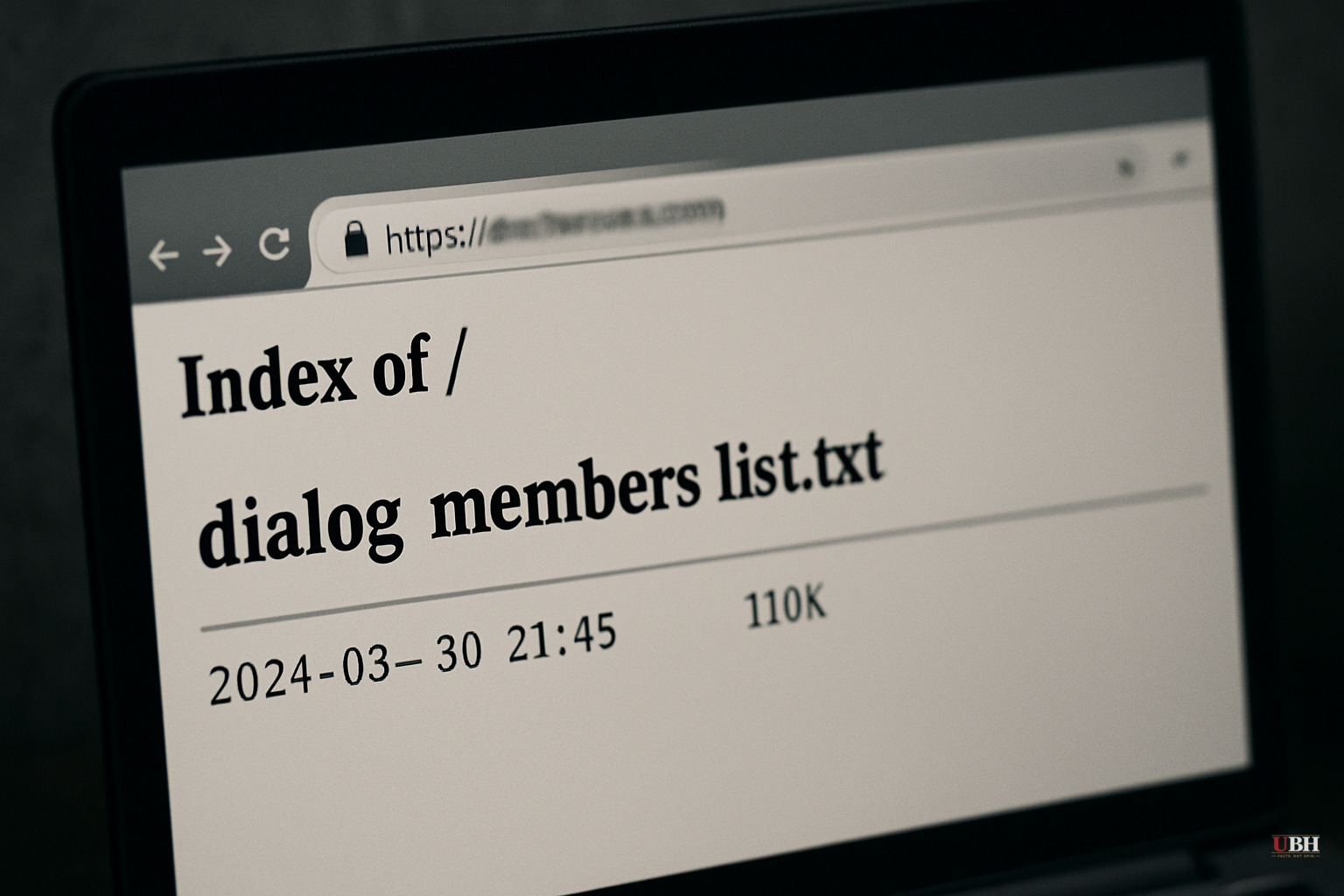
Since WIRED reported on June 19 that Dialog's internal records revealed a wealth-and-fame scoring system for members, a second layer of that story has now come into focus: how those records got out in the first place.
Dialog managing director Juliette Levine emailed affected members last week saying forensic investigators found the exposure was "a hack executed by a well-known criminal who is wanted in the United States." The notification, provided to WIRED, confirmed that 113 past event participants had their names exposed, along with an unspecified number of people registered for the group's August retreat outside Dublin, Ireland.
WIRED's technical review tells a different story.
What the site actually did
Dialog built a landing page to distribute a phone app for the August gathering. According to WIRED, anyone could visit that page, sign up with any email address, and receive no password prompt. The next page, a near-empty holding screen, automatically loaded internal files on roughly 200 registered attendees directly into the visitor's browser. Accessing those files required nothing more than the developer inspection tools built into every major browser: Chrome, Firefox, Safari, Edge.
Cybersecurity professionals have a name for this. It's a misconfiguration: the data was not locked behind authentication, not encrypted in transit in a way that prevented access, and not restricted by any credential check. It was, functionally, public.
Who was exposed
The records are not trivial. According to WIRED, the exposed files include a sitting NATO commander, two U.S. senators, the U.S. Treasury Secretary, a current White House intelligence official, a retired general with a senior U.S. intelligence background, and the national security policy and partnerships heads at two leading AI companies. International figures in the files include a former British security minister, a former Japanese defense minister, and a former Pakistani diplomat.
For nearly all of them, WIRED reports the exposed data was comprehensive, meaning more than just a name.
Why the framing gap matters
Dialog's "we were hacked" framing warrants careful examination because it shifts responsibility. If a sophisticated criminal broke through security controls, Dialog is a victim. If a misconfiguration left the front door open, Dialog is the author of its own breach. Those are legally and reputationally very different situations.
The strongest argument in Dialog's favor: WIRED's analysis is not a formal forensic investigation. It's possible that a malicious actor also accessed the data through more sophisticated means and that the misconfiguration was a separate, overlapping vulnerability. Dialog says it retained forensic investigators; WIRED has not seen that forensic report. Levine's notification to members referred to a "well-known criminal who is wanted in the United States," a specific claim that, if verifiable, would at minimum establish that someone with harmful intent was involved.
But that argument runs into a problem. A misconfiguration that makes data browser-readable to anyone requires no criminal actor to explain the exposure. The data was accessible without any intrusion. Layering a hack narrative on top of a basic configuration failure does not eliminate the configuration failure.
Sensitive people, basic security
The particulars make this worse than a generic data spill. Dialog's membership includes people with active national security roles and intelligence backgrounds. The August Dublin retreat, for which registrant files were accessible, has not yet occurred as of June 24, 2026, meaning those attendees' travel plans and identity details were exposed in advance of the event.
There is no federal law requiring Dialog, as a private club, to meet any specific cybersecurity standard for member data. No investigation or regulatory action has been announced as of today. Whether any of the named national security figures received individual notifications beyond Dialog's general member email is not reported by WIRED.
The unresolved question with direct consequences: Dialog says it has "temporarily closed many of its systems." It has not said whether it will publish the forensic report that supposedly identified a criminal hacker, or whether it will disclose the full scope of what data, beyond names, was accessible for how long.
Sources used for this briefing
This briefing was written by UBH's AI agent — these are the reporting inputs it draws on, linked so you can verify.


